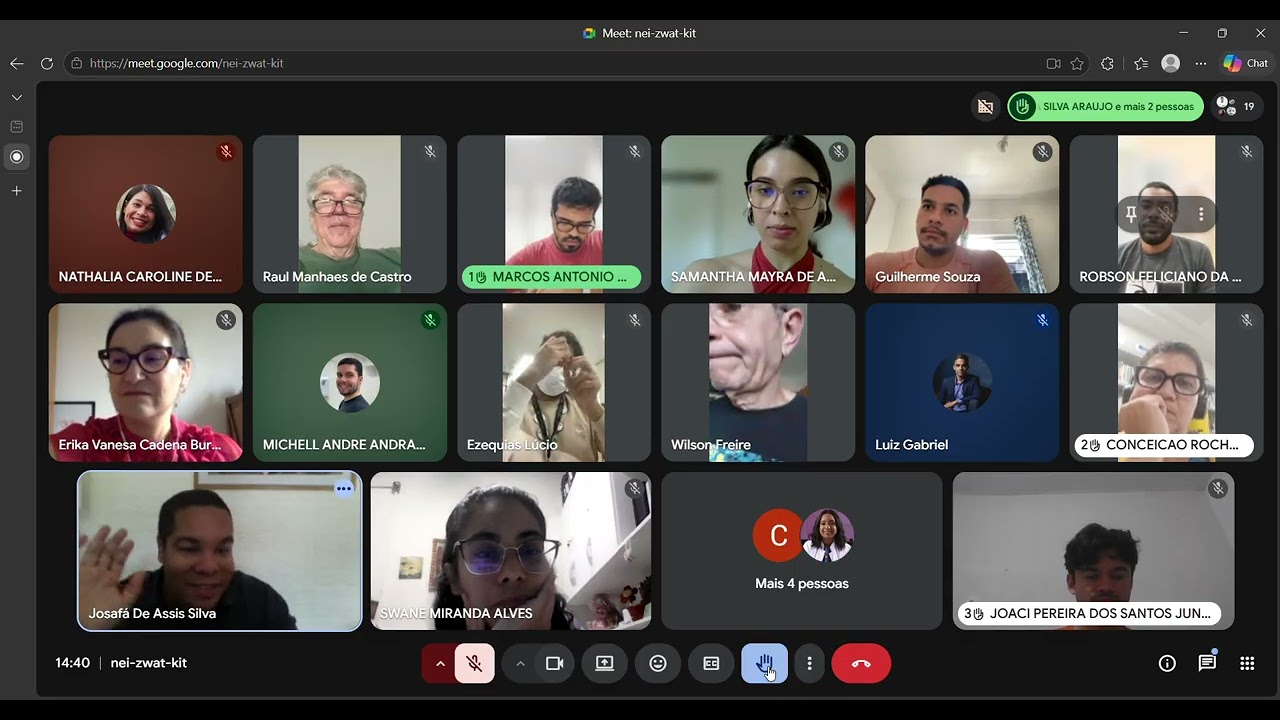
TEORIAS EPISTEMOLÓGICAS – Tema: Ciência e Arte: A Mistureba 2
Keywords
Summary
165 words
Critical Evaluation
Value of the Information & Strength of the Argument
The video offers valuable insights into the integration of science and art, drawing on the speaker’s extensive personal experience as a physician, poet, and filmmaker. The argumentation is largely anecdotal and narrative-driven, which makes it engaging but not systematically rigorous. The speaker’s defense of a multidisciplinary approach is compelling, but it relies on personal testimony rather than empirical evidence or theoretical frameworks. The discussion of art therapy, for instance, mentions observed improvements in patient outcomes but acknowledges the lack of published scientific studies. The value lies in the inspirational and philosophical dimensions, but the argumentation would benefit from more structured evidence and references.
Scientific Rigor, Source Quality, Title Accuracy
The video is a conversational lecture with no formal citations or references to academic literature. The speaker mentions his own books and projects, but these are not detailed or verified. The title accurately reflects the content, which is a discussion on epistemological theories with a focus on science and art. The lack of sources and the reliance on personal narrative reduce the scientific rigor. The video is more of a personal testimony and philosophical reflection than a rigorous academic presentation. The adequacy between title and content is good, but the scientific quality is limited by the absence of citations and the informal format.
221 words
Title / Content Match
The title accurately reflects the content, which is the second part of a discussion on epistemological theories focusing on the relationship between science and art.
Quality & Reliability
6/10
The video is a conversational lecture/debate featuring a medical doctor and poet discussing the intersection of science and art. It is rich in personal experience and anecdotal evidence, but lacks formal citations or peer-reviewed references. The content is intellectually stimulating but not rigorously scientific.
Key Moments
Markers derived by PSI from the transcript: the creator did not define chapters.
- Introduction and initial discussion about the speaker's daughters and their artistic pursuits.
- Speaker talks about his childhood and the influence of repentistas on his poetic education.
- Discussion about the speaker's extensive unpublished works and his plans for retirement.
- Speaker responds to a question about the relationship between art and medicine, emphasizing the importance of not limiting oneself.
- Speaker recounts his experiences during the Brazilian military dictatorship and his father's role.
- Speaker discusses his postgraduate studies in Germany and the scientific rigor he learned there.
- Speaker talks about the art therapy program at Hospital Osvaldo Cruz and its impact on patients.
- Speaker reflects on the transformative power of art and the importance of a multidisciplinary approach.
- Speaker answers a question about criticism he has faced for combining medicine and art.
- Speaker concludes with thoughts on art as a way of life and the importance of openness.
Cited Sources
- A única voz — Book by Wilson Freire about his experiences during the Brazilian military dictatorship.
- Para não acabar tão cedo — Novel by Clarice Freire, Wilson's daughter, mentioned in the discussion.
Concurring Sources
- Medical Humanities — Supports the idea of integrating arts and humanities into medicine.
- Art therapy — Provides background on the therapeutic use of art, aligning with the video's discussion.
Dissenting Sources
- No discordant sources identified — The video does not present conflicting scientific claims; it is primarily a personal narrative.
Contribution & Novelties
The video provides a unique personal perspective on the intersection of science and art, particularly through the lens of a medical doctor who is also a poet and filmmaker. It offers anecdotal evidence of the benefits of art therapy in a hospital setting, though it lacks formal research. The discussion highlights the importance of a multidisciplinary approach in education and practice.
Pour aller plus loin :
- Medical Humanities — Relevant for understanding the integration of arts and humanities into medical education and practice.
- Art therapy — Directly related to the art therapy program discussed in the video.
- Paulo Freire — Mentioned in the video, his educational philosophy is relevant to the discussion of epistemology and pedagogy.
116 words
Radar Profile
The radar profile shows moderate scores across all dimensions, with slightly higher scores in information quantity and quality, reflecting the rich personal narrative but limited technical depth and formal rigor. The video is more inspirational than scientific, with a balanced profile indicating a well-rounded but not deeply specialized discussion.
💬 No comments were provided for analysis.