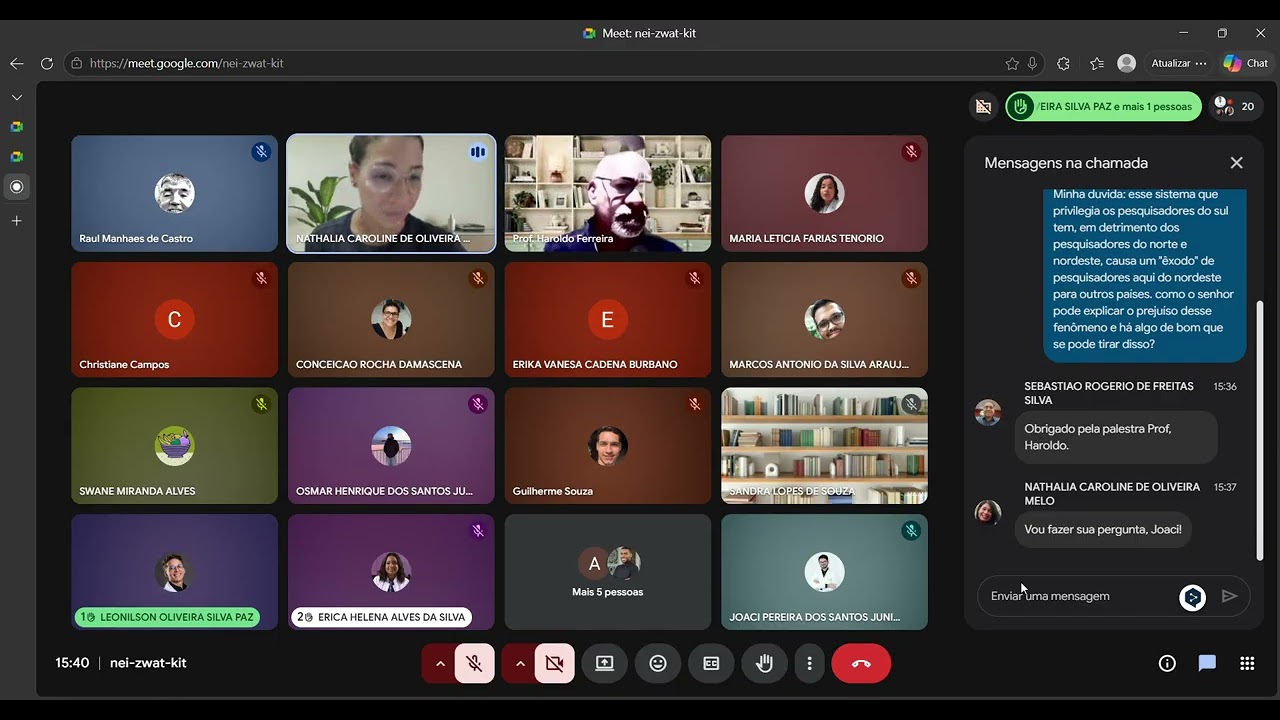
TEORIAS EPISTEMOLÓGICAS – Tema: Desafios de um pesquisador em saúde pública no nordeste do Brasil 2
Keywords
Summary
197 words
Critical Evaluation
Value of the Information & Strength of the Argument
The video provides valuable insights into the real-world challenges of conducting research in underfunded regions, based on the speaker’s extensive experience. The argumentation is largely anecdotal but persuasive, as it highlights systemic issues such as regional funding disparities, racial and gender discrimination, and the importance of mentorship. The speaker effectively uses personal stories to illustrate broader points, making the content relatable and impactful. However, the lack of empirical data or formal citations weakens the scientific rigor, and some arguments rely on subjective experiences rather than objective evidence.
96 words
Title / Content Match
The title accurately reflects the content, which is the second part of a lecture on epistemological theories focusing on challenges faced by public health researchers in Northeast Brazil.
Quality & Reliability
7/10
The video is a recorded academic seminar with a professor sharing personal experiences and observations about research challenges in Northeast Brazil. It is not a formal study but offers valuable insights into systemic issues. The speaker is a senior professor with relevant expertise, and the discussion is grounded in real experiences, though it lacks formal citations and data.
Key Moments
Markers derived by PSI from the transcript: the creator did not define chapters.
- Introduction and context of the lecture, with Professor Raul introducing the speaker and the topic.
- Discussion on regional disparities in research funding, comparing Alagoas to Rio de Janeiro and São Paulo.
- Personal anecdote about discrimination in a selection process for a research project, highlighting racial bias.
- Discussion on the importance of scientific initiation and the challenges faced by students from private universities.
- Advice on applying for CAPES funding for open-access publication fees and the importance of ORCID.
- Reflection on the speaker's career, including a mistake in applying to the wrong CNPq grant category.
- Discussion on brain drain and the impact of regional inequalities on research careers.
- Comparison of research infrastructure in Brazil and abroad, using an example from Geneva.
- Q&A session with students, addressing questions about funding and research challenges.
- Closing remarks and encouragement for aspiring researchers.
Cited Sources
- CAPES — Mentioned in the context of funding for open-access publication fees and agreements with publishers.
- CNPq — Mentioned in the context of research productivity grants and the speaker's experience with grant applications.
Concurring Sources
- CAPES — The speaker mentions CAPES as a funding agency for research and publication fees, which is consistent with its official role.
- CNPq — The speaker discusses CNPq grants and the application process, which aligns with the agency's function.
Contribution & Novelties
The video offers a unique perspective on the challenges of conducting public health research in Northeast Brazil, highlighting systemic inequalities and personal experiences. It provides practical advice for early-career researchers, such as navigating funding opportunities and the importance of mentorship. The discussion also sheds light on the impact of regional disparities on research productivity and the potential for brain drain.
Pour aller plus loin :
- CAPES — Official funding agency for Brazilian research, relevant to the discussion on publication fees.
- CNPq — National Council for Scientific and Technological Development, relevant to research grants.
- ORCID — Open Researcher and Contributor ID, mentioned as important for article acceptance.
- Scientific Initiation in Brazil — Concept of undergraduate research programs, relevant to the discussion on early research exposure.
- Brain Drain — Concept of emigration of skilled workers, relevant to the discussion on researchers leaving Northeast Brazil.
142 words
Radar Profile
The radar profile shows high scores in quantity and quality of information, reflecting the rich personal experiences and insights shared. The technical level is moderate, as the discussion is accessible but touches on complex systemic issues. The overall reliability is good, given the speaker's expertise, though the anecdotal nature limits the score.
💬 No comments were provided for analysis.