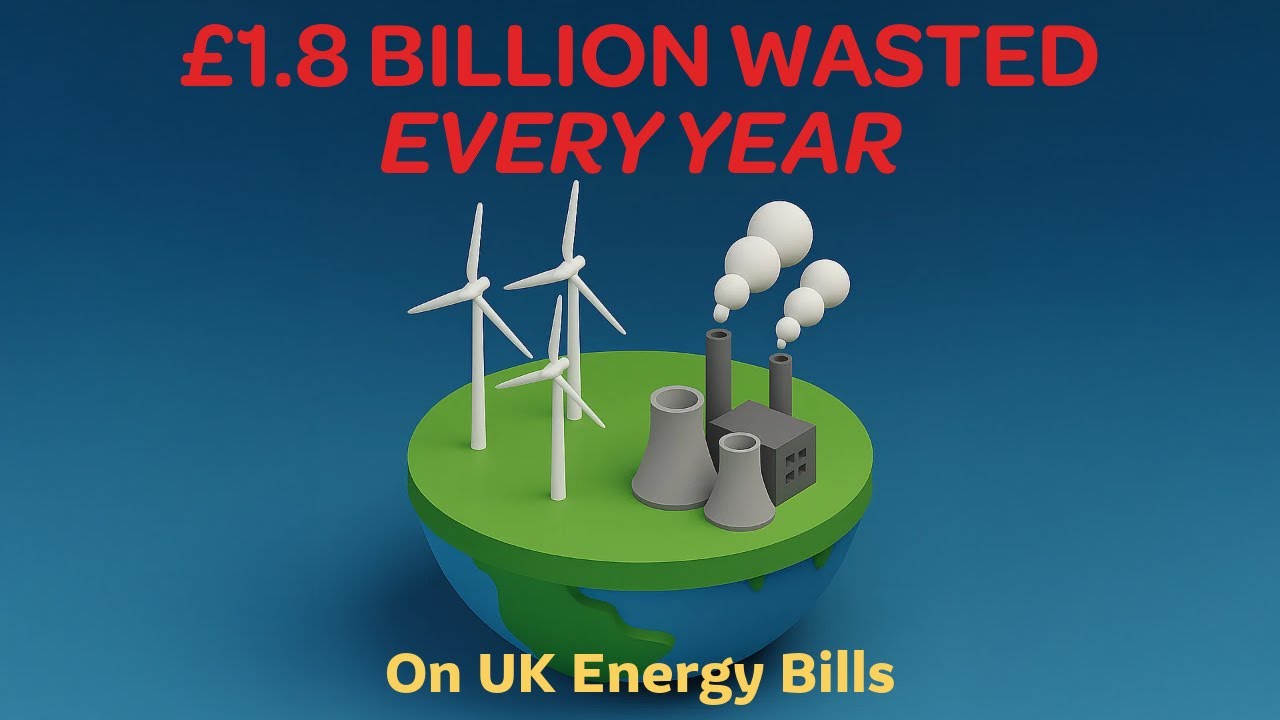
£1.8 BILLION Wasted on Energy Bills
Keywords
Summary
152 words
Critical Evaluation
Value of the Information & Strength of the Argument
The video provides valuable insights into the often-misunderstood issue of wind curtailment, explaining complex mechanisms like CfDs and pay-as-clear in an accessible manner. The argumentation is solid, supported by specific figures (e.g., £1.23 billion spent so far in 2025, £715 million in 2023) and references to NESO reports. The creator also presents a balanced view, acknowledging criticisms of CfDs and the need for subsidies for all energy sources. However, the argumentation is somewhat one-sided, as it focuses on the benefits of renewables and the need for grid upgrades without deeply exploring alternative perspectives or potential drawbacks of the proposed solutions.
Scientific Rigor, Source Quality, Title Accuracy
The video demonstrates scientific rigor by referencing the NESO report and providing specific technical details about grid constraints and technologies. The main source cited is the NESO document, which is authoritative. The title accurately reflects the content, and the video stays on-topic throughout. The creator’s expertise in the field adds credibility, but the lack of diverse sources and the personal opinion nature of the content slightly reduce the overall rigor.
185 words
Title / Content Match
The title accurately reflects the main topic: the financial waste associated with curtailing wind energy, projected to reach £1.8 billion in 2025.
Quality & Reliability
7/10
The video provides a detailed and technically accurate explanation of wind curtailment and grid constraints in the UK, supported by specific data and references to NESO reports. The creator demonstrates expertise in the field, but the content is presented from a personal perspective and lacks peer-reviewed sources.
Chapters
Cited Sources
- NESO Report on Balancing Costs — Referenced in the video description as the source for the £2 billion spent on balancing the grid last year.
Concurring Sources
- NESO Report on Balancing Costs — The report provides data on balancing costs, supporting the video's claims about the scale of curtailment costs.
Contribution & Novelties
The video offers a clear and comprehensive explanation of wind curtailment and its financial implications, making a complex topic accessible to a general audience. It highlights the double cost of paying wind farms to switch off and gas plants to switch on, and explains the role of CfDs and pay-as-clear in the energy market. The creator also discusses innovative solutions like dynamic line rating and high-temperature low-sag conductors, which are not widely known.
Pour aller plus loin :
- Contracts for Difference — Provides background on the CfD mechanism used in the UK.
- Dynamic Line Rating — Explains the technology for real-time monitoring of transmission line capacity.
- National Energy System Operator — Official site for the UK’s electricity system operator, where reports and data are available.
125 words
Radar Profile
The radar profile shows high scores in quantity of information and technical level, indicating a content-rich video with moderate depth. The lower score in quality of information and global reliability suggests that while the information is accurate, it relies on a single source and personal opinion, limiting its overall scientific robustness.