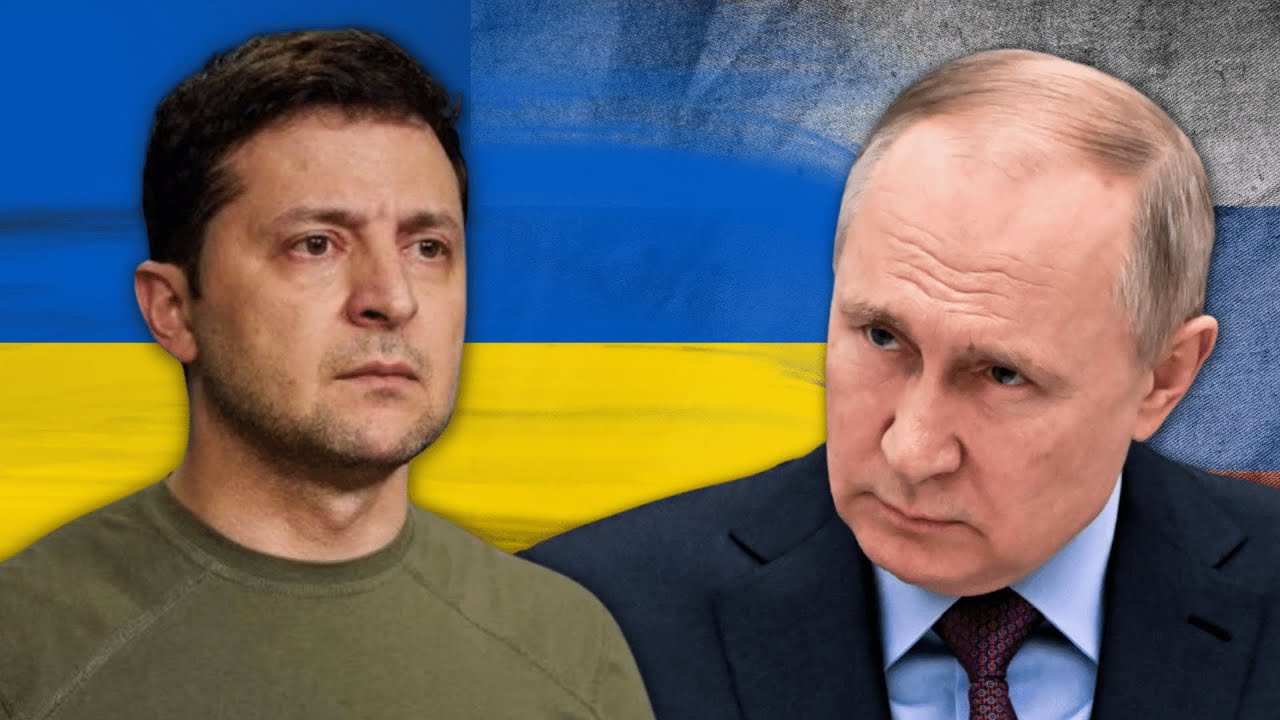
COMMENT L'UKRAINE GAGNE LA GUERRE DE LA COMMUNICATION (l'impact sur le conflit est énorme)
Keywords
Summary
141 words
Critical Evaluation
Value of the Information & Strength of the Argument
The video provides a clear and structured argument, presenting three distinct communication techniques with examples. The author’s reasoning is logical and accessible, though it relies on general concepts rather than in-depth analysis. The argumentation is persuasive but lacks empirical evidence or references to specific studies, which limits its scientific value.
Scientific Rigor, Source Quality, Title Accuracy
The video does not cite any specific sources, and the author relies on general knowledge and personal observations. The title accurately reflects the content, but the lack of citations and the author’s admission of limited geopolitical expertise reduce the scientific rigor. No comments were provided for analysis.
112 words
Title / Content Match
The title accurately reflects the content, which focuses on Ukraine's communication strategy in the conflict.
Quality & Reliability
5/10
The video offers a personal analysis based on general knowledge of communication strategies, without citing specific sources or data. The author acknowledges his limited expertise in geopolitics, which reduces the reliability of the geopolitical claims.
Key Moments
Markers derived by PSI from the transcript: the creator did not define chapters.
- Introduction: the author hesitates to make this video due to the sensitive topic.
- Thesis: wars are won politically, not just on the battlefield.
- First technique: the 'supporter syndrome' and how Zelensky positions himself as a civilian.
- Second technique: use of social media to reach Russian audiences and spread anti-war sentiment.
- Third technique: launch of the website 200rf.com to inform Russian families about soldiers.
- Conclusion: Russia may win battles but will lose politically and diplomatically.
Cited Sources
- 200rf.com — Website mentioned in the video as a tool to inform Russian families about soldiers killed or captured.
Concurring Sources
- Propaganda in the Russian invasion of Ukraine — Provides context on the communication strategies used by both sides.
Contribution & Novelties
The video offers a concise and accessible analysis of Ukraine’s communication strategy, framing it through the lens of cognitive biases and social media tactics. It provides a useful overview for a general audience, but does not introduce novel concepts or data.
Pour aller plus loin :
- Cognitive bias — Relevant to the ‘supporter syndrome’ concept.
- Propaganda in the Russian invasion of Ukraine — Directly related to the communication war.
- Social media in the Russo-Ukrainian War — Explores the role of social media in the conflict.
85 words
Radar Profile
The radar profile shows moderate scores across all dimensions, indicating a balanced but not deeply rigorous analysis. The video is informative for a general audience but lacks technical depth and source reliability.