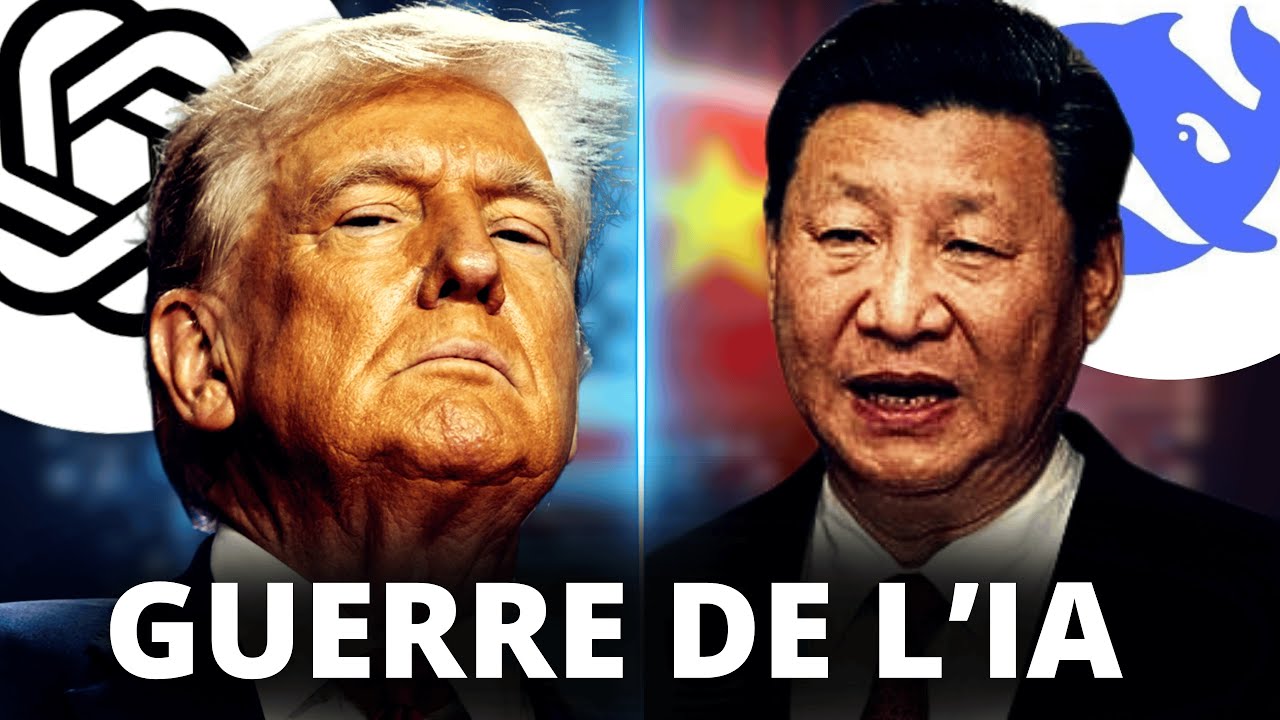
DeepSeek vs ChatGPT : la Guerre Froide de l'IA – Analyse
Keywords
Summary
171 words
Critical Evaluation
Value of the Information & Strength of the Argument
The video provides a valuable overview of the geopolitical dimensions of AI, synthesizing information from multiple reputable sources. The argumentation is structured logically, moving from economic impacts to cultural and military implications, and then to a global cartography. The creator effectively uses examples like the Israel-Hamas conflict and the US ban on Huawei to illustrate his points. However, the argumentation is one-sided, presenting a somewhat alarmist view of AI as a zero-sum geopolitical struggle without thoroughly exploring potential benefits or cooperative frameworks. The reliance on a few key sources, while credible, could be balanced with more diverse perspectives.
Scientific Rigor, Source Quality, Title Accuracy
The video demonstrates a strong commitment to sourcing, with numerous references to reports from Goldman Sachs, McKinsey, the World Economic Forum, Stanford, RAND, and news articles. These sources are relevant and add credibility to the analysis. The title accurately reflects the content, which focuses on the AI rivalry between the US and China. However, the video does not critically evaluate the sources or address potential biases in the data. The presentation is more of an expert opinion than a rigorous academic analysis, but the inclusion of specific data points and citations enhances its reliability.
207 words
Title / Content Match
The title accurately reflects the content, which focuses on the geopolitical competition between the US and China in AI, with DeepSeek and ChatGPT as representative examples.
Quality & Reliability
7/10
The video provides a broad geopolitical analysis of AI, citing multiple credible sources (Goldman Sachs, McKinsey, WEF, Stanford AI Index, RAND, etc.). However, the analysis is largely opinion-driven and lacks critical examination of the cited data. The sources are relevant and diverse, but the presentation is one-sided and does not address counterarguments or limitations.
Chapters
- Intro
- Hard Powers vs Soft Powers
- IA et PIB Mondial
- Potentiel de Croissance
- Le Défi de l'Emploi
- Influence de l'Éducation
- Fragilisation Politique Intérieure
- L'enjeu de la Culture
- Guerre de la Désinformation
- L'IA pour l'Espionnage
- Guerre de la donnée
- L'IA comme Arme Militaire
- Exemple avec Israël
- Les 2 ogres de l'IA
- Cartographie du Monde
- USA et Chine collaborent ?
- Guerre Froide de l'IA
- Le rôle de l'Europe
- L'Afrique Labo de la Chine ?
- Les Swing States
- 10 Pays à Suivre
- Le Motif d'Espoir
Cited Sources
- Goldman Sachs: Generative AI Could Raise Global GDP by 7% — Cited to support the claim that AI could increase global GDP by 7%.
- McKinsey: The Economic Potential of Generative AI — Cited to discuss productivity growth and the role of AI in economic growth.
- World Economic Forum: Future of Jobs Report 2023 — Cited to discuss job displacement and creation due to AI.
- Schiller Institute: The Impact of AI on Higher Education — Cited to discuss the role of AI in education and personalized learning.
- The Guardian: A robot wrote this article. Are you scared yet, human? — Cited to illustrate AI's capability in content creation and potential for disinformation.
- Washington Post: AI fake news misinformation — Cited to discuss AI as a super-propagator of disinformation.
- Brookings: Surveillance Exports and AI — Cited to discuss China's use of AI for surveillance and espionage.
- Reuters: US FCC bans equipment sales, imports from ZTE, Huawei over national security risk — Cited to illustrate US actions against Chinese tech companies over security concerns.
- Reuters: Privacy paradox with AI — Cited to discuss the tension between AI data needs and privacy.
- Maths et Tiques: Imitation Game — Cited to reference Alan Turing and the historical use of computing in warfare.
- France Info: Israel-Hamas war: 'Gospel' AI used as target factory — Cited to discuss the use of AI in military targeting during the Israel-Hamas conflict.
- Goldman Sachs: The Generative World Order: AI, Geopolitics and Power — Cited to discuss the geopolitical implications of AI.
- Lazard: Geopolitics of AI — Cited to provide a cartography of AI leadership and geopolitical importance.
- Stanford AI Index Report 2023 — Cited to provide data on AI development and investment.
- Wikipedia: Artificial Intelligence Cold War — Cited to define the concept of an AI Cold War.
- UN News: AI and the future of work — Cited to discuss the impact of AI on employment and society.
- RAND: The AI Cold War — Cited to discuss the geopolitical competition in AI.
- Goldman Sachs: The Rise of Geopolitical Swing States — Cited to discuss the role of swing states in the AI geopolitical landscape.
Concurring Sources
- Goldman Sachs: Generative AI Could Raise Global GDP by 7% — Supports the claim that AI will significantly boost global GDP.
- McKinsey: The Economic Potential of Generative AI — Supports the discussion on AI's impact on productivity and economic growth.
- World Economic Forum: Future of Jobs Report 2023 — Supports the claims about job displacement and creation due to AI.
Dissenting Sources
- No direct discordant sources cited — The video does not present any sources that contradict its main arguments. It relies on a consistent narrative of AI as a geopolitical threat.
External References
Contribution & Novelties
The video provides a comprehensive and accessible synthesis of the geopolitical implications of AI, drawing on a wide range of sources. It offers a structured framework (hard/soft powers) that helps viewers understand the multifaceted impact of AI on international relations. The inclusion of specific examples like the Israel-Hamas conflict and the US-China tech rivalry adds concreteness. However, the analysis is not entirely novel, as it largely synthesizes existing reports and commentary. Its value lies in its clarity and breadth rather than in breaking new ground.
Pour aller plus loin :
- Artificial Intelligence Cold War — Provides background on the concept of an AI Cold War.
- Stanford AI Index — Offers comprehensive data on AI development and investment.
- RAND: The AI Cold War — Discusses the geopolitical competition in AI.
- Goldman Sachs: The Generative World Order — Explores the geopolitical implications of AI.
142 words
Radar Profile
The radar profile shows high scores in quantity of information and reliability, reflecting the video's extensive use of sources and structured presentation. The lower score in technical level indicates that the content is more accessible to a general audience rather than deeply technical. Overall, the video is a solid introduction to the geopolitical dimensions of AI.
💬 Sur les 0 commentaires analysés, aucune tendance n'est disponible.