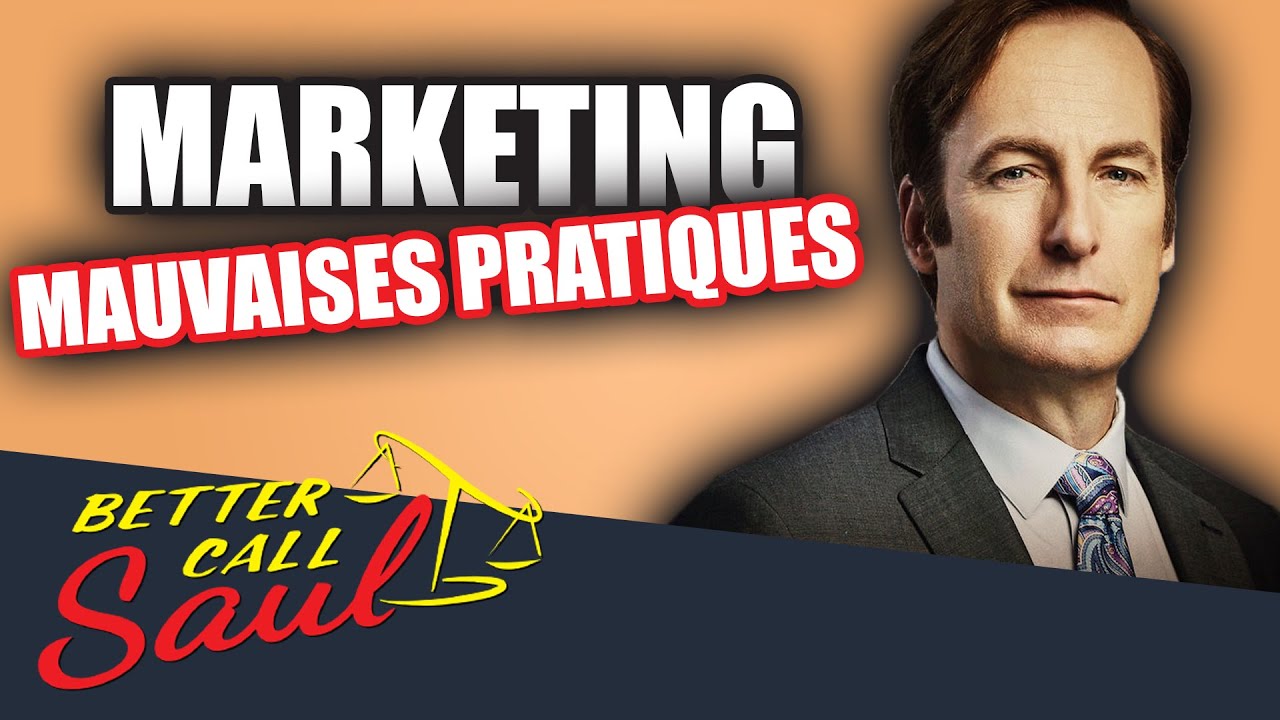
Comment foirer son Marketing : Analyse de Better Call Saul
Keywords
Summary
148 words
Critical Evaluation
Value of the Information & Strength of the Argument
The video provides a clear and engaging argument for modern marketing practices over traditional ones. It uses concrete examples from Better Call Saul to illustrate the pitfalls of untargeted advertising and the benefits of digital marketing techniques like lead scoring and inbound marketing. The argument is logically structured, moving from identifying problems to proposing solutions. However, the evidence is largely anecdotal and based on a fictional narrative, which limits its scientific rigor. The host’s expertise in marketing is evident, but the lack of empirical data or case studies weakens the overall persuasiveness.
Scientific Rigor, Source Quality, Title Accuracy
The video does not cite specific scientific studies or sources, but it references general marketing concepts and tools (e.g., Google Analytics, lead scoring). The description includes links to the host’s blog and a guide to inbound marketing, which may provide further information. The title accurately reflects the content, which is an analysis of marketing failures through the lens of Better Call Saul. The video is more of an opinion piece based on professional experience than a rigorously researched scientific analysis.
187 words
Title / Content Match
The title accurately reflects the content, which analyzes marketing failures through the lens of Better Call Saul.
Quality & Reliability
6/10
The video presents a coherent argument based on a fictional TV series, using it as an illustration of marketing principles. It lacks empirical data and scientific references, but the core concepts (lead scoring, inbound marketing, attention economy) are well-established in marketing practice.
Key Moments
Markers derived by PSI from the transcript: the creator did not define chapters.
- Introduction: two types of marketing, old vs modern.
- Example of Saul's TV spot and billboard campaign.
- First prospect: Richard Sykes, wants to secede from the US.
- Second prospect: inventor of talking toilets.
- Third prospect: elderly woman with small budget.
- Introduction of lead scoring and digital marketing benefits.
- Discussion of modern buyer behavior and attention economy.
- Importance of positioning and specialization.
- Evolution of marketing: mass, segment, person, experience.
- Example of Saul's targeted marketing in retirement homes.
- Value of providing value: bingo example.
- Conclusion: content should educate, solve, inform, or entertain.
Cited Sources
- Guide de l'Inbound Marketing — Mentioned as a resource for inbound marketing concepts.
- Newsletter — Mentioned as a way to stay updated.
- Blog — Mentioned for further reading.
- Vidéo des pires anecdotes Marketing — Mentioned as a related video.
Concurring Sources
- Inbound marketing — Supports the video's emphasis on attracting customers through valuable content.
- Lead scoring — Supports the video's discussion of qualifying leads.
Contribution & Novelties
The video offers a practical, example-driven explanation of why traditional marketing fails and how modern digital marketing can be more effective. It uses a popular TV series to make the concepts relatable and memorable. The emphasis on lead scoring and the four content purposes (educate, solve, inform, entertain) provides actionable advice for marketers.
Pour aller plus loin :
- Inbound marketing — Overview of the inbound methodology.
- Lead scoring — Explanation of the lead scoring technique.
- Attention economy — Context on the competition for consumer attention.
85 words
Radar Profile
The radar profile shows moderate scores across all dimensions, indicating a balanced but not deeply rigorous content. The video is informative and practical but lacks strong scientific backing.
💬 No comments were provided for analysis.