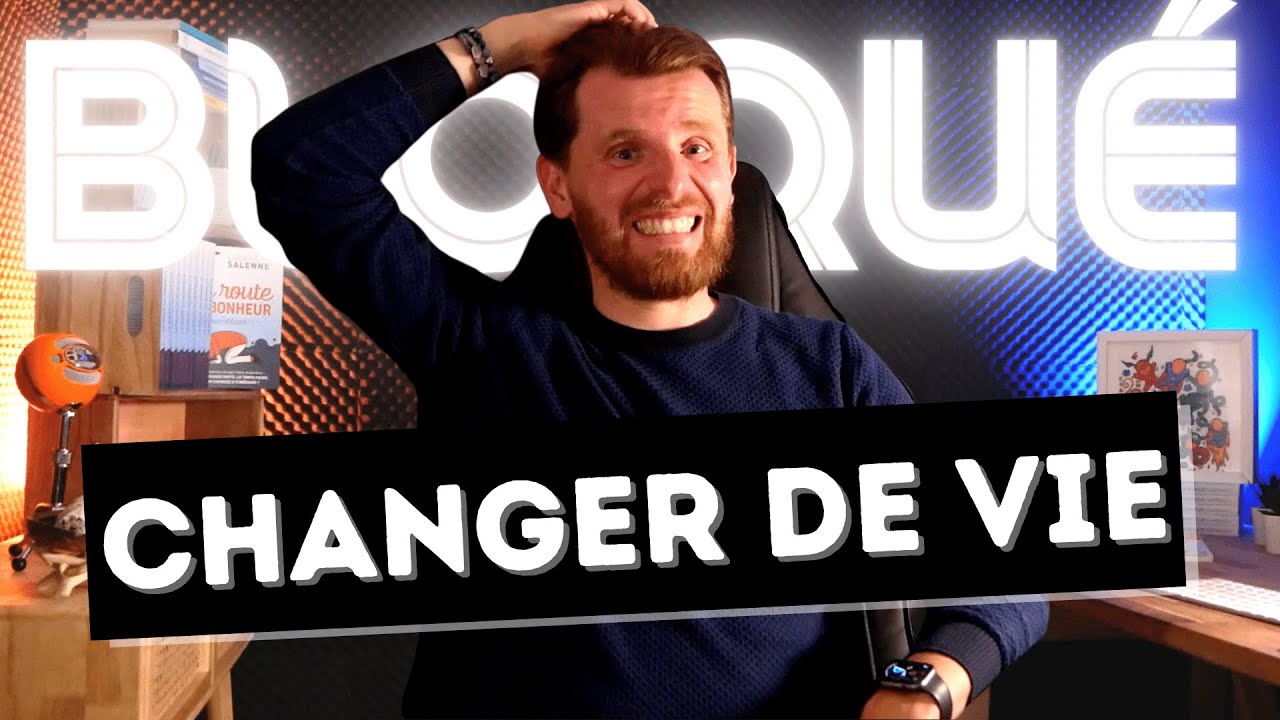
CHANGER DE VIE : 5 BLOCAGES PSYCHOLOGIQUES QUI VOUS EN EMPÊCHENT (et les solutions)
Keywords
Summary
130 words
Critical Evaluation
Value of the Information & Strength of the Argument
The video offers practical advice based on personal experience, which can be motivating for viewers. However, the argumentation is largely anecdotal and lacks scientific depth. The psychological concepts mentioned (e.g., loss aversion, confirmation bias) are simplified and not backed by rigorous evidence. The author’s reasoning is coherent but relies on common self-help tropes rather than empirical data.
Scientific Rigor, Source Quality, Title Accuracy
The scientific rigor is low: the video cites no academic sources, only a book by Daniel Kahneman (mentioned but not detailed) and the author’s own book. The title accurately reflects the content, but the content is more motivational than scientific. The description includes links to the author’s other video and book, but no external references. The video’s claims about psychological mechanisms are not substantiated.
136 words
Title / Content Match
The title accurately reflects the content: the video discusses five psychological blocks and offers solutions, matching the promise.
Quality & Reliability
5/10
The video is a personal development talk based on the author's experience and popular psychology concepts. It lacks scientific rigor, with no empirical evidence or citations to peer-reviewed studies. The advice is anecdotal and relies on oversimplified psychological mechanisms.
Chapters
Cited Sources
- MES OBJECTIFS À 5 ANS — Referenced in the video as a complement to the discussion on the closing door syndrome.
Contribution & Novelties
The video synthesizes common psychological barriers into a list of five blocks, which may help viewers identify their own obstacles. The ‘5 times OK and then’ exercise is a practical tool for rationalizing fears. However, the content is not novel; it draws on well-known concepts from behavioral economics and self-help literature.
Pour aller plus loin :
- Confirmation bias — Central concept in the video, explained in the context of decision-making.
- Impostor syndrome — Discussed as a major block; the video offers personal strategies to overcome it.
- Loss aversion — Underlies the ‘closing door syndrome’ and the fear of losing opportunities.
- Thinking, Fast and Slow — The book by Daniel Kahneman mentioned in the video, relevant to understanding cognitive biases.
119 words
Radar Profile
The radar profile shows low scores across all dimensions, reflecting the video's limited scientific depth and reliance on anecdotal evidence. The highest score is in quantity of information, but quality and reliability are weak, indicating a motivational rather than educational content.