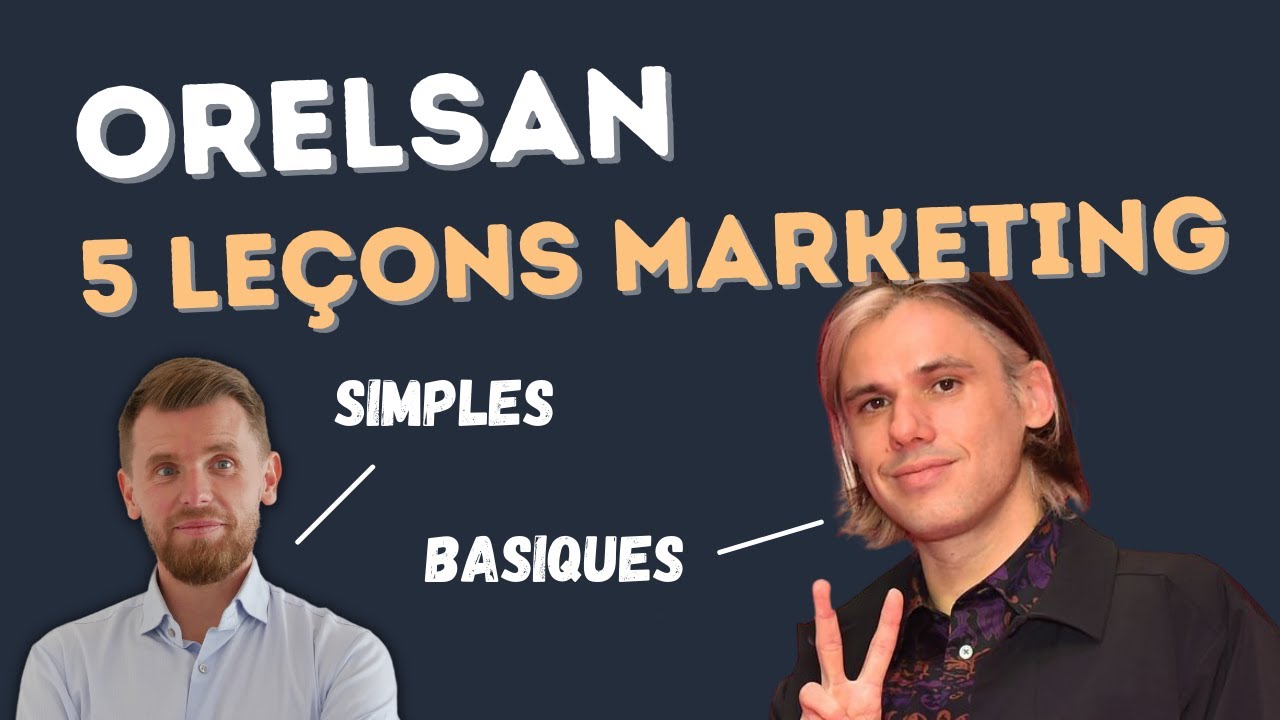
5 LEÇONS MARKETING D'ORELSAN (simples. basiques.)
Keywords
Summary
158 words
Critical Evaluation
Value of the Information & Strength of the Argument
The video provides practical marketing advice, but the argumentation is largely anecdotal and lacks scientific rigor. The creator uses Orelsan’s career as a case study, which is relevant and engaging, but the reasoning is often superficial. For instance, the concept of ‘borrowing authority’ is explained through the cognitive bias of association, but the explanation is brief and not backed by research. Similarly, the discussion on awareness is simplified, and the link between Orelsan’s mainstream tracks and the awareness concept is not deeply explored. The creator does offer actionable steps, such as working on positioning and using influencer marketing, which adds practical value. However, the overall argumentation would benefit from more evidence and a more critical examination of the concepts.
Scientific Rigor, Source Quality, Title Accuracy
The video does not cite any scientific sources; instead, it references the creator’s own blog posts and a YouTube video on cognitive biases. These sources are not authoritative and lack peer review. The title is somewhat misleading, as the video contains only four actual lessons, with the fifth being a self-referential copywriting tip. This is acknowledged by the creator, but it still affects the perceived reliability. The content is presented as expert opinion, but the lack of citations and the informal style reduce its scientific credibility. The video’s strength lies in its practical examples, but the absence of rigorous sourcing is a significant weakness.
238 words
Title / Content Match
The title promises 5 marketing lessons, but the video delivers only 4 real lessons, with the 5th being a meta-lesson about using the number 5 in titles. This is a deliberate clickbait strategy, which is acknowledged by the creator.
Quality & Reliability
5/10
The video is based on personal opinions and anecdotal examples rather than rigorous scientific evidence. The creator presents marketing concepts (positioning, authority borrowing, awareness, innovation) in a simplified manner, with limited depth and no empirical data. The sources provided are blog posts and a YouTube video, which are not peer-reviewed or authoritative.
Key Moments
Markers derived by PSI from the transcript: the creator did not define chapters.
- Introduction: presenter introduces the topic and outlines the five lessons.
- Lesson 1: Strong and polarizing positioning, using Orelsan's example.
- Lesson 2: Borrowing authority through associations with established figures.
- Lesson 3: Awareness - attracting a broader audience with mainstream content.
- Lesson 4: Innovation to stay relevant, citing Orelsan's hit 'Simples'.
- Lesson 5: Meta-lesson about using the number 5 in titles for click-through rate.
- Conclusion: recap and call to action.
Cited Sources
- Buyer Journey Definition & Method — Referenced in the description as a resource for understanding awareness.
- How to Define an Attractive Marketing Positioning — Referenced in the description as a resource for working on positioning.
- Cognitive Biases and Authority Borrowing — Referenced in the description as a video on cognitive biases and authority borrowing.
Concurring Sources
- Positioning (marketing) — Supports the concept of positioning as a key marketing strategy.
- Cognitive bias — Provides background on the cognitive biases mentioned in the video.
Dissenting Sources
- Marketing Myopia — Contrasts with the video's emphasis on product innovation, suggesting that focusing too much on product features can be detrimental.
Contribution & Novelties
The video offers a fresh perspective by analyzing a musician’s career through a marketing lens, which is not commonly done. It provides practical, actionable advice for marketers, such as using influencer marketing and focusing on awareness. However, the concepts are not new and are often simplified. The video’s originality lies in its application to Orelsan’s case, which makes it engaging and relatable.
Pour aller plus loin :
- Positioning (marketing) — Provides a comprehensive overview of positioning strategies.
- Cognitive bias — Explains the psychological basis for authority borrowing and other biases.
- Awareness (marketing) — Discusses the concept of brand awareness and its importance.
102 words
Radar Profile
The radar profile shows moderate scores across all dimensions, indicating a balanced but not exceptional video. The highest score is in 'quantite_information' (5) and 'fiabilite_globale' (4), while 'niveau_technique' is lower (3), reflecting the simplified presentation of concepts. Overall, the video is informative but lacks depth and scientific rigor.
💬 Sur les 0 commentaires analysés, aucune tendance n'est disponible.