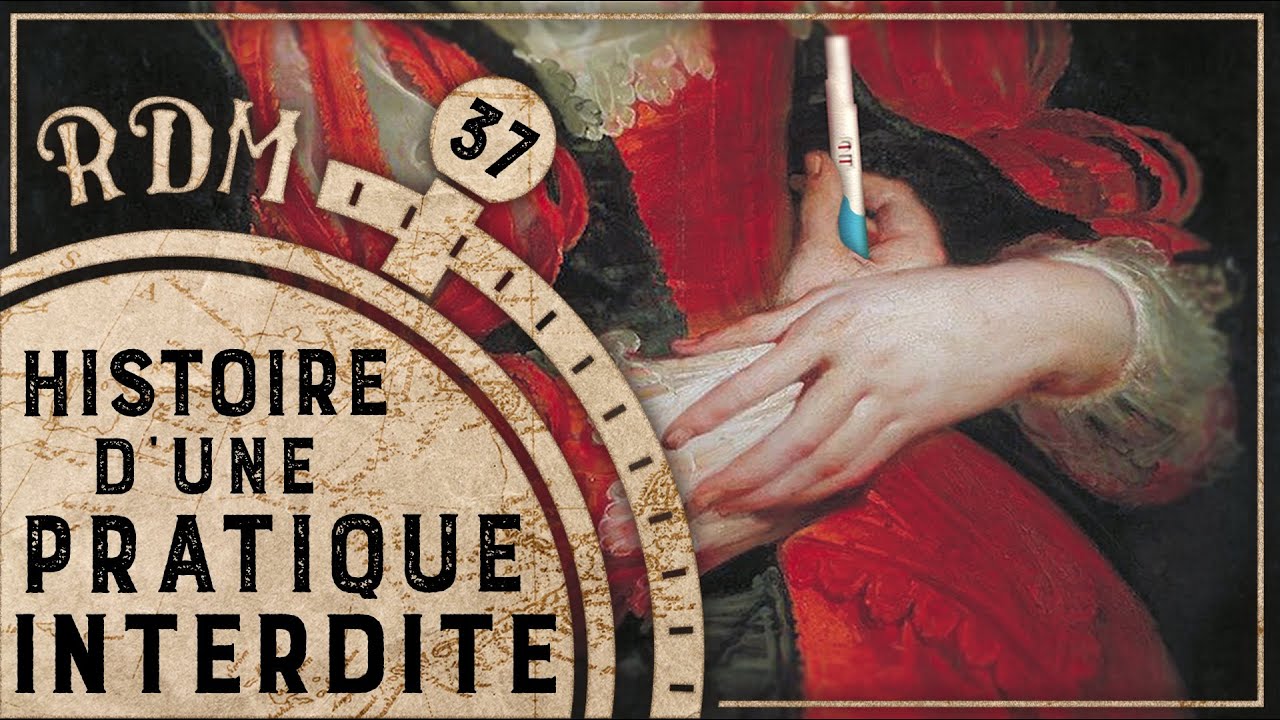
Pourquoi avorter est si souvent interdit dans l'Histoire ? - RDM #37
Why has abortion been so often forbidden throughout history? - RDM #37
Keywords
Summary
173 words
Critical Evaluation
Value of the Information & Strength of the Argument
The video provides genuine added value by assembling scattered historical data into a coherent narrative. The argumentation is structured around three explanatory axes—medical, moral, and patriarchal—which are supported by concrete examples and quotes from ancient texts. The author avoids militant bias by defining patriarchy as a social organization and stating that the mechanisms were not necessarily conscious. The demonstration is balanced, acknowledging exceptions (e.g., soranus recommending abortion to save the mother) and nuances (differing views on fetal animation). The final message, emphasizing that prohibition only increases danger, is founded on the historical evidence presented.
Scientific Rigor, Source Quality, Title Accuracy
The scientific rigor is high for a popular sphere. The video relies on ancient legal codes (Hammurabi, Assyrian), medical treatises (Hippocratic corpus, Soranus, Bernard de Gordon), and modern demographic analyses, all listed in the description. The author clearly indicates when interpretations are complex (e.g., the debate on ensoulment) and does not overstate conclusions. The title exactly matches the content, which systematically answers the question posed. Public reactions are overwhelmingly positive, with viewers appreciating the factual approach and the courage to address a sensitive topic despite demonetization.
195 words
Title / Content Match
The title poses a precise question that the entire video answers through a chronological survey, perfectly aligned with the content.
Quality & Reliability
8/10
Solid historical synthesis drawing on varied primary and secondary sources (legal codes, medical texts, demographic studies). The author acknowledges the complexity of the topic and bases each period on academic references. Despite some simplifications inherent to the format, sources are listed in the description and the reasoning is clearly articulated.
Key Moments
Markers derived by PSI from the transcript: the creator did not define chapters.
- Introduction: why is abortion universally present yet often banned?
- Mesopotamia: Code of Hammurabi and Assyrian law punishing abortion as violation of husband's rights.
- Ancient techniques: invasive methods rare, mostly herbal, physical pressure, and risks.
- Greece: Hippocrates and Soranus, abortion not legally banned but dangerous, moral reflections by Aristotle.
- Rome: legal penalties for abortion as infringement on father's rights, influence of Stoicism, later Christian moral prohibitions.
- Middle Ages: church dominance, ambiguous terminology, punishment of women for miscarriages, medical warnings.
- Renaissance: midwives accused of witchcraft, intensification of patriarchal control.
- Slavery context: enslaved women seeking abortion to avoid passing on status, contrasted with owners' exploitation.
- 19th century: shift toward limiting births, clandestine methods (soap injection, knitting needles), 'faiseuses d'anges'.
- Conclusion: synthesis of three causes, modern statistics on unsafe abortions, and closing remarks.
Cited Sources
- Stèle du code de Hammurabi - Louvre — Mention of the Code of Hammurabi as an early legal text penalizing abortion.
- Le code de Hammurabi (PDF) — Reference for the Mesopotamian legal code and its content.
- The Code of the Assura (Assyrian laws) — Used to cite the Assyrian law imposing death penalty for abortion against the husband's will.
- Christian Perspectives on Abortion Legislation — Source for Roman and Christian legislation on abortion.
- L’avortement de la perspective des religions de l’est — Reference for abortion in India and Eastern religions.
- Abortion in Ancient Rome (archived) — Historical study on techniques and attitudes in ancient Rome.
- Démographie de l’avortement au Moyen-Age — Demographic analysis of abortion in the medieval period.
- A propos de l’avortement dans le contexte de l’esclavage — Medical/legal article on abortion in the context of slavery.
- Sur la question de la mortalité liée à l’avortement — Discussion of abortion-related mortality and demographic consequences.
- Oxford Reference - Lysias (Greek poet) — Quotation of Lysias used to illustrate Roman legal thinking on abortion.
- Un ouvrage sociologique sur la politique de procréation — Sociological perspective on procreation policies.
Concurring Sources
- Code of Hammurabi — Supports the section on Mesopotamian law.
- Soranus of Ephesus — Supports the Greek medical perspective on abortion.
External References
Contribution & Novelties
The video’s original contribution lies in weaving together three explanatory threads—medical risk, moral-religious prohibition, and patriarchal control—through a long chronological span, showing their interplay. It underscores that ;interdiction never eradicates practice but shifts it to dangerous clandestinity, a point reinforced with modern statistics. The public value is significant as it confronts contemporary debates with historical facts and nuances.
Pour aller plus loin :
- Code of Hammurabi — Primary source for early legal penalties on abortion.
- Soranus of Ephesus — Greek physician who recommended abortion to save the mother, illustrating medical nuance.
- Witch trials in the early modern period — Context for the persecution of midwives as witches, reinforcing patriarchal control.
- Fetal animation — Theological debate on the ensoulment of the fetus, central to moral discussions.
125 words
Radar Profile
The radar profile shows high scores in information quantity, quality, and reliability, with a slightly lower technical level (7/10) indicating accessible but well-founded content. This reflects a well-researched popular science video that prioritizes breadth and rigor over technical detail.
💬 positif. Sur les 30 commentaires analysés, le ton est massivement enthousiaste et reconnaissant : les spectateurs saluent le travail de recherche, la clarté du propos et le courage d'aborder un sujet démonétisé, avec de nombreux témoignages personnels.