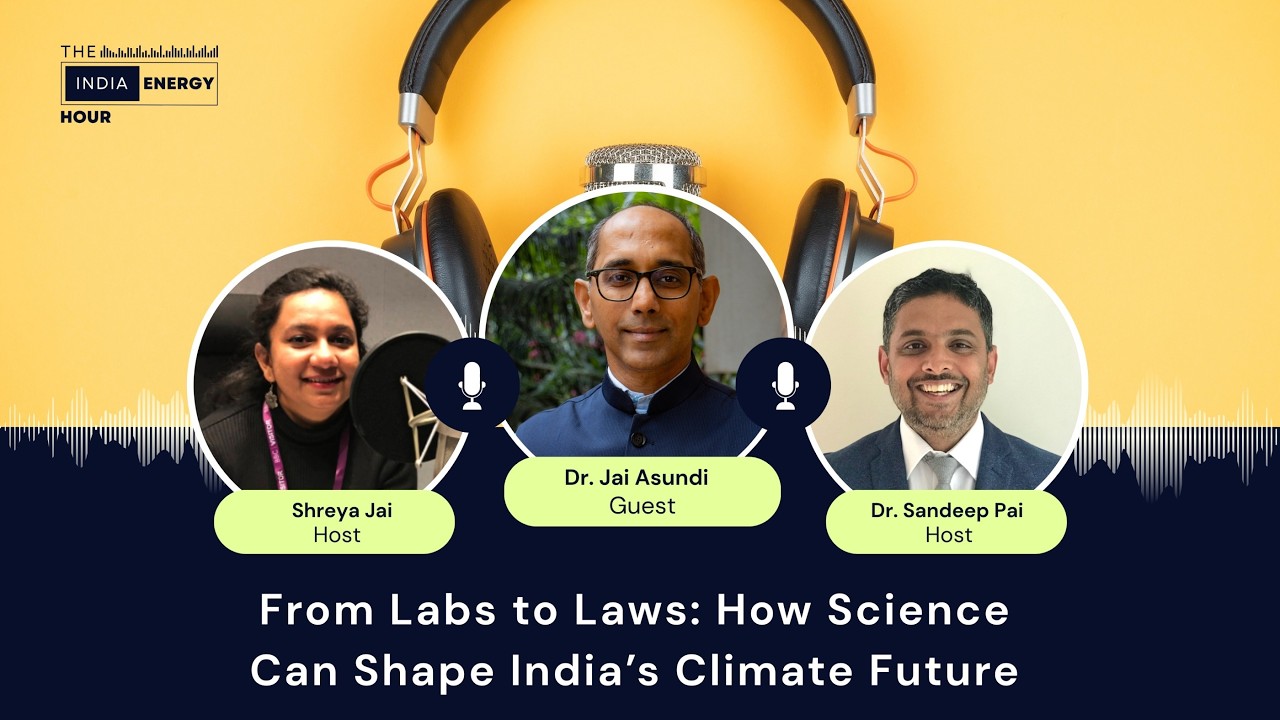
Episode 84: From Labs to Laws: How Science Can Shape India’s Climate Future | ft. Dr. Jai Asundi
Keywords
Summary
142 words
Critical Evaluation
Value of the Information & Strength of the Argument
The value of the information lies in the firsthand perspective of a leading figure in India’s science-policy ecosystem. Dr. Asundi provides a nuanced understanding of how think tanks operate and the importance of credibility and trust in influencing policy. His argumentation is coherent, emphasizing the need for evidence-based options and long-term thinking. However, the discussion lacks concrete examples or data to substantiate claims, making it more of an expert opinion than a rigorous analysis.
Scientific Rigor, Source Quality, Title Accuracy
The scientific rigor is moderate; the episode is based on the speaker’s experience rather than cited research. The title accurately reflects the content, focusing on the science-policy interface in India’s climate action. The description provides links to the transcript and related profiles, but no direct scientific sources are cited. The discussion is informative but would benefit from references to specific studies or policy documents.
153 words
Title / Content Match
The title accurately reflects the content, focusing on the role of science in shaping climate policy in India, as discussed with Dr. Jai Asundi.
Quality & Reliability
7/10
The episode features an expert with deep experience in science-policy integration, providing credible insights into the challenges and processes of evidence-based policymaking in India. However, it is largely anecdotal and lacks specific data or citations, limiting its scientific rigor.
Key Moments
Markers derived by PSI from the transcript: the creator did not define chapters.
- Introduction of Dr. Jai Asundi and his background.
- Discussion on the importance of interdisciplinary education in engineering.
- Explanation of CSTEP's mission and grand challenges.
- Challenges of building trust with policymakers.
- The role of think tanks in providing evidence-based options.
- Long-term strategies for sustainable development in India.
Cited Sources
- 101Reporters — Production company for the podcast.
- Full transcript of the episode — Transcript of the episode.
- Jai Asundi on LinkedIn — Profile of the guest.
- Sandeep Pai on LinkedIn — Profile of the co-host.
- Shreya Jai on LinkedIn — Profile of the co-host.
Concurring Sources
- CSTEP official website — Provides information on CSTEP's research areas and publications.
Contribution & Novelties
The episode provides a unique insider perspective on the science-policy interface in India, highlighting the practical challenges of translating research into policy action. It emphasizes the importance of trust-building and offering options rather than prescriptions, which is a valuable contribution to understanding how think tanks operate in developing countries.
Pour aller plus loin :
- Science-policy interface — Overview of the concept and its challenges.
- Evidence-based policy — Discussion on the use of evidence in policymaking.
- Center for Study of Science, Technology and Policy — Official website of CSTEP, providing more details on their work.
94 words
Radar Profile
The radar profile shows moderate to high scores across all dimensions, with the highest in information quantity and reliability, reflecting the expert's credibility. The lower score in technical level indicates the content is accessible to a general audience, while the overall balance suggests a well-rounded discussion.