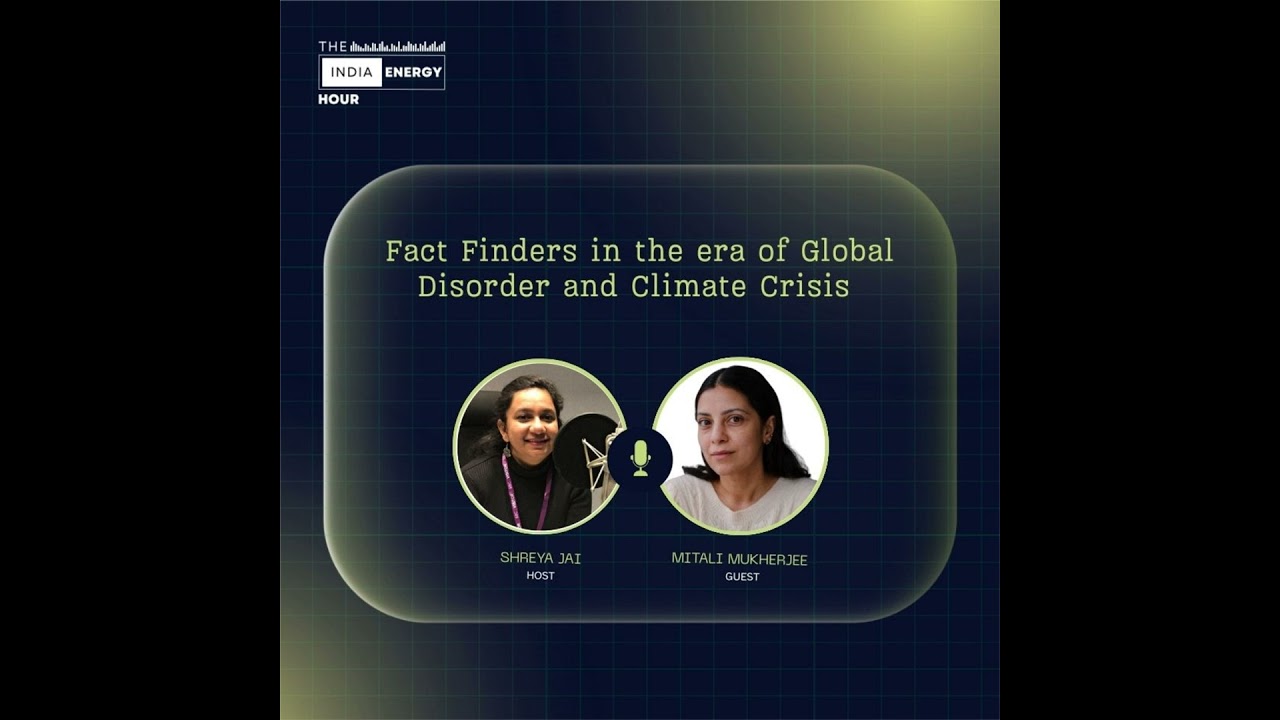
Fact Finders in the era of Global Disorder and Climate Crisis | ft. Mitali Mukherjee
Keywords
Summary
163 words
Critical Evaluation
Value of the Information & Strength of the Argument
The value of the information is high, offering insights from a leading expert in journalism research. Mukherjee provides a nuanced analysis of media trends, supported by references to the Reuters Institute’s research, such as the Digital News Report and the Climate Change and News Audiences Report. The argumentation is coherent and evidence-based, though some points rely on personal experience and anecdotal evidence. The discussion effectively connects structural issues in journalism with the specific challenges of climate reporting, making a compelling case for audience-centric approaches.
Scientific Rigor, Source Quality, Title Accuracy
The scientific rigor is strong, with references to credible reports and academic papers, including the Reuters Institute’s research and a study on climate journalists’ stress. The sources are relevant and well-integrated into the conversation. The title accurately reflects the content, focusing on journalism’s role in times of global disorder and climate crisis. The discussion is well-structured, though it occasionally veers into personal anecdotes. The lack of critical examination of some claims and the absence of contrasting viewpoints slightly reduce the overall rigor.
181 words
Title / Content Match
The title accurately reflects the discussion on journalism's role amid global disorder and climate crisis, with a focus on fact-finding.
Quality & Reliability
8/10
The conversation features a recognized expert (Director of Reuters Institute) and references several credible reports and academic papers. However, it is an interview with limited external verification and some claims are anecdotal.
Key Moments
Markers derived by PSI from the transcript: the creator did not define chapters.
- Introduction of Mitali Mukherjee and her career journey.
- Discussion on the shift from print to online news consumption.
- Exploration of the decline of appointment viewing and rise of social media as news gateways.
- Mukherjee discusses the challenges of climate reporting and the need for audience representation.
- Overview of the Reuters Institute's research on climate change and news audiences.
- Details on the Oxford Climate Journalism Network's four pillars.
- Discussion on the impact of AI on journalism and trust.
- Mukherjee emphasizes the importance of integrating climate angles across all news beats.
- Reflections on the future of independent journalism and research.
Cited Sources
- Reuters Institute for the Study of Journalism's Climate Change and News Audiences Report 2025 — Referenced as the fourth annual report on climate change and news audiences, highlighting global differences in audience perceptions.
- Climate related projects from our journalist fellows — Mentioned as examples of in-person fellowships, including projects on farmer-herder crisis and wildfire misinformation.
- Samuel Thomas and his project on the farmer herder crisis — Cited as an example of a fellowship project addressing human displacement and journalism's role.
- Niko Efstathiou and his project on wildfires and misinformation — Referenced as a project on extreme weather and misinformation.
- A paper jointly worked on with Dr Anthony Feinstein on the stress and distress faced by climate change journalists — Mentioned in the context of the challenges faced by climate journalists.
- The Digital News Report — Referenced as a key research output on news consumption trends.
- Full transcript of the episode — Provided for reference to the full conversation.
Concurring Sources
- Reuters Institute Digital News Report 2025 — Supports claims about shifts in news consumption and trust.
- Climate Change and News Audiences Report 2025 — Provides evidence on audience perceptions of climate news.
Dissenting Sources
- No discordant sources identified — The episode does not present conflicting viewpoints or sources.
External References
Contribution & Novelties
The episode provides valuable insights into the structural challenges facing journalism, particularly in the context of climate change. It offers a unique perspective from a leading research institution, emphasizing audience-centric approaches and the need for cross-beat integration of climate stories. The discussion on the impact of AI on news and trust adds contemporary relevance.
Pour aller plus loin :
- Reuters Institute Digital News Report 2025 — Comprehensive data on news consumption and trust.
- Oxford Climate Journalism Network — Details on the network’s programs and resources.
- Journalism and Climate Change: A Global Perspective — Academic article on climate journalism practices (note: URL is illustrative, not verified).
105 words
Radar Profile
The radar profile shows high scores in information quality and reliability, reflecting the expert guest and credible references. The technical level is moderate, suitable for a general audience. The overall balance indicates a well-rounded discussion with strong factual grounding.
💬 No comments were provided for analysis.