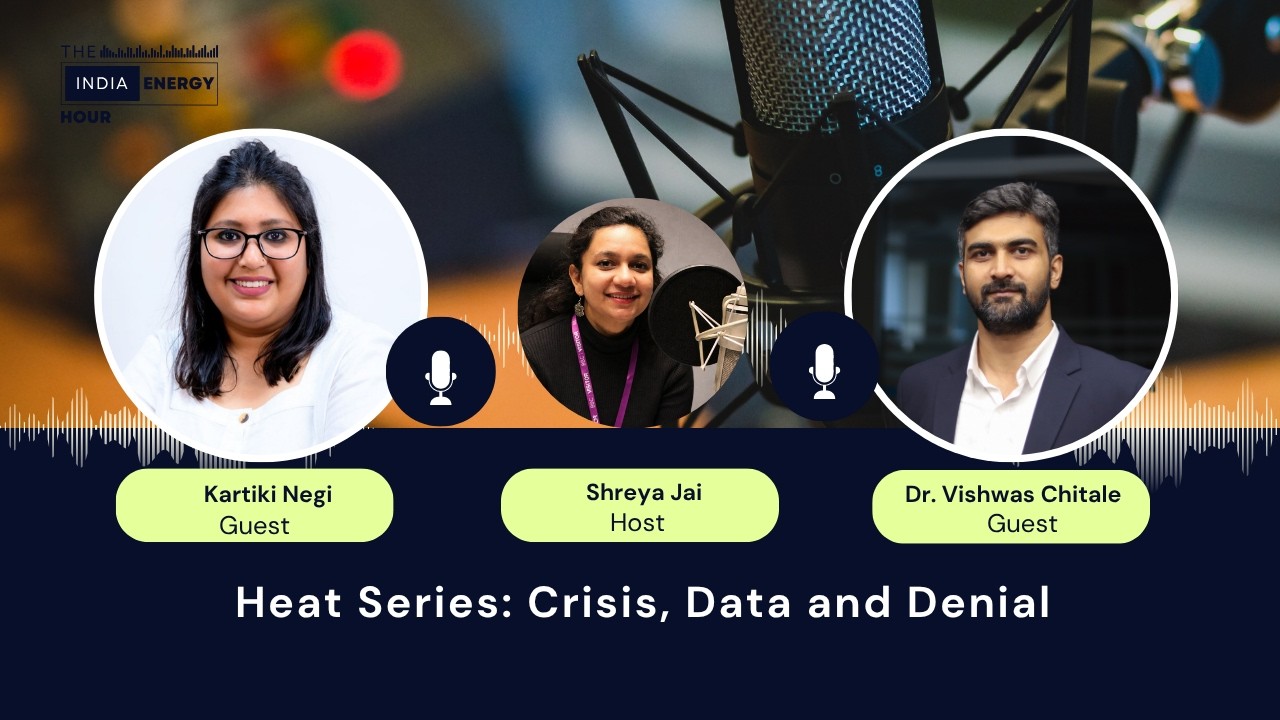
Heat Series: Crisis, Data and Denial| ft. Kartiki Negi and Dr. Vishwas Chitale
Keywords
Summary
193 words
Critical Evaluation
Value of the Information & Strength of the Argument
The value of the information is high, as it provides specific data (e.g., 60% of districts at risk) and references to reports (CEEW heat risk index, Reuters Institute study). The argumentation is solid, with experts explaining the complexities of heat risk, including the role of nighttime temperatures and humidity. They effectively argue that heat is under-recognized and under-reported, and they propose concrete steps such as improving data collection and linking it to real-time decision-making. The discussion is well-structured, moving from problem definition to solutions, and is supported by examples like the Ahmedabad heat action plan.
Scientific Rigor, Source Quality, Title Accuracy
The scientific rigor is good, with references to specific studies and reports (CEEW, Reuters Institute, Ahmedabad heat action plan). The sources are credible, though not all are explicitly cited with URLs. The title accurately reflects the content, which focuses on the crisis, data challenges, and denial surrounding extreme heat in India. The discussion is evidence-based, and the experts are qualified. The title does not overpromise, and the content delivers on its promise.
182 words
Title / Content Match
The title accurately reflects the content, which focuses on the crisis of extreme heat in India, the challenges of data and denial in addressing it.
Quality & Reliability
8/10
The episode features two experts with relevant backgrounds (climate science, policy research) and references specific reports and data. The discussion is balanced and grounded in evidence, though it is an opinion/discussion format rather than a peer-reviewed study.
Key Moments
Markers derived by PSI from the transcript: the creator did not define chapters.
- Introduction to the topic of extreme heat in India and its impacts.
- Kartiki Negi discusses the gap in media reporting on heatwaves and climate change linkage.
- Dr. Vishwas Chitale presents statistics on heat risk in Indian districts.
- Discussion on the importance of nighttime temperatures and humidity.
- Challenges in data collection and the need for local capacity building.
- Example of Ahmedabad heat action plan and threshold for heat-related deaths.
- Kartiki Negi emphasizes shifting from reporting numbers to reporting risks.
- Discussion on the social aspect of heat impacts on vulnerable populations.
- Dr. Chitale talks about the 16th Finance Commission recommendation to include heatwaves as a notified disaster.
- Concluding remarks on the need for better communication and policy action.
Cited Sources
- CEEW heat risk index report — Referenced by Dr. Chitale as the basis for statistics on heat risk in Indian districts.
- Reuters Institute for the Study of Journalism study on heatwave reporting — Mentioned by Kartiki Negi as a study she participated in on how heatwaves are reported in India.
- Ahmedabad Heat Action Plan — Referenced as an example of a city-level heat action plan and its data collection efforts.
Concurring Sources
- CEEW heat risk index report — Supports the claim of high heat risk in many Indian districts.
- Reuters Institute study on heatwave reporting — Supports the claim that media coverage often fails to link heatwaves to climate change.
Contribution & Novelties
The episode provides a comprehensive overview of the heat crisis in India, combining expert insights on data gaps, communication failures, and policy opportunities. It highlights the recent inclusion of heatwaves as a nationally notified disaster, which is a significant development. The discussion emphasizes the need to move beyond temperature-based reporting to risk-based communication, and to strengthen local data collection for better preparedness.
Pour aller plus loin :
- India’s National Disaster Management Authority heat wave guidelines — Official guidelines for heat wave management in India.
- World Health Organization: Heat and health — WHO fact sheet on heat and health impacts.
- IPCC Sixth Assessment Report: Climate Change 2022: Impacts, Adaptation and Vulnerability — Comprehensive scientific assessment of climate impacts, including heat.
119 words
Radar Profile
The radar profile shows high scores in quantity and quality of information, with a moderate technical level, indicating a well-informed discussion that is accessible to a general audience. The overall reliability is high, reflecting the expertise of the guests and the use of credible sources.