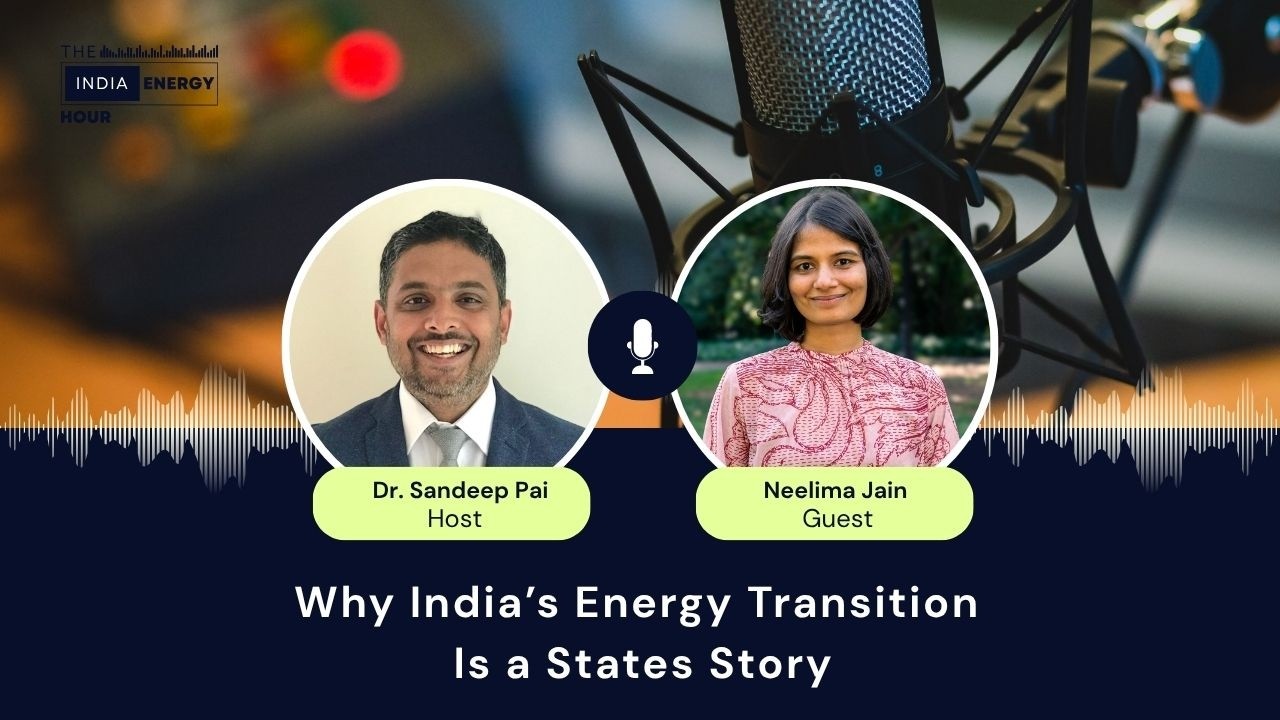
Why India’s Energy Transition Is a States Story | ft. Neelima Jain
Keywords
Summary
151 words
Critical Evaluation
Value of the Information & Strength of the Argument
The episode provides valuable firsthand insights into the operational realities of implementing large-scale energy programs in India. Jain’s narrative of UJALA illustrates the importance of state-level engagement and the need to customize approaches for different political and bureaucratic contexts. Her argument that states are the decisive arena for energy transition is well-supported by constitutional analysis, fiscal arrangements, and practical examples. The discussion also offers comparative perspectives with US states, highlighting common challenges and potential for learning. The argumentation is coherent and grounded in extensive professional experience, though it relies more on anecdotal evidence than systematic data.
Scientific Rigor, Source Quality, Title Accuracy
The episode maintains a high level of rigor in its discussion, with Jain referencing specific institutions (EESL, CSIS, UC Berkeley) and programs (UJALA, CDM). However, no formal sources are cited, and the conversation is based on expert opinion rather than published research. The title accurately reflects the content, focusing on the role of states in India’s energy transition. The discussion is well-structured and stays on topic, with minimal digressions. The absence of formal citations is typical for a podcast format but limits the ability to verify claims independently.
199 words
Title / Content Match
The title accurately reflects the core theme: the critical role of Indian states in the energy transition, as argued by the guest.
Quality & Reliability
8/10
The episode features a highly experienced practitioner with direct involvement in major Indian energy programs (UJALA, EESL), providing credible insider perspectives. The discussion is grounded in practical experience and references to institutional frameworks, though it lacks formal citations or data verification.
Key Moments
Markers derived by PSI from the transcript: the creator did not define chapters.
- Introduction to the podcast and guest Neelima Jain.
- Jain discusses her early career in software testing and entry into the energy sector.
- Jain recounts her work on the Bachat Lamp project and the importance of MRV.
- Jain describes her experience with Pollinate Energy and the impact of energy access.
- Jain explains her role in scaling up UJALA and the challenges of state-level implementation.
- Discussion on why states matter for India's energy transition, citing constitutional and fiscal reasons.
- Comparison of US and Indian states in energy transition, with examples of institutional pairing.
- Jain discusses the importance of local political dynamics and the need for tailored approaches.
- Reflections on the evolution of awareness and engagement in the energy sector.
- Closing thoughts on the future of state-level energy transitions and the role of institutions.
Cited Sources
- India Energy and Climate Center, UC Berkeley — Neelima Jain's current affiliation, mentioned as her institutional base.
- EESL (Energy Efficiency Services Limited) — The organization where Jain worked on UJALA and other programs.
- CSIS (Center for Strategic and International Studies) — Jain's previous employer, where she worked on US-India state cooperation.
Concurring Sources
- India Energy and Climate Center, UC Berkeley — The center's research on India's energy transition aligns with the episode's themes.
- EESL (Energy Efficiency Services Limited) — EESL's official website provides information on UJALA and other programs, corroborating the discussion.
Contribution & Novelties
The episode offers a unique practitioner perspective on the role of states in India’s energy transition, drawing on Neelima Jain’s extensive experience in implementing large-scale programs like UJALA. It highlights the practical challenges of state-level policy implementation and the importance of tailoring approaches to local contexts. The comparative analysis with US states provides valuable insights for international cooperation.
Pour aller plus loin :
- UJALA scheme — Background on the LED bulb program discussed in the episode.
- Concurrent List of the Indian Constitution — Explains the constitutional basis for state involvement in electricity.
- Clean Development Mechanism — Context for the carbon finance project mentioned.
103 words
Radar Profile
The radar profile shows high scores in quality and reliability, reflecting the guest's expertise and the coherent argumentation. The lower score in technical level indicates that the discussion is accessible to a general audience, while the quantity of information is moderate, typical for a podcast interview.
💬 No comments were provided for analysis.