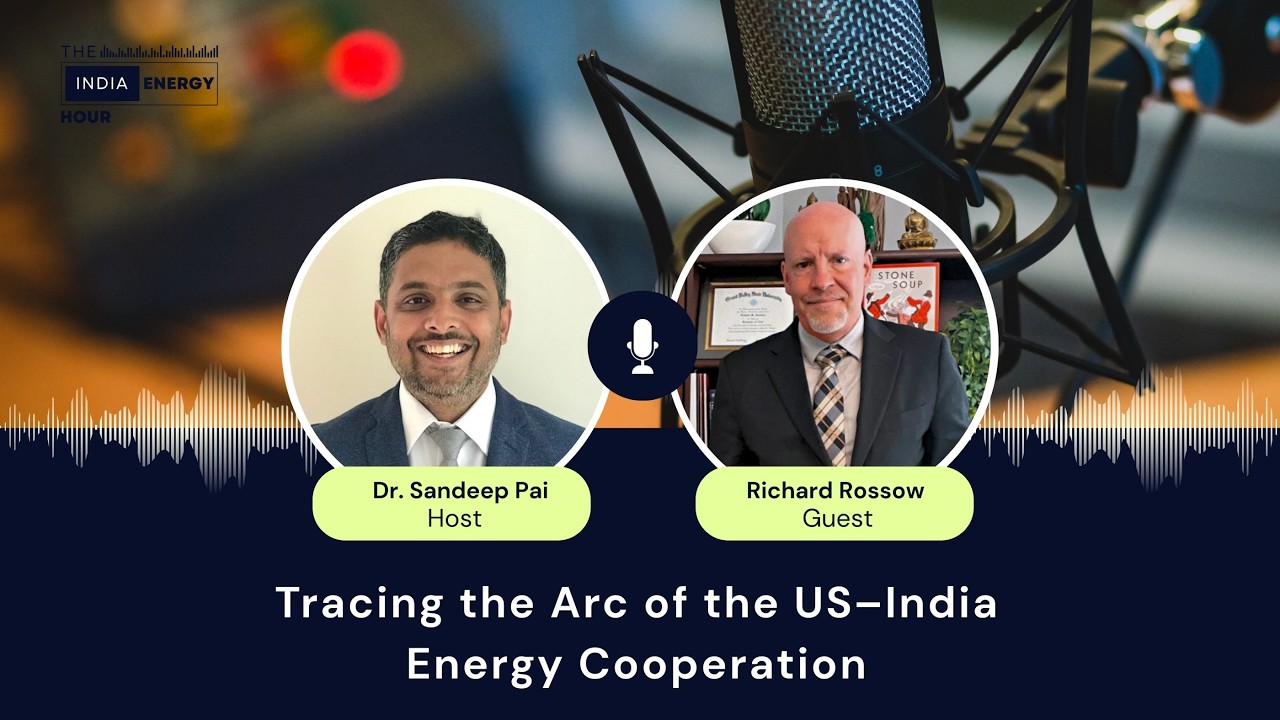
Episode 87: Tracing the Arc of the US–India Energy Cooperation | ft. Richard Rossow
Keywords
Summary
158 words
Critical Evaluation
Value of the Information & Strength of the Argument
The value of the information lies in the unique perspective of a seasoned practitioner with decades of direct involvement in US-India relations. Rossow provides historical context and personal anecdotes that enrich the discussion, offering insights not commonly found in academic literature. His argumentation is coherent, drawing on his experience to support claims about the evolution of energy cooperation and the role of private capital. However, the discussion is largely anecdotal and lacks rigorous data or citations, making it more of an expert opinion than a systematic analysis. The hosts facilitate a thoughtful conversation, but the depth of technical detail is limited, suitable for a general audience rather than specialists.
Scientific Rigor, Source Quality, Title Accuracy
The scientific rigor is moderate: the episode is an expert interview rather than a peer-reviewed analysis. Rossow references historical events and policies, but specific sources are not cited within the conversation. The description provides links to the transcript, the presenting organization (101Reporters), and social media profiles, but no direct references to academic papers or official reports. The title accurately reflects the content, focusing on the arc of US-India energy cooperation. The discussion is well-structured and stays on topic, with minimal digressions. The lack of formal citations and the reliance on personal recollection slightly detract from the overall rigor, but the expertise of the guest lends credibility.
230 words
Title / Content Match
The title accurately reflects the content, which traces the evolution of US-India energy cooperation from the 2005 Civil Nuclear Agreement to current clean energy and LNG collaboration.
Quality & Reliability
7/10
The episode features a recognized expert from CSIS with deep experience in US-India relations, providing informed analysis. However, it is primarily an opinion/discussion format with limited verifiable data or citations, and the low viewership suggests limited peer or public scrutiny.
Key Moments
Markers derived by PSI from the transcript: the creator did not define chapters.
- Introduction of Richard Rossow and his background, including his early career with the US-India Business Council.
- Discussion on the historical evolution of US-India relations, from the Cold War estrangement to the 2005 Civil Nuclear Agreement.
- Exploration of current energy cooperation, focusing on clean energy and LNG trade.
- Analysis of the role of private capital in driving energy investments between the two countries.
- Rossow's reflections on the future of US-India energy ties and the emerging importance of Indian cities in politics.
- Concluding remarks on milestones to watch over the next decade in building a resilient low-carbon future.
Cited Sources
- 101Reporters — Presenting organization of the podcast, a network of grassroots reporters in India.
- Full transcript of the episode — Transcript of the episode, providing a written record of the discussion.
- Sandeep Pai's LinkedIn — Host's professional profile, indicating his background as an energy transition researcher.
- Shreya Jai's LinkedIn — Host's professional profile, indicating her role as an energy and climate journalist.
Concurring Sources
- CSIS India Chair — The program at CSIS that Richard Rossow leads, focusing on India's commercial environment and energy.
Contribution & Novelties
The episode offers a unique insider perspective on US-India energy cooperation, blending historical context with current policy discussions. Rossow’s personal journey and extensive experience provide a nuanced understanding of the bilateral relationship, particularly the role of subnational actors and the growing importance of private capital. The discussion also highlights the strategic significance of energy ties in the broader geopolitical landscape.
Pour aller plus loin :
- US-India Civil Nuclear Agreement — Provides background on the 2005 agreement that marked a turning point in bilateral relations.
- Center for Strategic and International Studies (CSIS) — The think tank where Richard Rossow works, offering additional research on India and energy.
- International Energy Agency (IEA) India page — Offers data and analysis on India’s energy sector, relevant to the discussion.
- Liquefied Natural Gas (LNG) trade — Explains the LNG market, a key topic in the episode.
141 words
Radar Profile
The radar profile shows balanced scores across information quantity, quality, and reliability, with a slightly lower technical level. This indicates a well-rounded discussion suitable for a general audience, with strong expert input but limited technical depth.