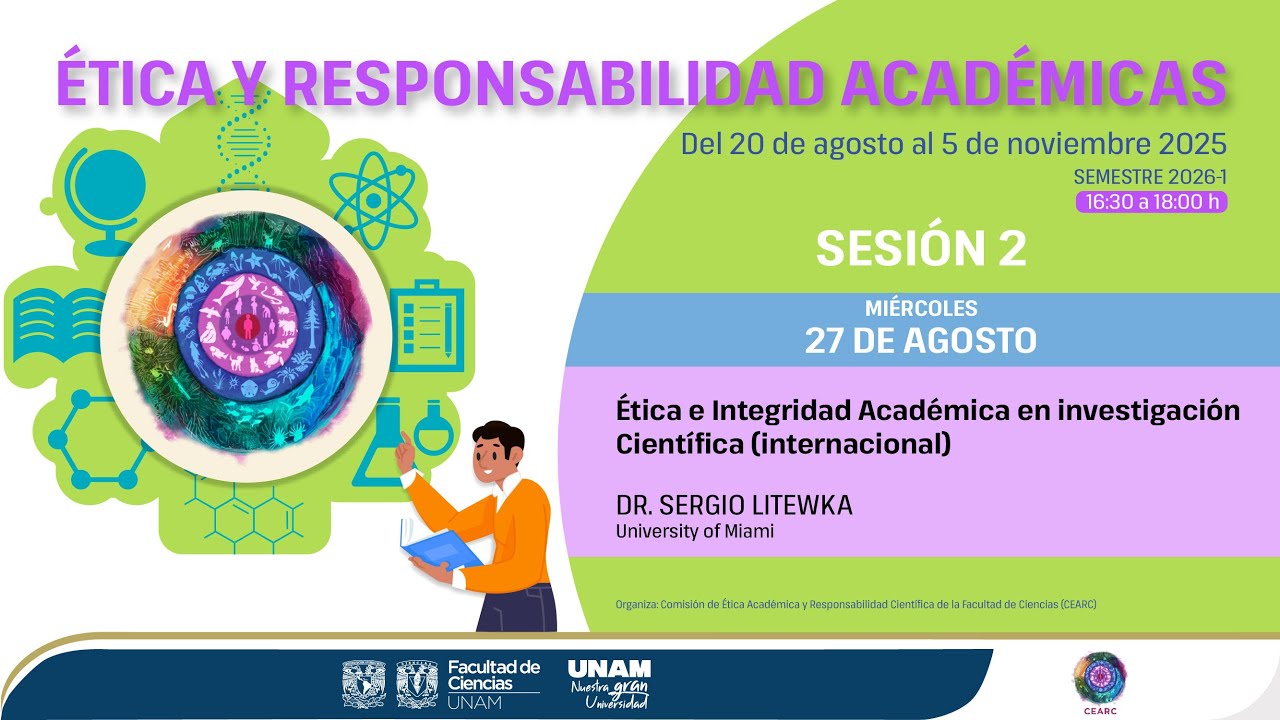
Ética e Integridad Académica en investigación Científica (internacional)
Keywords
Summary
215 words
Critical Evaluation
Value of the Information & Strength of the Argument
The lecture provides valuable insights into the current state of research integrity, drawing on the speaker’s extensive experience. It offers a comprehensive overview of definitions, principles, and international frameworks. The argumentation is coherent and well-structured, moving from general concepts to specific examples and regional comparisons. The speaker effectively highlights the gap between rhetoric and practice, particularly in Latin America. He uses concrete examples like paper mills and survey data to support his points. However, some arguments rely on anecdotal evidence or personal experience rather than systematic data, and the lecture does not delve deeply into solutions or best practices.
Scientific Rigor, Source Quality, Title Accuracy
The speaker demonstrates strong expertise and references established definitions (e.g., US ORI) and codes (e.g., ALLEA). He mentions specific studies and reports, but often without providing full citations or URLs. The title accurately reflects the content. The lecture is scientifically rigorous in its conceptual framework, but the lack of detailed source citations limits its verifiability. The speaker’s authority and the institutional context (UNAM) lend credibility. The content is well-aligned with the title, focusing on international perspectives on academic ethics and integrity.
195 words
Title / Content Match
The title accurately reflects the content, which focuses on academic ethics and integrity in scientific research from an international perspective.
Quality & Reliability
8/10
The speaker is a recognized expert in bioethics and research integrity, with extensive experience in international training and policy. The content is well-structured, references established definitions and codes, and includes concrete examples. However, it is primarily an opinion/lecture, not a systematic review, and some claims lack specific citations.
Key Moments
Markers derived by PSI from the transcript: the creator did not define chapters.
- Introduction and speaker presentation by the host.
- Definition of scientific integrity and its components.
- Discussion on the principles of integrity: honesty, objectivity, rigor, respect, transparency, accountability.
- Definition of scientific misconduct: fabrication, falsification, plagiarism.
- Examples of questionable research practices: honorary authorship, exclusion of authors, statistical manipulation.
- Discussion on the rise of paper mills and the impact of publication pressure.
- International frameworks: European Code of Conduct (ALLEA), Denmark, UK Research Integrity Office.
- Challenges in Latin America: lack of regulations and resources, reference to the 2003 Mexican study.
- Importance of clear definitions and procedures for handling allegations, protecting whistleblowers.
- Conclusion: need for institutional commitment and public trust in science.
Cited Sources
- European Code of Conduct for Research Integrity (ALLEA) — Mentioned as a key European framework defining good research practices and misconduct.
- US Office of Research Integrity (ORI) definition of misconduct — Cited as the basis for the definition of fabrication, falsification, and plagiarism.
- UK Research Integrity Office (UKRIO) — Mentioned as a non-governmental advisory body on research integrity.
Concurring Sources
- ALLEA European Code of Conduct — Aligns with the speaker's emphasis on clear definitions and procedures.
- US ORI definition of misconduct — Provides the standard definition used in the lecture.
Dissenting Sources
- Some researchers argue that misconduct rates are not increasing significantly — The speaker suggests an increase in misconduct, but some studies indicate that the rise in retractions may be due to increased scrutiny and detection, not necessarily a rise in misconduct.
Contribution & Novelties
The lecture provides a comprehensive overview of research integrity from an international perspective, emphasizing the challenges in Latin America. It highlights the gap between having codes and implementing effective procedures. The speaker’s experience with international training programs adds practical insights. The discussion of paper mills and the impact of publication pressure is particularly timely.
Pour aller plus loin :
- Committee on Publication Ethics (COPE) — Provides guidelines and resources for editors and publishers on handling misconduct.
- Retraction Watch — Tracks retractions and discusses cases of scientific misconduct.
- The Hong Kong Principles for Assessing Researchers — Principles for assessing researchers to incentivize research integrity.
103 words
Radar Profile
The radar profile shows high scores in information quantity, quality, and reliability, reflecting the speaker's expertise and the comprehensive coverage. The technical level is moderate, making it accessible to a broad academic audience. The overall profile indicates a well-balanced and credible presentation.
💬 No comments were provided for analysis.