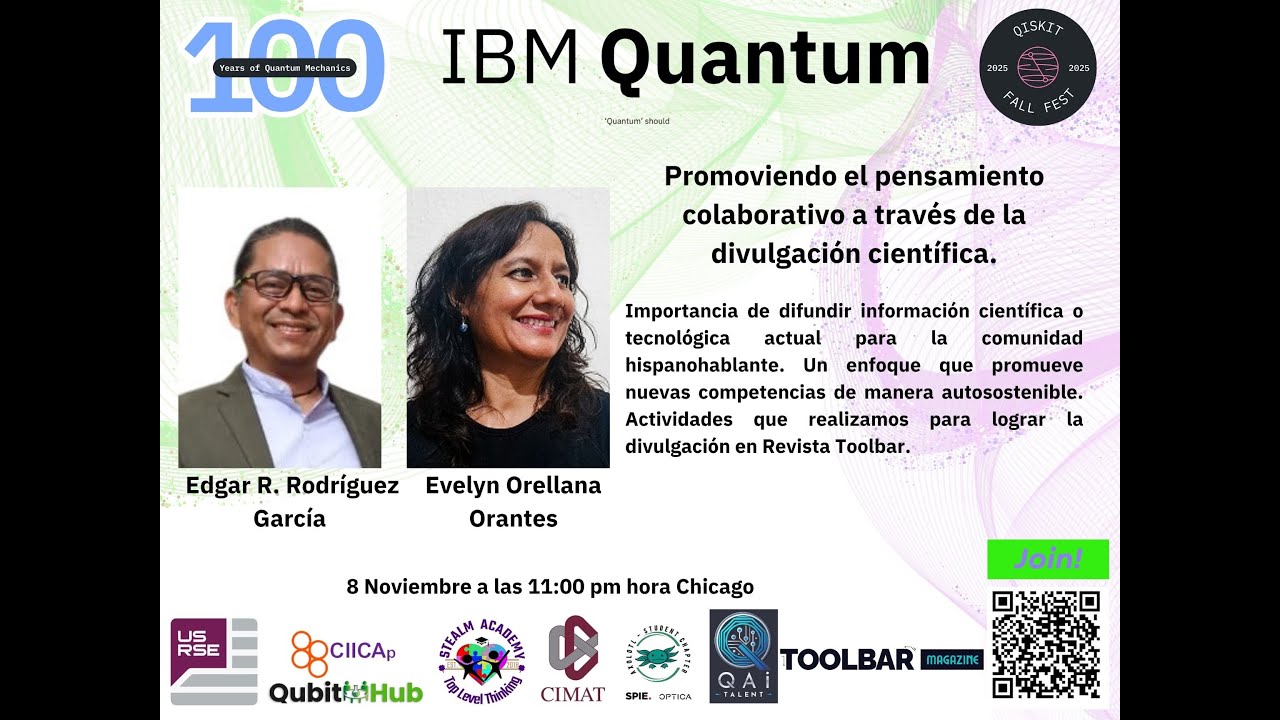
Promoviendo el pensamiento colaborativo a través de la divulgación científica
Keywords
Summary
221 words
Critical Evaluation
Value of the Information & Strength of the Argument
The talk provides valuable insights into the practice of science communication, particularly from the perspective of a Spanish-language digital magazine. The speakers argue convincingly for the importance of inclusive and collaborative approaches, drawing on their own experiences and the UNESCO declaration on the right to science. They use the anecdote of George Dantzig to illustrate the potential of inclusive education, and they reference Lera Boroditsky’s research to support the idea that language shapes thought. The argumentation is coherent and well-structured, though it relies heavily on personal experience and general principles rather than specific data or case studies. The emphasis on the role of translators as interpreters of scientific knowledge is a thoughtful contribution to the discourse on science communication.
Scientific Rigor, Source Quality, Title Accuracy
The speakers demonstrate a good understanding of the subject, but the scientific rigor is moderate. They mention the UNESCO right to science and Lera Boroditsky’s work, but do not provide specific citations or links. The title accurately reflects the content, which is focused on promoting collaborative thinking through science communication. The talk is more of an expert opinion than a rigorous scientific presentation, but it is well-argued and grounded in the speakers’ professional backgrounds. The lack of direct references to specific studies or articles is a limitation for those seeking to verify the claims.
228 words
Title / Content Match
The title accurately reflects the content, which focuses on promoting collaborative thinking through science communication.
Quality & Reliability
7/10
The talk is an expert opinion based on the speakers' extensive professional experience and academic background. They reference the UNESCO right to science and mention cognitive scientist Lera Boroditsky, but provide no direct citations or links to specific studies. The content is coherent and well-structured, but lacks verifiable sources for some claims.
Key Moments
Markers derived by PSI from the transcript: the creator did not define chapters.
- Introduction of the speakers and their backgrounds.
- Motivation for starting the magazine during the pandemic.
- Discussion on the right to science and UNESCO's declaration.
- Anecdote about George Dantzig and inclusive education.
- Reference to Lera Boroditsky's research on language and thought.
- Explanation of the collaborative model used by the magazine.
- Emphasis on the role of translators in science communication.
- Discussion on the personal and professional benefits of science communication.
- Invitation to view the magazine as a stepping stone for further exploration.
Cited Sources
- UNESCO Declaration on the Right to Science — Mentioned as a basis for the right to science.
- Lera Boroditsky's TED Talk on Language and Thought — Referenced to support the idea that language shapes thought.
Concurring Sources
- UNESCO Recommendation on Science and Scientific Researchers — Supports the right to science and the importance of science communication.
Contribution & Novelties
The talk offers a unique perspective on science communication from a Spanish-language magazine, emphasizing the importance of linguistic and cultural inclusivity. It highlights the collaborative model as a key to effective dissemination. The speakers’ personal experiences and the anecdote about George Dantzig provide concrete examples of the impact of inclusive education.
Pour aller plus loin :
- Science Communication on Wikipedia — Overview of the field.
- The Right to Science on UNESCO — Official declaration.
- Lera Boroditsky’s Research — Talk on language and thought.
83 words
Radar Profile
The radar profile shows moderate scores across all dimensions, with slightly higher scores in quantity and quality of information, reflecting the talk's informative nature but limited technical depth. The low technical score indicates that the content is accessible to a general audience.
💬 No comments were provided for analysis.