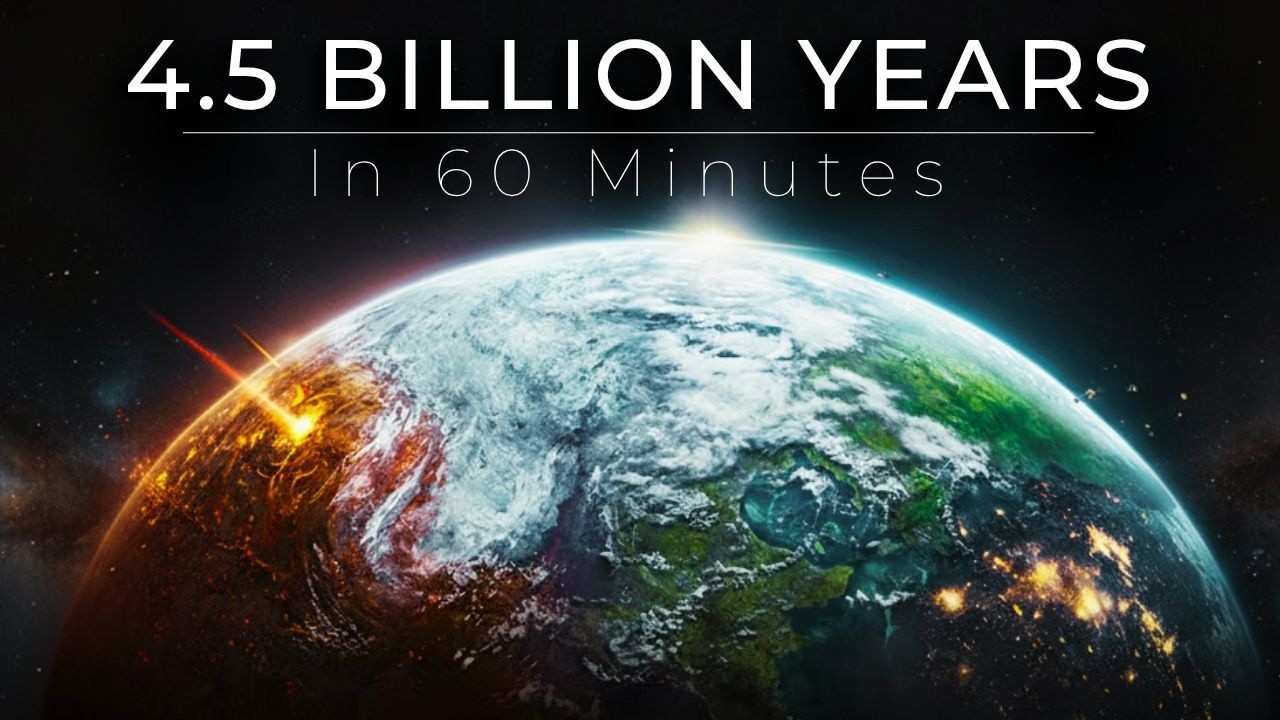
The Untold History of Earth and Life | FULL DOCUMENTARY
Keywords
Summary
154 words
Critical Evaluation
The documentary offers a compelling and largely accurate narrative of Earth’s history, synthesizing well-established scientific knowledge. It excels in making complex concepts accessible to a general audience without oversimplifying to the point of error. The use of specific examples, such as zircon dating, the Theia impact, and the Great Oxidation Event, grounds the narrative in real science. However, the lack of explicit citations to primary sources is a notable weakness; while the information is generally correct, a viewer cannot easily verify claims or explore further. The argumentation is coherent, but the dramatic tone sometimes borders on sensationalism, potentially exaggerating the ‘catastrophic’ nature of events for effect. The documentary’s strength lies in its ability to convey the vast timescales and the interconnectedness of Earth’s systems, but it could benefit from more nuanced discussion of scientific debates, such as the exact triggers of Snowball Earth or the origins of water. Overall, it is a valuable educational resource, though not without minor simplifications.
160 words
Title / Content Match
The title accurately reflects the content, which covers the full history of Earth and life, though it emphasizes dramatic narrative over exhaustive detail.
Quality & Reliability
7/10
The documentary presents a broad overview of Earth's history with generally accurate scientific content, referencing specific events and concepts (e.g., zircon dating, Theia impact, Great Oxidation Event). However, it lacks direct citations to primary sources and simplifies complex processes, which slightly reduces its reliability for a specialist audience.
Key Moments
Markers derived by PSI from the transcript: the creator did not define chapters.
- Introduction to the harsh early Earth and the question of why life exists.
- Formation of the solar system from a collapsing cloud, possibly triggered by a supernova.
- The Theia impact and the formation of the Moon, stabilizing Earth's tilt.
- Delivery of water by asteroids during the late heavy bombardment.
- The Great Oxidation Event and the poisoning of anaerobic life.
- Snowball Earth episodes and the runaway thaw caused by volcanic CO2.
- The Cambrian explosion and the subsequent evolution of complex life.
Cited Sources
- No specific sources cited in the video description — The description does not include any links or references to scientific sources.
Concurring Sources
- NASA - Earth's Moon — NASA's overview of the Moon's formation and its role in stabilizing Earth's tilt.
- USGS - Banded Iron Formations — USGS article explaining banded iron formations as evidence of early oxygen production.
Dissenting Sources
- Alternative theories on water origin — Some studies suggest a significant portion of Earth's water may have been present during accretion, rather than delivered later by asteroids, challenging the late heavy bombardment hypothesis.
Contribution & Novelties
The documentary provides a comprehensive and engaging synthesis of Earth’s history, emphasizing the role of catastrophic events in shaping habitability. It effectively communicates the concept of deep time and the interconnectedness of geological and biological processes.
Pour aller plus loin :
- Great Oxidation Event — Provides detailed scientific background on the event and its consequences.
- Snowball Earth — Explores the hypothesis and evidence for global glaciation.
- Theia (planet) — Discusses the hypothetical planet that collided with Earth to form the Moon.
81 words
Radar Profile
The radar profile shows high scores in quantity of information and reliability, reflecting the documentary's comprehensive coverage and generally accurate content. The moderate score in technical level indicates that while it is accessible, it does not delve into advanced scientific detail.
💬 Sur les 0 commentaires analysés, aucune tendance n'est disponible.