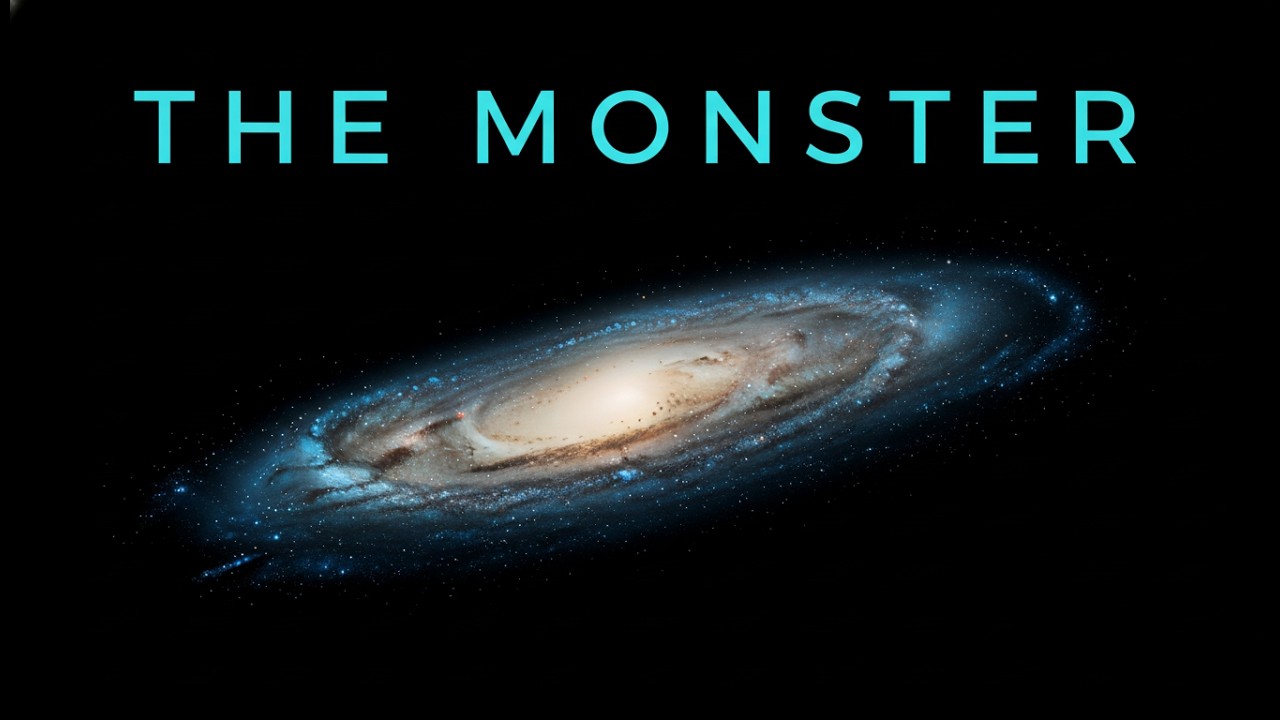
Why Andromeda is More Dangerous Than You Think
Keywords
Summary
160 words
Critical Evaluation
The video provides a thorough and engaging exploration of the scale of the Andromeda galaxy, using a pedagogical approach that builds from familiar scales to cosmic ones. The scientific facts presented are accurate: Andromeda is indeed about 2.5 million light-years away, contains roughly a trillion stars, and spans about 220,000 light-years. The collision with the Milky Way in about 4 billion years is a well-established prediction. The video effectively uses analogies, such as driving times and light travel, to make these vast distances more relatable. However, the video lacks explicit citations to scientific sources, which reduces its credibility for a rigorous audience. The title suggests a focus on ‘danger’, but the content primarily emphasizes scale and structure, with only brief mentions of the collision and the central black hole. This mismatch may disappoint viewers expecting a discussion of threats. The video’s strength lies in its ability to convey cosmic scale and inspire wonder, but it could be improved by including references to studies or observations, such as those from the Hubble Space Telescope. The pacing is slow, with a 2.5-hour runtime, which may be excessive for the content covered. Overall, the video is scientifically sound but could benefit from more depth on the ‘dangerous’ aspects and better sourcing.
208 words
Title / Content Match
The title suggests a focus on danger, but the video primarily explores Andromeda's scale and structure, with only brief mentions of collision and black holes. The title is somewhat misleading.
Quality & Reliability
7/10
The video provides accurate astronomical facts (distances, sizes, speeds) and uses analogies to convey scale. However, it lacks citations to primary sources, and the title's 'dangerous' aspect is not substantively addressed. The content is generally reliable but not deeply sourced.
Key Moments
Markers derived by PSI from the transcript: the creator did not define chapters.
- Introduction: Andromeda's light has traveled 2.5 million years to reach us.
- The problem with numbers: understanding large scales.
- Earth and the Sun: distances in our solar system.
- The Oort Cloud and the edge of the solar system.
- Proxima Centauri: our nearest star.
- The Milky Way: our home galaxy.
- The scale of the Milky Way and our place in it.
- Introduction to Andromeda: distance and size.
- Andromeda's trillion stars and its structure.
- The supermassive black hole at Andromeda's core.
- The future collision with the Milky Way.
Cited Sources
- NASA - Andromeda Galaxy — Referenced in the video's description as a source for information about Andromeda.
- ESA/Hubble - Andromeda Galaxy — Likely source for images and facts about Andromeda.
Concurring Sources
- NASA - Andromeda Galaxy — Confirms Andromeda's distance and size.
- ESA/Hubble - Andromeda Galaxy — Provides images and data consistent with the video.
Contribution & Novelties
The video’s original contribution is its pedagogical approach to conveying cosmic scale through a ladder of comparisons, making abstract distances tangible. It effectively uses analogies to everyday experiences to build intuition. However, it does not present new scientific findings; it synthesizes known facts.
Pour aller plus loin :
- Andromeda Galaxy (Wikipedia) — Comprehensive overview of Andromeda’s properties and history.
- Milky Way–Andromeda collision (Wikipedia) — Details on the predicted collision and its consequences.
- Supermassive black hole (Wikipedia) — Background on the black holes at galactic centers.
85 words
Radar Profile
The radar profile shows high scores in quantity of information and technical level, indicating a content-rich video with moderate depth. Quality and reliability are slightly lower due to lack of citations. Overall, a solid educational resource.