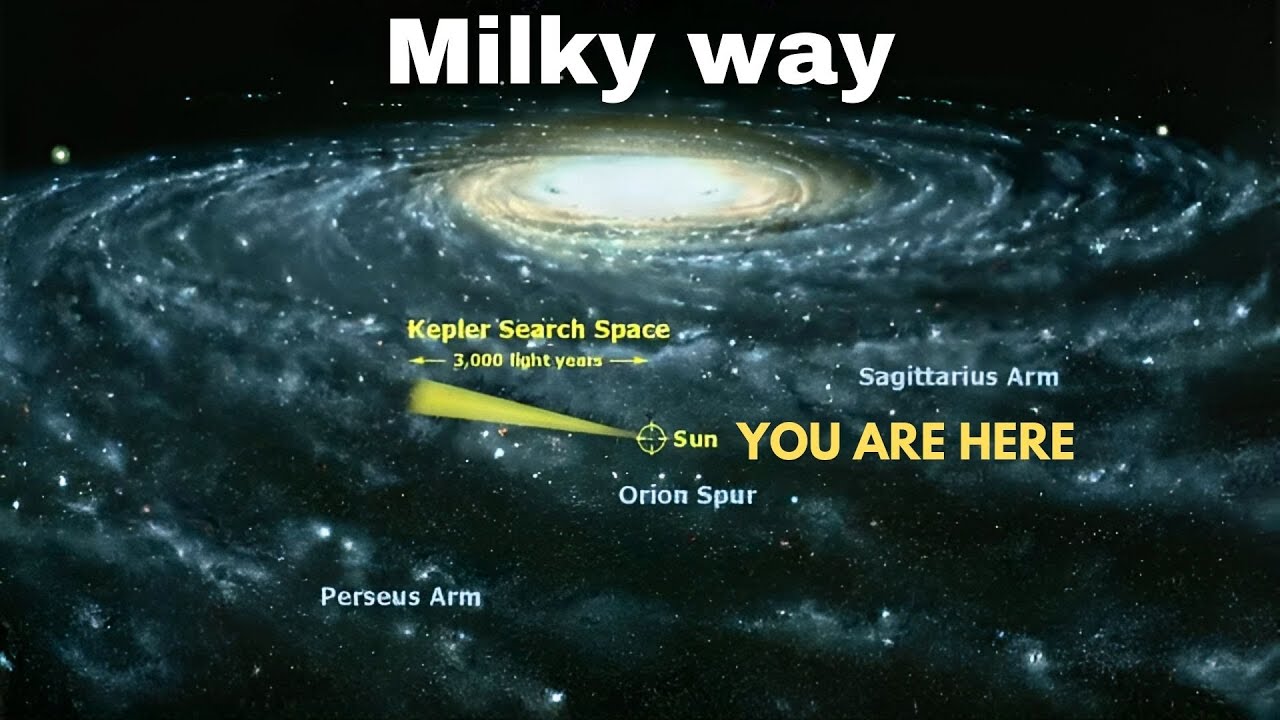
Let's Journey to the Center of the Milky Way Galaxy. #spacedocumentary
Keywords
Summary
181 words
Critical Evaluation
The documentary ‘Let’s Journey to the Center of the Milky Way Galaxy’ offers a visually stunning and narratively engaging overview of our galaxy. Its primary strength lies in its ability to communicate complex astronomical concepts to a broad audience without oversimplifying to the point of inaccuracy. The use of analogies, such as comparing the galaxy to a city and the overview effect, helps ground abstract scales in relatable terms. The content is generally scientifically accurate, reflecting current understanding of the Milky Way’s structure, stellar lifecycles, and the presence of a supermassive black hole at its core. However, the documentary lacks explicit citations to primary sources, which limits its utility for those seeking to verify specific claims. Some statements, such as the exact number of stars or the precise distance to the galactic center, are presented as definitive but are actually estimates that could vary. Additionally, the documentary occasionally anthropomorphizes cosmic phenomena, which, while engaging, may blur the line between poetic description and scientific fact. The pacing is well-structured, with clear chapters that guide the viewer through different aspects of the galaxy. The inclusion of future galactic collision with Andromeda adds a compelling narrative arc, though it is presented with a certainty that might be overstated given the uncertainties in galactic dynamics. Overall, the documentary serves as an excellent introduction to galactic astronomy, but it should be supplemented with more rigorous sources for those seeking deeper scientific detail. The title accurately reflects the content, and the production quality is high, making it a valuable educational resource for general audiences.
258 words
Title / Content Match
The title accurately reflects the content: a journey from Earth to the galactic center, covering various aspects of the Milky Way. The documentary does indeed take the viewer on a narrative voyage, though it also extends beyond the center to discuss the galaxy's future and broader cosmic context.
Quality & Reliability
7/10
The documentary provides a broad overview of the Milky Way galaxy, covering its structure, stellar phenomena, and the supermassive black hole. It relies on established scientific concepts and mentions specific facts (e.g., distance to galactic center, number of stars) that align with current astronomical knowledge. However, it lacks explicit citations to primary sources, and some statements are simplified or lack nuance. The production quality is high, but the scientific depth is moderate, making it a reliable introductory resource.
Chapters
- The Ghostly River of Light (Introduction)
- Leaving Earth: The Pale Blue Dot Fades
- Mapping the Impossible City of Stars
- Stellar Nurseries: Where Stars Are Born
- Stellar Cataclysms: The Death of Giants
- Heart of Darkness: The Monster at Our Core
- Galactic Genesis: The Ancient Past
- Our Galactic Neighborhood: Friends & Foes
- The Cosmic Cradle: Are We Alone?
- Hazards of the Milky Way: Cosmic Threats
- Cosmic Legacy: Our Place in the Universe
- We Are The Galaxy (Conclusion)
Contribution & Novelties
This documentary synthesizes a wide range of astronomical knowledge into a cohesive narrative, providing viewers with a comprehensive understanding of the Milky Way’s structure, stellar phenomena, and the supermassive black hole at its center. Its original contribution lies in its accessible presentation of complex concepts, making it a valuable educational tool for those new to astronomy. It does not present new scientific findings but rather compiles existing knowledge in an engaging format.
Pour aller plus loin :
- Milky Way (Wikipedia) — Comprehensive overview of the galaxy’s structure, history, and scientific study.
- Sagittarius A* (Wikipedia) — Detailed information about the supermassive black hole at the galactic center.
- Galactic Habitable Zone (Wikipedia) — Explanation of the concept of a region in the galaxy conducive to life.
- Andromeda–Milky Way collision (Wikipedia) — Overview of the predicted future collision between our galaxy and Andromeda.
140 words
Radar Profile
The radar profile shows high scores in quantity of information and fiabilité globale, indicating a content-rich and generally reliable documentary. The niveau technique is moderate, reflecting its accessibility to a general audience, while the qualité information is also strong, suggesting accurate and well-presented content. Overall, the documentary is a solid educational resource.