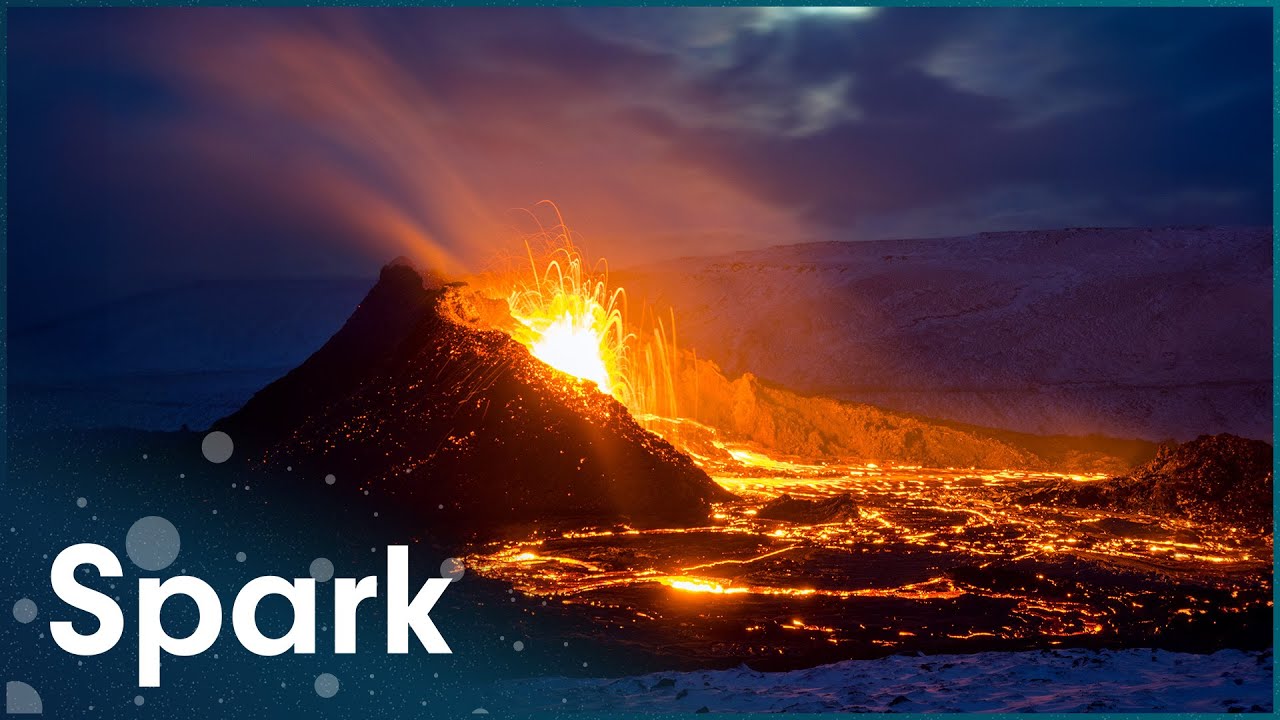
The Unmatched Raw Power Of Iceland's Volcanic Landscape
Keywords
Summary
147 words
Critical Evaluation
The documentary provides a compelling and informative overview of Iceland’s volcanic activity, effectively combining stunning visuals with expert commentary. The scientific content is generally accurate, with volcanologists explaining concepts such as magma chambers, hotspot plumes, and deformation monitoring in accessible terms. The inclusion of specific examples, like the 2010 Eyjafjallajökull eruption and the monitoring of Grímsvötn, adds credibility and helps illustrate the real-world implications of volcanic activity. However, the documentary lacks explicit references to peer-reviewed studies or detailed data, which limits its scientific depth. Some segments, particularly those involving dramatic reenactments or metaphors (e.g., the soufflé analogy), may oversimplify complex geological processes. The film also tends to emphasize the catastrophic potential of volcanoes, which, while engaging, could be seen as sensationalist. The adéquation between title and content is strong, as the documentary indeed focuses on the raw power of Iceland’s volcanoes. Overall, it serves as a good introductory resource for general audiences, but it does not provide the rigorous analysis expected in a purely scientific context.
166 words
Title / Content Match
The title accurately reflects the content, focusing on the power and danger of Iceland's volcanic landscape.
Quality & Reliability
7/10
The documentary features interviews with established volcanologists (Páll Einarsson, Björn Oddsson, Hazel Rymer, Erik Sturkell) and presents scientific methods (gravity measurements, GPS monitoring, seismic sensors) accurately. However, it lacks detailed citations or references to specific studies, and some dramatic elements may oversimplify complex processes.
Key Moments
Markers derived by PSI from the transcript: the creator did not define chapters.
- Introduction to Iceland's volcanic origins and the 2010 Eyjafjallajökull eruption.
- Interview with Páll Einarsson about the 30 active volcanoes in Iceland.
- Introduction to the four 'sleeping giants': Hekla, Katla, Askja, and Grímsvötn.
- Björn Oddsson explains the Grímsvötn caldera and the hotspot beneath Iceland.
- Discussion of subglacial eruptions and the danger of ash to aircraft.
- Hazel Rymer demonstrates gravity measurements at Askja to track magma movement.
- Erik Sturkell discusses the deflation of Askja and the possibility of future eruptions.
- Exploration of Katla's history and its potential for a major eruption.
- The role of seismic sensors and GPS in monitoring volcanic activity.
- Conclusion summarizing the ongoing threat and the importance of monitoring.
Cited Sources
- Spark YouTube Channel — The channel that published the documentary.
Concurring Sources
- Icelandic Meteorological Office — Provides official monitoring data and alerts for Icelandic volcanoes, consistent with the documentary's depiction of surveillance.
- Global Volcanism Program — Offers scientific data on volcanic activity, supporting the documentary's claims about the number and activity of Icelandic volcanoes.
Dissenting Sources
- No discordant sources found — The documentary's content aligns with established scientific knowledge; no conflicting sources were identified.
Contribution & Novelties
The documentary provides a comprehensive overview of Iceland’s volcanic systems, highlighting the work of volcanologists and the technologies used for monitoring. It offers a unique perspective on the four major volcanoes and the risks they pose. The film effectively communicates the scientific concepts to a general audience, making it a valuable educational resource.
Pour aller plus loin :
- Icelandic Meteorological Office - Volcanic monitoring — Official source for real-time volcanic activity and monitoring in Iceland.
- Global Volcanism Program - Smithsonian Institution — Comprehensive database of volcanoes worldwide, including Iceland’s.
- Eyjafjallajökull eruption 2010 - Wikipedia — Detailed account of the 2010 eruption and its impacts.
104 words
Radar Profile
The radar profile shows high scores in quantity of information and fiabilité, reflecting the documentary's comprehensive coverage and credible expert interviews. The level of technical detail is moderate, making it accessible to a broad audience. The overall balance indicates a reliable educational resource.
💬 No comments were provided for analysis.