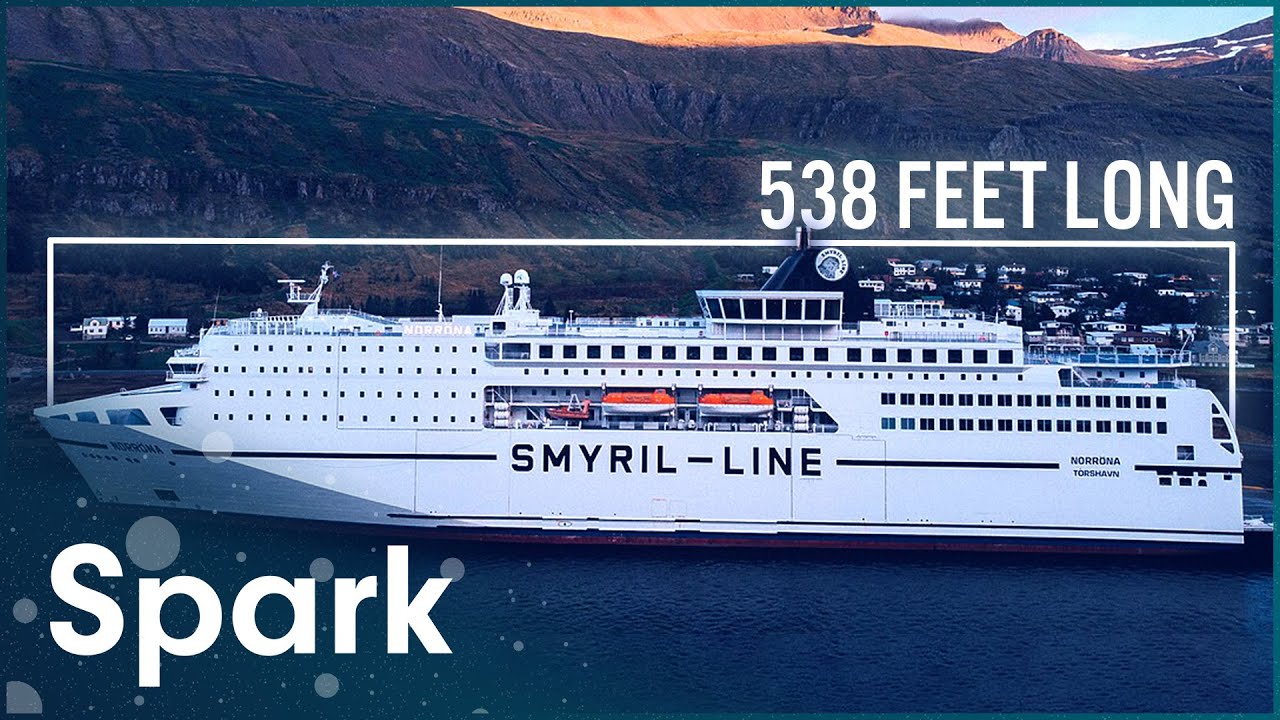
MS Norrona: The King Of The North Atlantic
Keywords
Summary
104 words
Critical Evaluation
The documentary offers a comprehensive and engaging look at the operations of a large ferry, providing valuable insights into maritime logistics and the challenges of North Atlantic navigation. The information is presented in an accessible manner, with clear explanations of technical procedures such as the 180-degree turn in port and the use of stabilizers. The interviews with crew members add authenticity and depth, showcasing their expertise and dedication. The film effectively conveys the importance of the Norröna to the Faroe Islands, both economically and socially, by highlighting its role in transporting fish, goods, and passengers. The documentary also touches on safety procedures, including emergency drills and the use of survival suits, which adds to its educational value. However, the documentary is not without limitations. It lacks critical analysis of the environmental impact of the ferry, such as fuel consumption and emissions, which is a significant consideration for modern shipping. Additionally, while the film mentions the economic value of the fish exports, it does not delve into the broader economic or geopolitical context of the route. The focus is primarily on the operational aspects, which may leave viewers wanting more in-depth analysis. The sources cited are limited to the documentary itself, with no external references provided. Overall, the documentary is a well-produced and informative piece that successfully captures the essence of life on a North Atlantic ferry, but it could benefit from a more critical perspective on the industry’s challenges.
239 words
Title / Content Match
The title accurately reflects the content, which focuses on the MS Norröna and its role as a dominant ferry in the North Atlantic.
Quality & Reliability
8/10
The documentary provides a detailed, behind-the-scenes look at the operation of a large ferry, featuring interviews with crew members and showing real procedures. The information appears accurate and is presented without obvious bias. However, it is not a scientific study and lacks external verification of specific claims.
Key Moments
Markers derived by PSI from the transcript: the creator did not define chapters.
- Introduction to the Norröna and its route.
- Captain performs a 180-degree turn to dock in Hirtshals.
- Loading of cargo, including a 87-ton excavator.
- Departure from Denmark and encounter with rough weather.
- UK Coastguard practices helicopter maneuvers.
- Arrival in Tórshavn, Faroe Islands, and quick turnaround.
- Captain adjusts ballast for fuel efficiency.
- Arrival in Seyðisfjörður, Iceland, and maintenance work.
- Emergency drill with survival suits.
- Viking-themed feast and final return to Denmark.
Cited Sources
- Smyril Line official website — The ferry operator's official site, providing details on the Norröna and its routes.
Concurring Sources
- Smyril Line official website — Confirms the ferry's route and schedule.
Contribution & Novelties
The documentary provides a rare, detailed look at the operations of a North Atlantic ferry, highlighting the technical and human aspects of maritime logistics. It offers insights into the challenges of navigating in harsh weather and the importance of such vessels to remote communities.
Pour aller plus loin :
- Ferry — General information on ferries and their role in transportation.
- North Atlantic Ocean — Overview of the North Atlantic’s geography and conditions.
- Stabilizer (ship) — Explanation of ship stabilizers and their function.
82 words
Radar Profile
The radar profile shows high scores in quantity and quality of information, with moderate technical level and high reliability. This indicates a well-balanced documentary that is informative and trustworthy, but not overly technical.
💬 Sur les 0 commentaires analysés, aucune tendance n'a pu être dégagée.