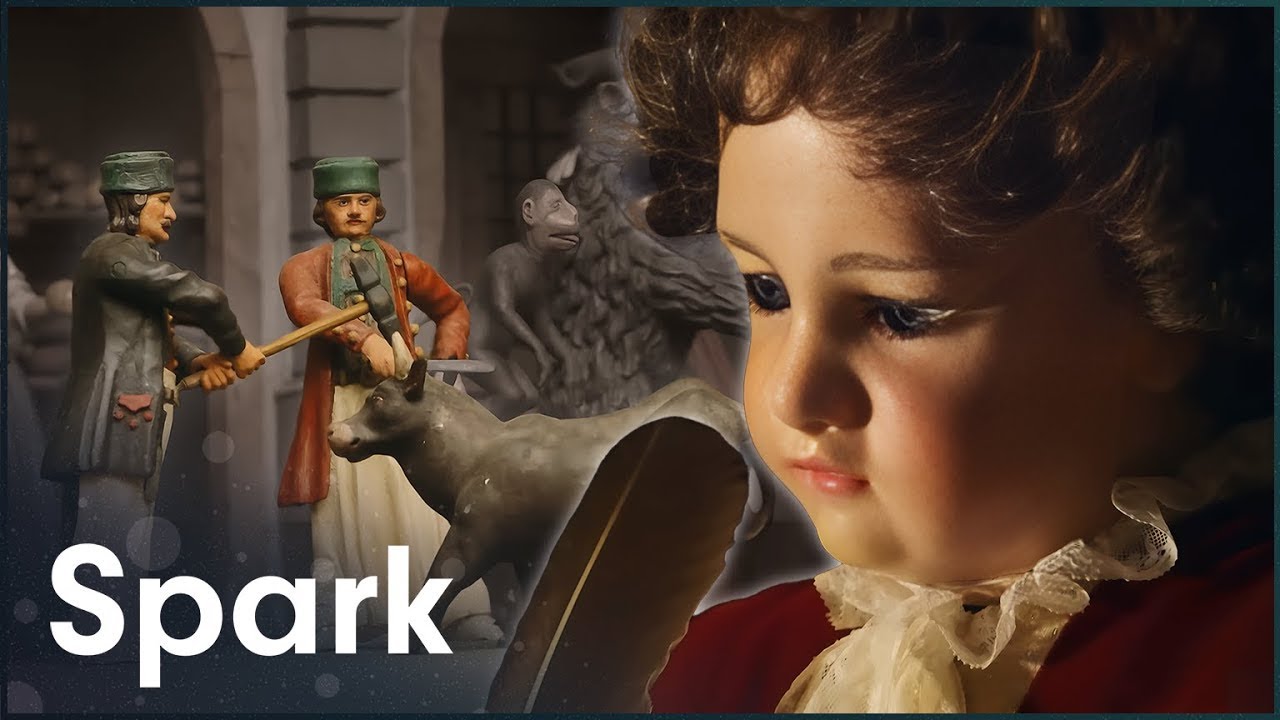
Automata: The Shockingly Advanced 17th Century Clockwork Robots
Keywords
Summary
177 words
Critical Evaluation
The documentary is a well-crafted and informative exploration of automata, offering a rich historical narrative that connects technological innovation with social and philosophical contexts. Professor Simon Schaffer’s presentation is engaging and authoritative, and the inclusion of expert commentary from Jonathan Betts adds technical depth. The film excels in illustrating the craftsmanship and ingenuity of clockwork artisans, using close-ups and demonstrations to convey the complexity of their work. The historical context is well-researched, with attention to the social conditions of artisans and the political uses of automata, such as the Hellbrunn Mechanical Theatre’s representation of a utopian society. The documentary also effectively raises philosophical questions about the nature of life and the boundaries between humans and machines, drawing on the ideas of Descartes and Vaucanson. However, there are some limitations. The documentary does not provide explicit citations for all historical claims, and some assertions, such as the fate of Vaucanson’s flute player, are based on incomplete records. Additionally, the focus on the 17th and 18th centuries means that earlier automata, such as those from ancient Greece, are only briefly mentioned. The pacing is generally good, but some sections, particularly the detailed demonstrations of screw-making, may feel slow for general viewers. Overall, the documentary is a valuable resource for those interested in the history of technology and the philosophical implications of artificial life. It balances technical detail with broader cultural analysis, making it accessible to a wide audience. The title accurately reflects the content, and the documentary delivers on its promise to reveal the advanced nature of these early machines.
258 words
Title / Content Match
The title accurately reflects the content, focusing on 17th-century clockwork automata and their advanced nature.
Quality & Reliability
8/10
The documentary is presented by a respected academic (Professor Simon Schaffer) and features expert commentary from a horology curator. It draws on historical records and surviving artifacts, but some claims about specific automata are based on historical accounts rather than direct evidence. The production is well-researched and balanced, though it does not provide citations for all claims.
Key Moments
Markers derived by PSI from the transcript: the creator did not define chapters.
- Introduction to automata and the central question of understanding life by building machines.
- Explanation of the role of clockwork in medieval cities, using the Zytglogge in Bern as an example.
- Discussion of the Hellbrunn Mechanical Theatre and its representation of a utopian society.
- Interview with Jonathan Betts on the miniaturization of clockwork components and the making of tiny screws.
- Exploration of the artisan workforce and the conditions of clockmakers in 18th-century Europe.
- Focus on Jacques de Vaucanson and his anatomical approach to building automata, including the flute player.
- Philosophical implications of automata and the question of whether machines can simulate life.
- Conclusion reflecting on the legacy of automata and their connection to modern computing.
Cited Sources
- Spark YouTube Channel — The documentary is published on the Spark channel, which is known for science and technology content.
Concurring Sources
- The Mechanical Turk - Wikipedia — Another famous automaton from the 18th century, though it was later revealed to be a hoax.
Dissenting Sources
- Automaton - Britannica
Contribution & Novelties
The documentary provides a comprehensive historical overview of automata, emphasizing the social and philosophical contexts that drove their creation. It highlights the often-overlooked role of artisans and the miniaturization of clockwork as key technological advancements. The film also draws connections between automata and modern computing, suggesting a lineage of ideas about simulating life.
Pour aller plus loin :
- Automaton - Wikipedia — A broad overview of automata across history and cultures.
- Jacques de Vaucanson - Wikipedia — Detailed biography of the famous automaton maker.
- Clockwork - Wikipedia — Explains the mechanics of clockwork and its historical development.
97 words
Radar Profile
The radar profile shows high scores in quantity and quality of information, with a slightly lower but still strong score in technical level and reliability. This indicates a well-rounded documentary that is both informative and credible, though it may not be highly technical for experts.
💬 Très positif. Sur les 30 commentaires analysés, la grande majorité exprime admiration et fascination pour les automates et la qualité du documentaire, avec quelques remarques techniques sur les détails historiques.