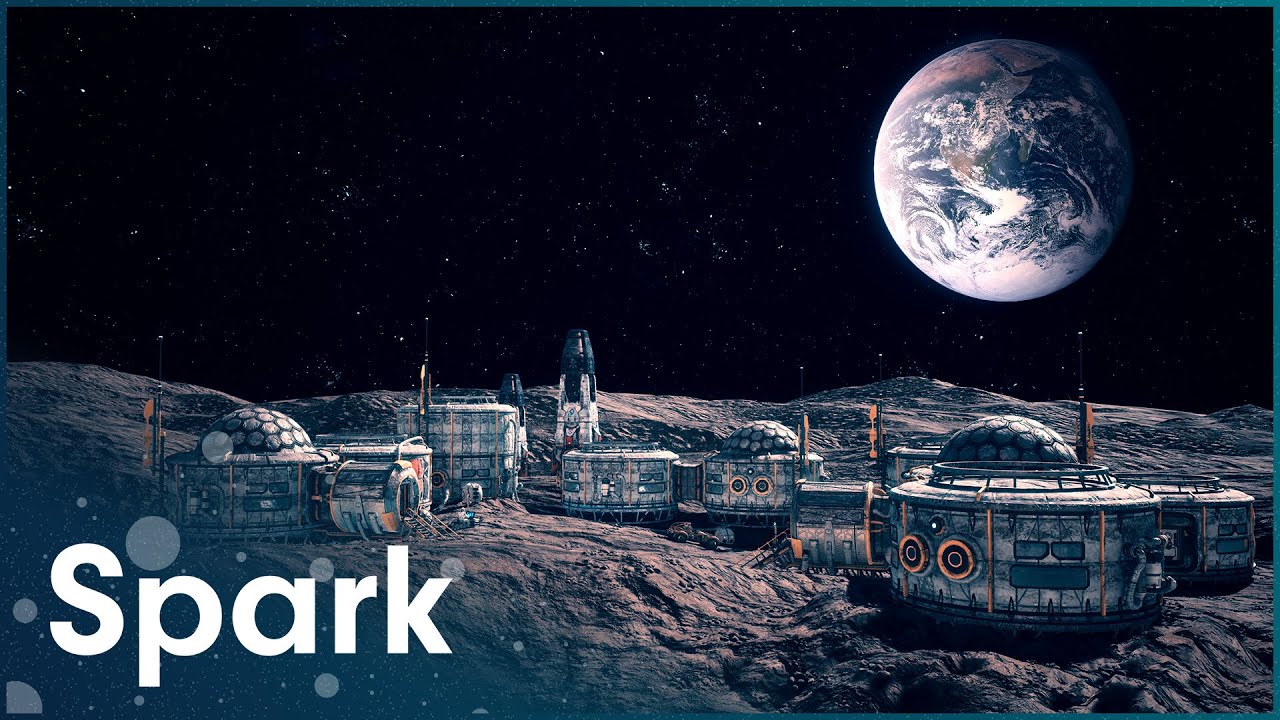
Why Colonising The Moon Is Essential To Space Travel
Keywords
Summary
121 words
Critical Evaluation
The documentary provides a comprehensive overview of lunar science and exploration, featuring interviews with credible experts such as geologists and engineers. It effectively communicates complex scientific concepts in an accessible manner, making it valuable for a general audience. The historical narrative is well-structured, covering the Space Race and subsequent missions. However, the documentary lacks explicit citations to peer-reviewed sources, which weakens its scientific rigor. Some claims, such as the possibility of future volcanic eruptions, are presented as speculative without sufficient evidence. The title’s promise of explaining why Moon colonization is essential is only partially fulfilled; while the argument is made, the documentary focuses more on scientific discoveries than on the practicalities of colonization. The inclusion of experts adds credibility, but the absence of dissenting voices on certain topics, such as the feasibility of lunar resource extraction, limits the critical analysis. Overall, the documentary is informative and engaging, but it could benefit from more rigorous sourcing and a deeper exploration of the challenges of lunar settlement.
165 words
Title / Content Match
The title accurately reflects the content, which argues that the Moon is a crucial stepping stone for deep-space travel.
Quality & Reliability
8/10
The documentary features credible experts (geologists, engineers, scientists) and references actual space missions and scientific findings. It presents a balanced view of lunar science and exploration, though it lacks explicit citations to peer-reviewed sources.
Key Moments
Markers derived by PSI from the transcript: the creator did not define chapters.
- Introduction to the Moon's significance and the documentary's scope.
- Discussion of early lunar probes and the Space Race.
- Discovery of recent volcanic activity and the Moon's shrinking core.
- Apollo missions and the collection of lunar samples.
- Exploration of lunar water ice and potential for resource extraction.
- Discussion of lava tubes as habitats and the future of lunar exploration.
Cited Sources
- Lunar Reconnaissance Orbiter — Mentioned as a source of recent lunar imagery and discoveries.
- Apollo Program — Referenced for historical lunar landings and sample collection.
- Luna 2 — First spacecraft to reach the Moon.
- Luna 9 — First soft landing on the Moon.
- Luna 16 — First robotic sample return from the Moon.
Concurring Sources
- NASA Artemis Program — Aligns with the documentary's argument that the Moon is essential for deep-space exploration.
- Lunar Reconnaissance Orbiter — Provides recent data on lunar geology and water ice.
Dissenting Sources
- Skepticism on lunar resource extraction — Some experts argue that lunar resources may not be economically viable, contrary to the documentary's optimistic tone.
Contribution & Novelties
The documentary synthesizes recent lunar science findings, such as the discovery of water ice and volcanic activity, and presents them in a compelling narrative. It emphasizes the Moon’s role as a stepping stone for Mars exploration, a perspective that is increasingly relevant in current space policy discussions.
Pour aller plus loin :
- Lunar water — Overview of the discovery and significance of water on the Moon.
- Lava tube — Geological formations that could serve as habitats.
- Artemis program — NASA’s current plan to return humans to the Moon.
88 words
Radar Profile
The radar profile shows high scores in quantity and quality of information, with a moderate level of technical depth. The reliability is strong due to expert interviews, but the lack of explicit citations slightly lowers the overall score.
💬 Positif. Sur les 30 commentaires analysés, la majorité exprime une appréciation du documentaire, soulignant sa clarté et son contenu informatif, avec quelques critiques sur le nombre de publicités.