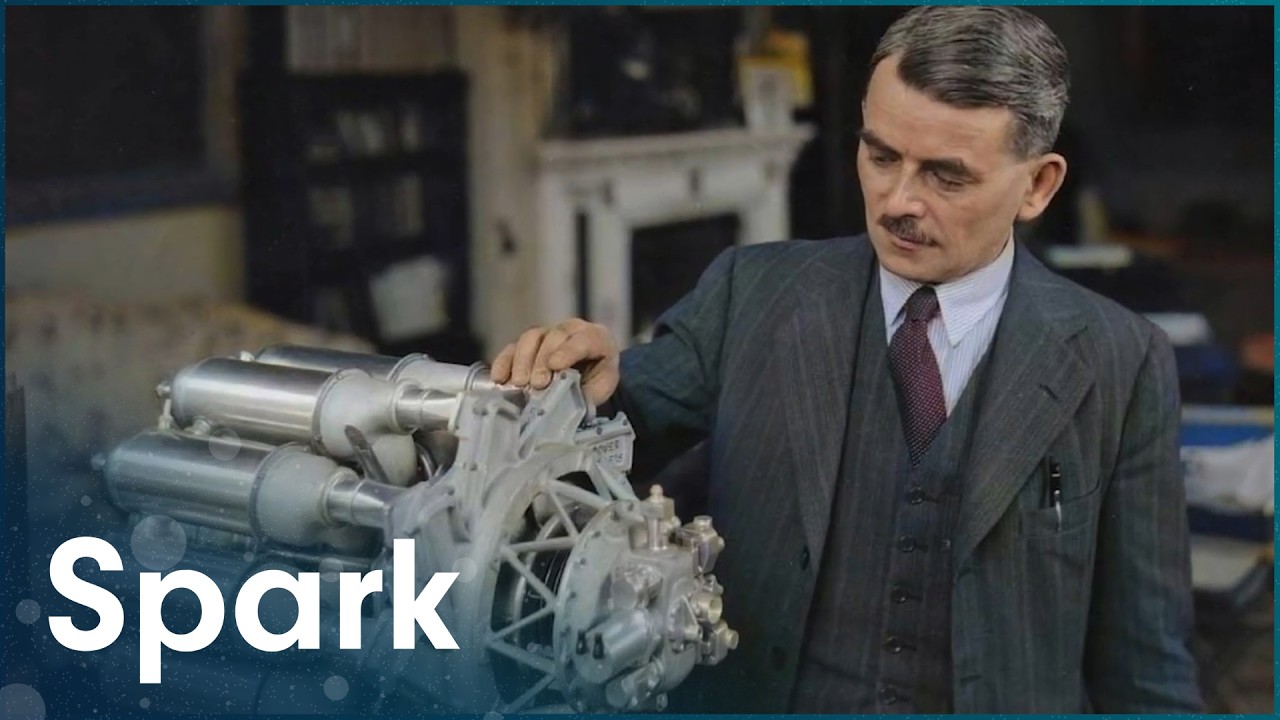
My Father Invented The Jet Engine (The Secret History of WWII's Greatest Breakthrough)
Keywords
Summary
119 words
Critical Evaluation
The documentary offers a compelling and intimate portrait of Frank Whittle, blending personal anecdotes with historical context. The inclusion of Ian Whittle’s firsthand accounts adds emotional depth and authenticity, making the narrative engaging. The technical explanation of the turbojet engine is clear and accessible, using the ‘suck, squash, bang, blow’ analogy to simplify complex concepts. However, the film could benefit from more rigorous sourcing; while it mentions key events and figures, it does not provide explicit references to archival documents or scholarly works. The historical narrative is generally accurate, but some details may be oversimplified or dramatized for effect. The documentary also touches on broader themes such as the role of bureaucracy in innovation and the personal costs of pioneering work. Overall, it is a valuable resource for those interested in aviation history and engineering, offering both educational content and a human story. The production quality is high, with good use of archival footage and interviews. The main weakness is the lack of critical analysis of Whittle’s work in comparison to parallel developments in Germany, such as Hans von Ohain’s engine. Nevertheless, the documentary succeeds in honoring Whittle’s legacy and inspiring future engineers.
193 words
Title / Content Match
The title accurately reflects the content, focusing on Frank Whittle's invention of the jet engine and its historical impact.
Quality & Reliability
8/10
The documentary combines personal testimony from Frank Whittle's son, archival footage, and expert commentary, providing a well-rounded historical account. However, it lacks explicit citations to primary sources and may contain minor inaccuracies common in historical documentaries.
Key Moments
Markers derived by PSI from the transcript: the creator did not define chapters.
- Ian Whittle introduces his father's legacy and the significance of the jet engine.
- Frank Whittle's early life and fascination with flying are explored.
- Whittle's application to the RAF and his determination to overcome rejection.
- The development of Whittle's turbojet concept and his thesis at Cranwell.
- The patenting of the jet engine and the lack of interest from the government.
- Whittle's time at Cambridge and his continued refinement of the engine design.
- The first successful flight of the Gloster E.28/39 in 1941.
- The impact of the jet engine on aviation and the war effort.
- Ian Whittle's personal reflections on his father's struggles and achievements.
- The legacy of Frank Whittle and the future of aviation technology.
Cited Sources
- Spark Channel — The documentary is produced by Spark, a channel dedicated to science and technology content.
Concurring Sources
- Frank Whittle - Wikipedia — Provides a detailed biography of Frank Whittle, confirming the key events and achievements mentioned in the documentary.
- Gloster E.28/39 - Wikipedia — Confirms the specifications and historical significance of the aircraft featured in the documentary.
Dissenting Sources
Contribution & Novelties
The documentary provides a unique personal perspective on Frank Whittle’s life through interviews with his son, offering insights not commonly found in other historical accounts. It also emphasizes the challenges of innovation and the importance of perseverance.
Pour aller plus loin :
- Frank Whittle - Wikipedia — Comprehensive biography and technical details.
- Gloster E.28/39 - Wikipedia — Details on the first British jet aircraft.
- Turbojet - Wikipedia — Explanation of the turbojet engine principles.
74 words
Radar Profile
The radar profile shows high scores in information quantity, quality, and reliability, with a slightly lower technical level, indicating that the documentary is accessible to a general audience while still providing substantial historical detail.
💬 No comments were provided for analysis.