Looking Back and Looking Forward 2026 - Ethics for Lunch Year in Review
Keywords
Summary
171 words
Critical Evaluation
Value of the Information & Strength of the Argument
The video provides valuable insights into real-world clinical ethics dilemmas, offering a practical perspective from experienced practitioners. The argumentation is solid, as panelists justify their positions with reasoning based on ethical principles, legal considerations, and clinical experience. They explore multiple facets of each case, such as the importance of exploring the reasons behind a patient’s request for MAID, and the ethical distinction between offering all options and providing medically ineffective care. The discussion is balanced, acknowledging differing viewpoints and the complexity of these issues. However, the arguments are primarily opinion-based and lack rigorous scientific evidence or citations, which limits their generalizability.
Scientific Rigor, Source Quality, Title Accuracy
The video is produced by the Berman Institute, a reputable institution in bioethics, and features qualified panelists. However, it does not cite specific scientific sources or studies; the discussion is based on expert opinion and clinical experience. The title accurately reflects the content, as it is a year-in-review session. The video does not include any commercial advertisements. No comments were provided for analysis.
179 words
Title / Content Match
The title accurately reflects the content: a year-in-review session covering past ethics topics and soliciting input for future ones.
Quality & Reliability
7/10
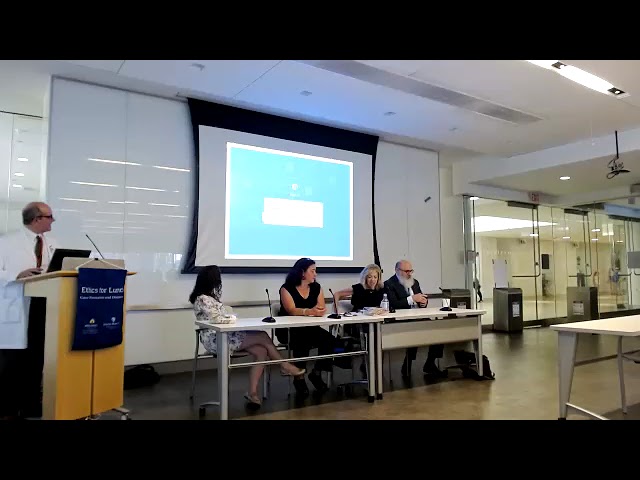
The video is a panel discussion by experienced healthcare professionals and ethicists from the Johns Hopkins Berman Institute, providing expert opinions on clinical ethics cases. It is not a formal study but offers valuable insights into ethical decision-making. The discussion is balanced and considers multiple perspectives, though it lacks rigorous scientific citations.
Key Moments
Markers derived by PSI from the transcript: the creator did not define chapters.
- Introduction and objectives of the session
- Review of past year's topics and audience poll
- Discussion on periviability and resuscitation decisions
- Case on medical aid in dying (MAID) and physician obligations
- Discussion on hope and denial at end of life, including AMEN protocol
- Case on incarcerated patients and ethical challenges
- Audience suggestions for future topics
- Further discussion on psychiatric care and healthcare proxy issues
- Wrap-up and closing remarks
Cited Sources
- Berman Institute of Bioethics — The host institution for the Ethics for Lunch series.
Concurring Sources
- American Medical Association Code of Medical Ethics — Provides ethical guidelines that align with the discussion on physician obligations and patient autonomy.
Contribution & Novelties
The video offers a unique year-in-review perspective on clinical ethics topics, providing a comprehensive overview of key issues faced in hospital settings. It emphasizes practical approaches to ethical dilemmas, such as the AMEN protocol for discussing miracles and the importance of exploring underlying reasons for patient requests. The session also highlights the evolving nature of medical ethics, particularly in areas like periviability and medical aid in dying.
Pour aller plus loin :
- Medical Aid in Dying — Overview of the practice and its legal status in various jurisdictions.
- Periviability — Definition and ethical considerations surrounding extreme prematurity.
- AMEN Protocol — A communication framework for discussing miracles with patients and families.
110 words
Radar Profile
The radar profile shows high scores in quality of information and reliability, reflecting the expert panel and reputable institution. However, the quantity of information is moderate, and the technical level is lower, indicating a focus on practical ethics rather than deep scientific detail. The overall balance suggests a valuable resource for healthcare professionals seeking ethical guidance.