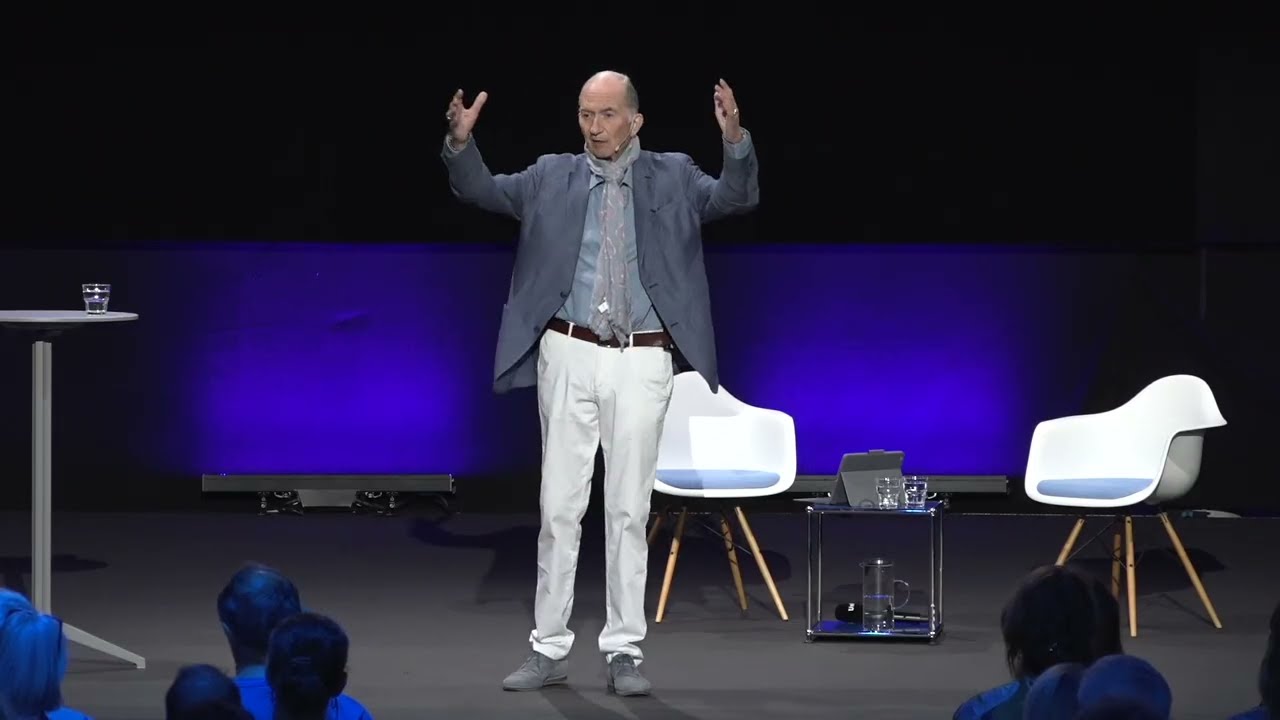
Réinventer la médecine: quand la science rejoint les savoirs anciens
Keywords
Summary
139 words
Critical Evaluation
The lecture presents a compelling narrative about the need to integrate spiritual and traditional healing practices into modern medicine. Besson draws on his extensive clinical experience and personal encounters with indigenous communities, particularly the Kogi, to illustrate the limitations of a purely materialistic approach. However, the argumentation is largely anecdotal and lacks rigorous scientific evidence. While he mentions neuroscientific research on psychedelics and NDEs, he does not provide specific studies or citations, making it difficult to assess the validity of his claims. The talk is more of an opinion piece than a scientific review, and it often relies on broad generalizations and metaphysical concepts that are not empirically testable. The lack of concrete data and references weakens the overall credibility. Additionally, the speaker’s enthusiasm for indigenous wisdom, while respectful, risks romanticizing these traditions without acknowledging potential cultural differences or the need for ethical considerations in integrating them into Western medicine. The title accurately reflects the content, but the promise of ‘science rejoining ancient knowledge’ is not fully substantiated with concrete examples from peer-reviewed literature. Overall, the lecture offers thought-provoking ideas but falls short of scientific rigor.
186 words
Title / Content Match
The title accurately reflects the content, which explores the integration of ancient healing traditions with modern scientific approaches.
Quality & Reliability
6/10
The speaker is a professor emeritus of psychiatry with clinical experience, but the talk is largely anecdotal and lacks rigorous scientific citations. Personal experiences with the Kogi people and speculative claims about consciousness are presented without empirical support.
Key Moments
Markers derived by PSI from the transcript: the creator did not define chapters.
- Introduction and exercise about consciousness 300,000 years ago
- Discussion of shaman as priest and healer
- Transition to ancient Greece and Hippocrates
- Critique of modern medicine's materialism
- Encounter with the Kogi people and their worldview
- Visit to CERN and the Kogi's cosmic knowledge
- Discussion of psychedelics in psychiatric research
- Near-death experiences and consciousness studies
- Call for integrative medicine and reconnection with nature
- Conclusion and Q&A
Cited Sources
- Kogi people — Mentioned as an indigenous community encountered by the speaker, known for their ecological knowledge and spiritual traditions.
- CERN — Mentioned as a place where the Kogi visited and shared their cosmological views.
- Near-death experience — Discussed as a phenomenon studied in relation to consciousness and spirituality.
Concurring Sources
- Psychedelic therapy research — Recent studies on psychedelics for depression support the speaker's claim of renewed scientific interest.
Dissenting Sources
- Skeptical analysis of NDEs
Contribution & Novelties
The lecture offers a unique perspective by bridging modern psychiatry with indigenous wisdom, advocating for a more holistic approach to health. It highlights the growing scientific interest in psychedelics and NDEs as evidence of a paradigm shift.
Pour aller plus loin :
- Psychedelic therapy — Relevant for understanding the clinical applications of psychedelics in mental health.
- Neurotheology — Explores the neural basis of spiritual experiences, relevant to the talk’s themes.
- Integrative medicine — Provides an overview of approaches combining conventional and alternative therapies.
83 words
Radar Profile
The radar profile shows moderate scores across all dimensions, indicating a balanced but not exceptionally rigorous presentation. The talk is informative but lacks deep technical detail and strong scientific backing.
💬 Sur les 0 commentaires analysés, aucune tendance n'est disponible.