Qui façonne vraiment nos territoires ? Le pouvoir discret des organisations environnementales
Keywords
Summary
153 words
Critical Evaluation
The video provides a compelling and well-structured presentation of a doctoral thesis, offering valuable insights into the often-overlooked role of environmental organizations in land governance. The speaker effectively communicates complex research findings in an accessible manner, using personal anecdotes and clear examples. The argumentation is solid, grounded in empirical data from interviews and archival research, and the comparative approach between Switzerland and Australia adds depth to the analysis. The research design is appropriate for the research question, and the findings are presented with appropriate nuance, acknowledging the role of context in shaping organizational strategies. The sources cited are primarily from the thesis itself and the organizations mentioned, but the video does not provide direct references to academic literature. The title accurately reflects the content, and the presentation maintains a high level of scientific rigor. The main limitation is the lack of detailed methodological transparency, as the video is a summary of the thesis rather than a full academic presentation. Additionally, the speaker’s personal narrative, while engaging, sometimes overshadows the systematic presentation of evidence. Overall, the video is a valuable contribution to the public understanding of environmental policy and land governance.
190 words
Title / Content Match
The title accurately reflects the content, which focuses on the influence of environmental organizations on land-use policies through land acquisition, lobbying, and legal recourse.
Quality & Reliability
8/10
The video presents a doctoral thesis defense, based on original research with interviews and archival work, providing a rigorous academic foundation. The speaker is a PhD candidate, and the content is structured and evidence-based. However, as a presentation, it lacks peer-reviewed publication details and some claims are summarized without full methodological transparency.
Key Moments
Markers derived by PSI from the transcript: the creator did not define chapters.
- Introduction: The question of who decides land use, and the role of environmental organizations.
- Personal motivation: Experience at Notre-Dame-des-Landes and the question of property rights.
- Research question: How environmental organizations use land acquisition, lobbying, and legal recourse.
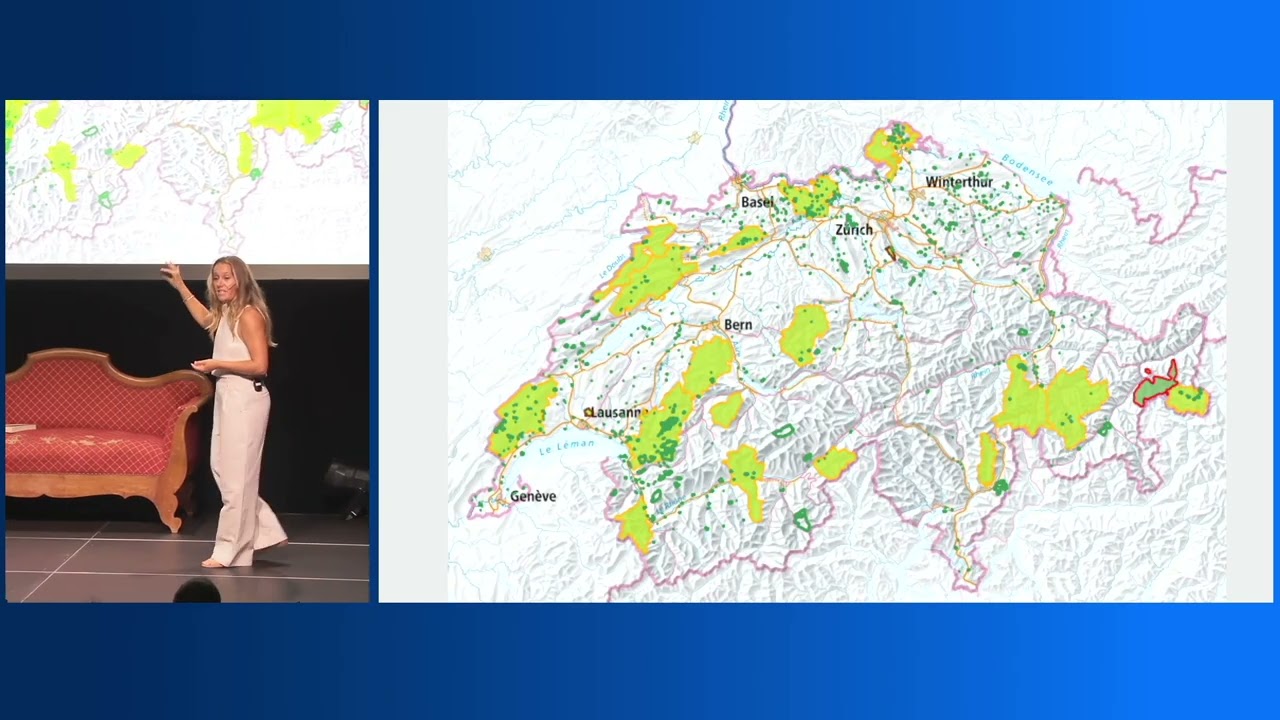
- Swiss case study: Pro Natura's land acquisition strategies, including the highway expansion conflict.
- Australian case study: The Nature Conservancy's focus on returning land to Indigenous communities.
- Lobbying strategies: How they evolve with the policy cycle and differ by context.
- Conclusion: The importance of context and the discreet power of environmental organizations.
Cited Sources
- Pro Natura — Mentioned as the largest environmental organization in Switzerland, and a key case study.
- The Nature Conservancy — Mentioned as a major environmental organization in Australia, and a key case study.
Concurring Sources
- Pro Natura — The organization's official website provides information on its land holdings and conservation activities, consistent with the thesis findings.
Contribution & Novelties
The thesis provides a novel comparative analysis of how environmental organizations use land acquisition, lobbying, and legal recourse to influence land-use policies, highlighting the role of context in shaping these strategies. It challenges the traditional view of environmental organizations as mere advocates, showing their active participation in governance.
Pour aller plus loin :
- Land grabbing — Relevant to the concept of land acquisition as a political tool.
- Environmental governance — Provides a broader framework for understanding the role of non-state actors in environmental policy.
- Direct democracy in Switzerland — Explains the political context that influences lobbying strategies in Switzerland.
99 words
Radar Profile
The radar profile shows high scores in information quantity, quality, and reliability, indicating a well-researched and informative presentation. The technical level is moderate, reflecting the accessible nature of the talk while still conveying complex concepts.
💬 No comments were provided for analysis.