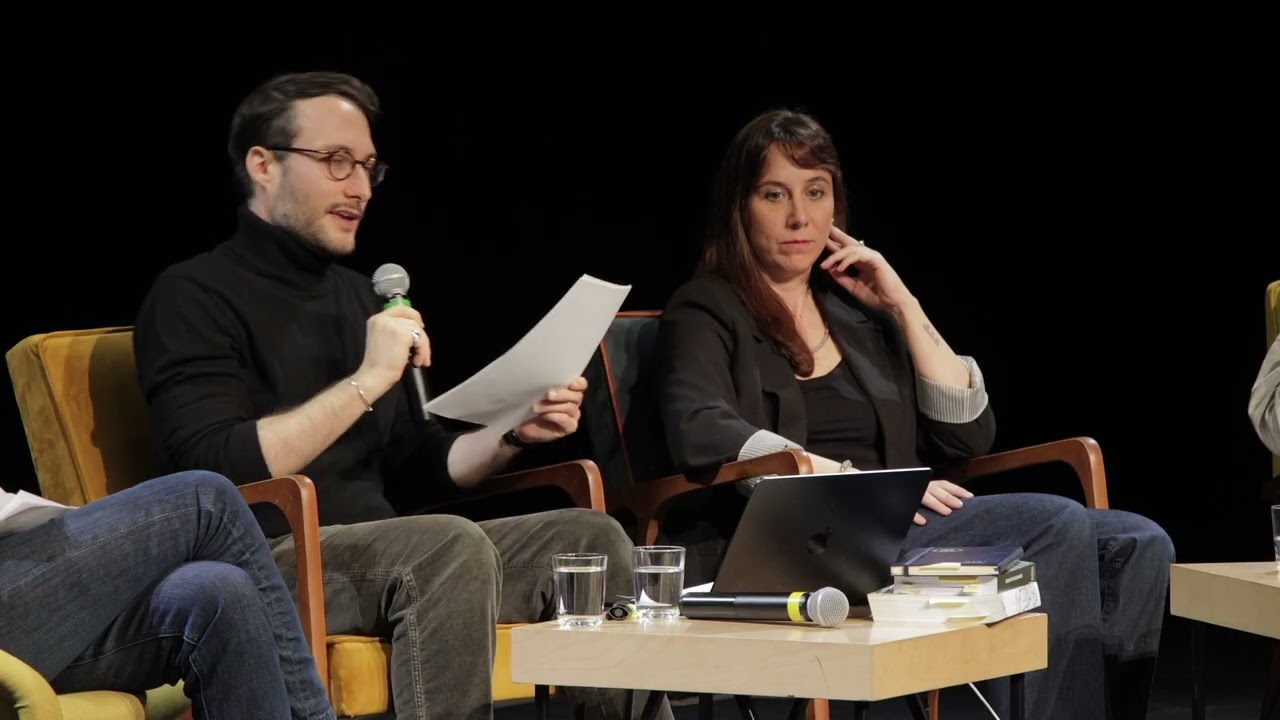
ECOTOPIALES 2025 - Quand les fleuves prennent la parole - soirée de clôture au Théâtre de Vidy
Keywords
Summary
154 words
Critical Evaluation
The panel discussion offers a rich and nuanced exploration of the rights of nature, a topic of growing importance in environmental law and philosophy. The speakers bring complementary expertise: Marine Yzquierdo provides a clear legal definition and historical context, Camille de Toledo contributes a literary and imaginative perspective, and Gérald Hess grounds the discussion in environmental ethics. The moderation by Brian Favre effectively structures the conversation, guiding it from definitions to broader implications.
The strength of the discussion lies in its interdisciplinary approach, connecting legal theory with cultural narratives and philosophical ethics. The historical grounding in Christopher Stone’s seminal article and the reference to the Whanganui River case provide concrete examples that illustrate the abstract concept of legal personhood for nature. The inclusion of the Parliament of Loire as a creative and participatory initiative demonstrates how art and literature can contribute to legal and social change.
The argumentation is generally solid, with speakers acknowledging the complexities and potential pitfalls of granting rights to nature. For instance, they discuss the risk of anthropomorphizing nature and the challenges of defining representation. However, the discussion remains largely theoretical, with limited exploration of practical implementation and potential conflicts with existing legal systems. The panel could have benefited from more critical examination of the effectiveness of such rights in achieving tangible environmental protection.
The sources cited are credible, including legal texts, philosophical works, and literary pieces. The speakers reference specific cases and publications, adding to the reliability of the content. The adéquation between title and content is strong, as the discussion indeed focuses on how rivers and nature can ’take the floor’ in legal and cultural arenas.
Overall, the discussion is intellectually stimulating and provides a comprehensive overview of the rights of nature movement. It would be particularly valuable for students and scholars in law, philosophy, and environmental studies. The main limitation is the lack of concrete case studies and empirical evidence, which could strengthen the practical relevance of the arguments.
326 words
Title / Content Match
The title accurately reflects the content: a closing event of a festival exploring how rivers and nature can be given legal and cultural voice.
Quality & Reliability
8/10
The discussion features recognized experts in law, philosophy, and literature, providing a multidisciplinary perspective on rights of nature. The arguments are well-structured and grounded in legal and philosophical frameworks, though the format is a debate rather than a peer-reviewed presentation.
Key Moments
Markers derived by PSI from the transcript: the creator did not define chapters.
- Introduction by the moderator, Brian Favre, setting the stage for the discussion on rights of nature.
- Marine Yzquierdo defines rights of nature and distinguishes them from environmental law.
- Historical context: Christopher Stone's 1972 article 'Should Trees Have Standing?' and the Mineral King case.
- Camille de Toledo discusses the Parliament of Loire and the role of narrative in giving voice to rivers.
- Gérald Hess explores the philosophical foundations of environmental ethics and the concept of dignity of creatures.
- Discussion on the Whanganui River in New Zealand as a precedent for legal personhood of nature.
- Challenges and critiques: anthropomorphism, representation, and the risk of tokenism.
- The role of art and literature in shaping ecological consciousness and legal change.
- Q&A session with the audience, addressing practical implications and future directions.
- Closing remarks by the panelists, emphasizing the need for a cultural revolution.
Cited Sources
- Should Trees Have Standing? — Christopher Stone's 1972 article, foundational to the rights of nature movement.
- Le fleuve qui voulait écrire: les auditions du Parlement de Loire — Camille de Toledo's 2021 book recounting the Parliament of Loire hearings.
- Les éthiques de la nature — Gérald Hess's 2013 book on environmental ethics.
- Droits de la nature: vers un nouveau paradigme de protection du vivant — Marine Yzquierdo's 2022 edited volume on rights of nature.
Concurring Sources
- Rights of Nature: A Legal Revolution That Could Save the World — Scientific American article discussing the global movement for rights of nature.
- The Rights of Nature: A History of Environmental Ethics — Guardian article providing historical context and examples.
Dissenting Sources
- The Problem with Giving Nature Rights
Contribution & Novelties
The discussion provides a unique interdisciplinary perspective on rights of nature, bridging law, philosophy, and literature. It highlights the importance of narratives and artistic expression in advancing legal and cultural change. The panel offers a nuanced view of the challenges and opportunities, emphasizing the need for a paradigm shift in human-nature relationships.
Pour aller plus loin :
- Rights of Nature — Overview of the concept and its global applications.
- Christopher D. Stone — Biography and contributions to environmental law.
- Whanganui River — Case study of legal personhood for a river in New Zealand.
- Environmental ethics — Philosophical foundations of the movement.
101 words
Radar Profile
The radar profile shows high scores in quantity and quality of information, reflecting the depth and expertise of the panel. The technical level is moderately high, suitable for an informed audience. Overall reliability is strong due to credible speakers and references.
💬 Sur les 0 commentaires analysés, aucune tendance n'est disponible.