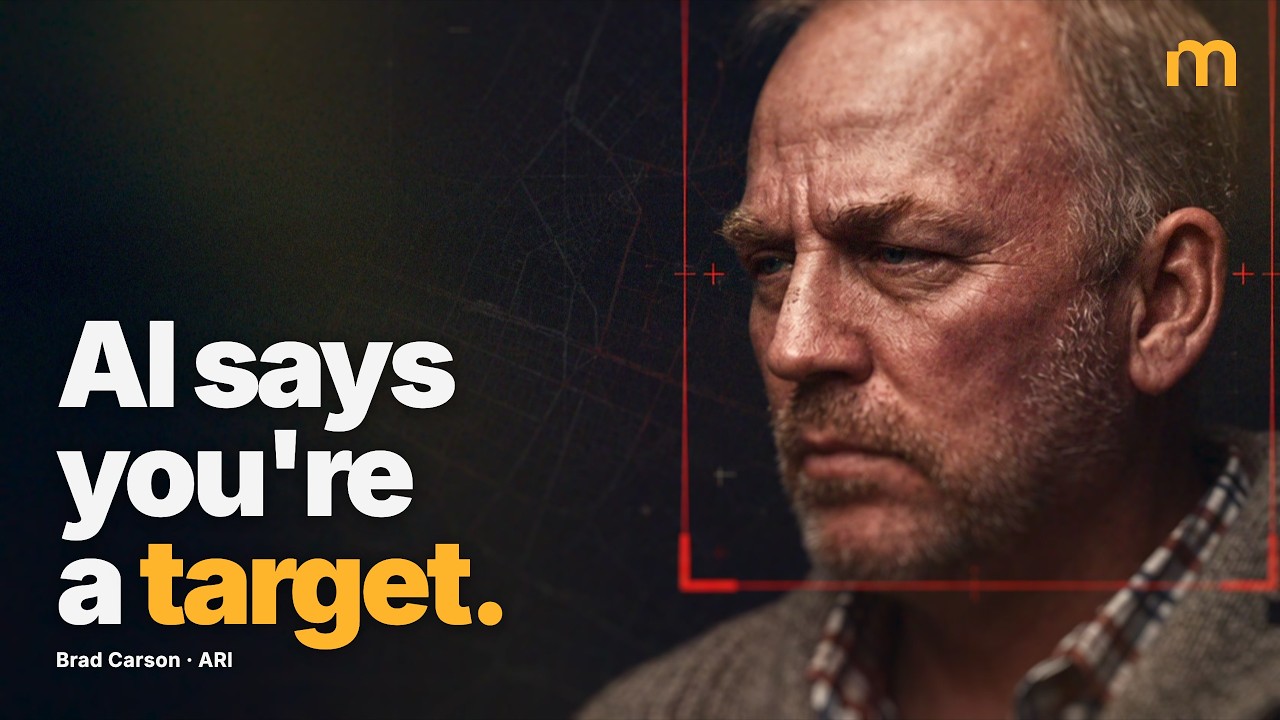
The Ex-Pentagon Chief Sounding the Alarm on AI Weapons — Brad Carson
Keywords
Summary
157 words
Critical Evaluation
Value of the Information & Strength of the Argument
The value of the information lies in the unique perspective of a former Pentagon official who has been involved in AI policy at the highest levels. Carson provides insider insights into the challenges of regulating AI in the military context, such as the difficulty of holding anyone accountable for errors made by opaque neural networks. His argumentation is generally coherent and well-structured, drawing on historical analogies and legal frameworks. However, some points are presented as assertions without deep evidence, and the discussion sometimes lacks rigorous analysis of counterarguments. The host’s pushback adds depth, but the conversation remains largely opinion-driven rather than data-driven.
Scientific Rigor, Source Quality, Title Accuracy
The discussion references several credible sources, including the ICRC position on autonomous weapons, the Asilomar Conference, and various policy documents. The sources cited in the description are relevant and support the topics discussed. The title accurately reflects the content, focusing on Carson’s warnings about AI weapons. However, the episode is more of an expert opinion discussion than a rigorous scientific analysis, and some claims could benefit from more detailed sourcing. The presence of a sponsorship segment is noted but does not detract from the overall quality.
203 words
Title / Content Match
The title accurately reflects the content, as the episode focuses on Brad Carson's warnings about AI weapons and his advocacy for responsible innovation.
Quality & Reliability
7/10
The discussion features a former high-ranking Pentagon official with direct policy experience, providing credible insider perspectives. However, the conversation is largely opinion-driven and lacks rigorous empirical evidence or systematic analysis, with some claims presented without deep substantiation.
Chapters
- From the Pentagon to AI governance
- Regulatory capture vs Silicon Valley networks
- Transparency and the Claude tier changes
- Tort liability when AI tools cause harm
- AI is a product, not a person
- Children, suicide, and the suicide business
- Opaque neural nets and the law of war
- Probabilistic targeting and the death of accountability
- The arms race fallacy: Asilomar and restraint
- Talking to China: track 2 talks and chip leverage
- Air power never wins: capital for labour
- Anthropic vs the Department of War
- Concentration, open source, and brain drain
- DeepSeek, Chinese culture, and AI as diplomacy
- Upskilling Congress and why public trust matters
Cited Sources
- ICRC position on autonomous weapons — Referenced at the beginning of the discussion regarding the law of war and autonomous weapons.
- Americans for Responsible Innovation (ARI) — Carson's organization, mentioned as his current role.
- Andreessen Horowitz (a16z) — Mentioned in the context of regulatory capture and Silicon Valley influence.
- Anthropic — Discussed regarding transparency and Claude tier changes.
- DeepSeek — Mentioned in the context of Chinese AI and diplomacy.
- Moonshot AI (Kimi) — Referenced in the discussion on Chinese AI companies.
- Office of Technology Assessment — Mentioned in the context of upskilling Congress.
- Beneficial AGI 2019 Conference — Carson recounts being invited to this conference by Anthony Aguirre.
- Section 230 of the Communications Decency Act — Discussed as a potential defense for AI companies.
- Lethal Autonomous Weapons (LAWS) — Referenced in the context of autonomous weapons in war.
- Strategic Arms Limitation Talks (SALT) — Mentioned as a historical example of arms control.
- Asilomar Conference on Recombinant DNA (1975) — Used as an example of successful regulation of dangerous technology.
- The New Iron Triangle (ARI policy byte) — Referenced in the discussion on capital for labor in warfare.
- Defense Production Act — Mentioned in the context of chip leverage and national security.
- Anthony Aguirre — Carson mentions being invited to a conference by him.
- Dean Ball — Hyperdimensional — Mentioned in the debate on regulatory capture.
- Neel Nanda — mechanistic interpretability — Referenced in the discussion on interpretability of neural networks.
- Jack Clark (Anthropic) on Conversations with Tyler — Mentioned in the context of AI policy and industry perspectives.
- Dean Acheson — Referenced in the discussion on arms control and diplomacy.
- Paul Nitze — Mentioned in the context of Cold War arms control.
- Robert Trager — Centre for the Governance of AI — Referenced in the discussion on international cooperation.
- Giulio Douhet — Mentioned in the discussion on air power and capital for labor.
- Don Beyer (US Congress) — Mentioned in the context of upskilling Congress.
- Phalanx CIWS — Used as an example of autonomous systems in military.
- Palantir Foundry — Referenced in the discussion on probabilistic targeting.
- Qwen (Alibaba) — Mentioned in the context of Chinese AI models.
Concurring Sources
- ICRC position on autonomous weapons — Aligns with Carson's concerns about the law of war and autonomous weapons.
- Asilomar Conference on Recombinant DNA — Supports the argument that dangerous technologies can be regulated.
Dissenting Sources
External References
Contribution & Novelties
The episode provides a unique insider perspective from a former Pentagon official on the challenges of AI governance in the military domain. Carson’s emphasis on the ‘genie is not out of the bottle’ argument and his advocacy for treating AI as a product rather than a person offer a distinctive viewpoint. The discussion on probabilistic targeting and the death of accountability is particularly thought-provoking.
Pour aller plus loin :
- Lethal autonomous weapons — Overview of the debate on autonomous weapons systems.
- Asilomar Conference on Recombinant DNA — Historical precedent for regulating dangerous technologies.
- Mechanistic interpretability — Research area addressing the opacity of neural networks.
- Section 230 — Legal immunity for online platforms, relevant to AI liability.
- Office of Technology Assessment — Historical example of congressional advisory body.
127 words
Radar Profile
The radar profile shows high scores in quantity and quality of information, reflecting the depth of the discussion and the credibility of the guest. The technical level is moderate, as the conversation is accessible but touches on complex topics. Overall reliability is strong due to the expert's background, though the opinion-driven nature tempers the score.