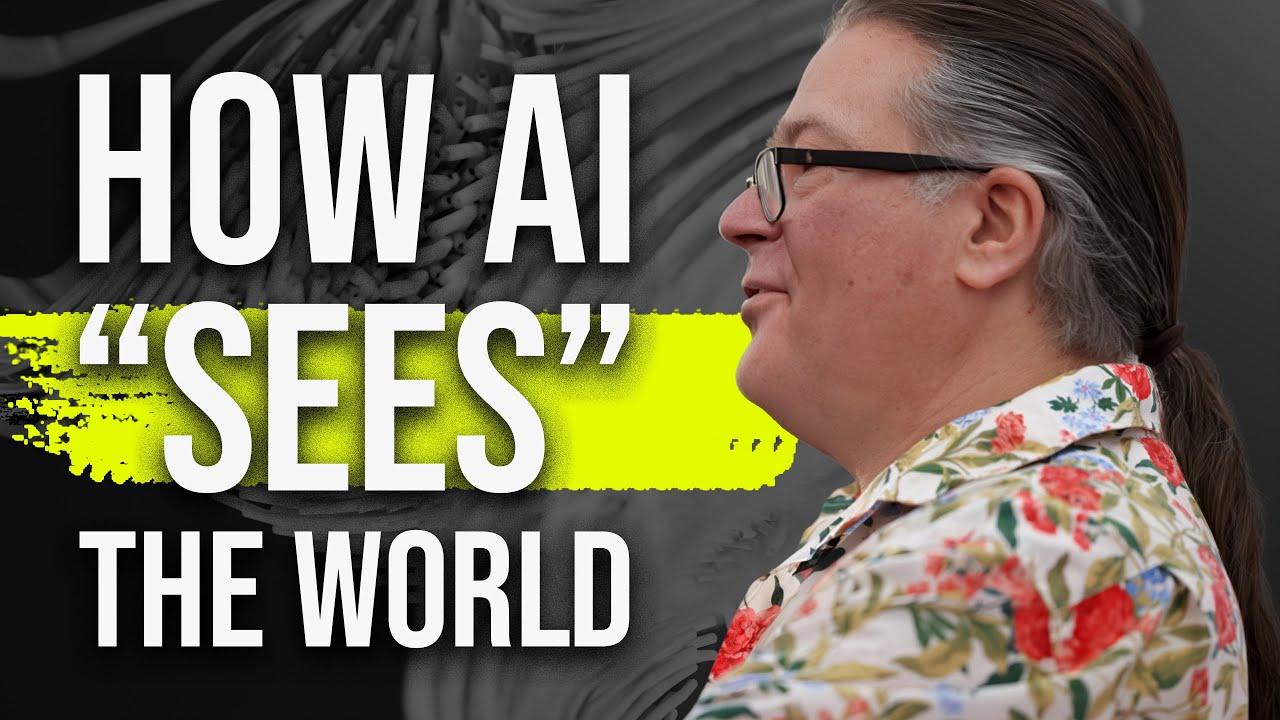
A Physicist Found the Hidden Phase Transitions in Society — Cristopher Moore
Keywords
Summary
157 words
Critical Evaluation
Value of the Information & Strength of the Argument
The video provides valuable insights into the intersection of physics, computer science, and AI. Moore’s arguments are well-reasoned and grounded in his expertise. He effectively explains complex concepts like phase transitions and computational irreducibility in an accessible manner. The discussion on why transformers work is particularly insightful, emphasizing the structured nature of real-world data. Moore’s perspective on the limitations of current AI, especially in handling 2D data and creative problem-solving, is thought-provoking. The argumentation is solid, though some points are speculative and based on personal opinion rather than empirical evidence.
Scientific Rigor, Source Quality, Title Accuracy
The video demonstrates strong scientific rigor. Moore references several academic works, including his own book ‘The Nature of Computation’ and papers on replica theory, Turing machines, and cellular automata. The sources are credible and relevant. The title is somewhat misleading, as the video covers a broad range of topics beyond ‘phase transitions in society.’ However, the content is scientifically accurate and well-presented. The description includes links to relevant resources, which enhances the video’s credibility.
179 words
Title / Content Match
The title is somewhat sensationalized and does not fully capture the breadth of the conversation, which covers many topics beyond phase transitions in society. However, it does highlight the physicist's perspective on complex systems.
Quality & Reliability
8/10
The speaker is a professor at the Santa Fe Institute with a strong background in physics and computer science. The discussion is grounded in established concepts (computational complexity, phase transitions, Turing completeness) and references several academic sources. However, the format is an informal conversation, and some claims are speculative or based on personal opinion.
Chapters
- Introduction
- Meet Christopher Moore: A Frog in the World of Science
- The Limits of Transformers and Real-World Data
- Intelligence as Creative Problem-Solving
- Grounding, Meaning, and Shared Reality
- The Nature of Creativity and Aesthetics
- Computational Irreducibility and Universality
- Turing Completeness, Recursion, and Intelligence
- The Universe Through a Computational Lens
- Algorithmic Justice and the Need for Transparency
Cited Sources
- The Nature of Computation — Moore's book, mentioned as a reference for computational complexity and related topics.
- Birds and Frogs — Freeman Dyson's essay, referenced to explain the bird/frog dichotomy in science.
- Replica Theory — Paper on replica theory, relevant to phase transitions in disordered systems.
- Janossy pooling — Reference to Janossy pooling, mentioned in the context of transformer architectures.
- Cracking the Cryptic — YouTube channel for puzzle solving, mentioned in the discussion about AI and puzzles.
- Sudoku Bench — Benchmark for AI solving Sudoku variants, mentioned as a challenge for AI.
- Fractured entangled representations — Paper on phylogenetic locking, referenced in the discussion about representation learning.
- The War Against Cliché — Book by Martin Amis, mentioned in the context of creativity and clichés.
- Rule 110 (CA) — Reference to Rule 110 cellular automaton, relevant to universality.
- Universality in Elementary Cellular Automata — Paper by Matt Cooke on universality in cellular automata.
- Small Semi-Weakly Universal Turing Machines — Paper by Damien Woods on small universal Turing machines.
- COMPUTING MACHINERY AND INTELLIGENCE — Turing's 1950 paper, referenced in the discussion on intelligence and computation.
- Comment on Space Time as a causal set — Moore's comment on causal sets, mentioned in the context of the universe as computation.
- Recursion Theory on the Reals and Continuous-time Computation — Moore's paper on recursion theory, referenced in the discussion on continuous-time computation.
Concurring Sources
- The Nature of Computation — Moore's book aligns with the topics discussed in the video.
- Replica Theory — The paper on replica theory supports the discussion on phase transitions.
- Birds and Frogs — Dyson's essay provides a framework for the bird/frog dichotomy discussed in the video.
External References
Contribution & Novelties
The video offers a unique perspective from a physicist on the foundations of AI, particularly the role of phase transitions and computational complexity in understanding transformers. Moore’s emphasis on the structured nature of real-world data as the key to AI success is a valuable contribution. He also highlights the importance of mathematizing real-world structure, which is a novel idea. The discussion on puzzle-solving as a benchmark for AI creativity is original and thought-provoking.
Pour aller plus loin :
- Phase transition (Wikipedia) — Relevant to the concept of phase transitions in physics and their application to machine learning.
- Computational irreducibility (Wikipedia) — Directly related to Moore’s discussion on the limits of prediction and simulation.
- Turing completeness (Wikipedia) — Relevant to the discussion on Turing machines and the limits of computation.
- Spin glass (Wikipedia) — Relevant to the replica theory and phase transitions in disordered systems.
144 words
Radar Profile
The radar profile shows high scores in quantity and quality of information, with a moderate level of technical depth. The overall reliability is high, reflecting the speaker's expertise and the use of credible sources. The video is strong in providing valuable insights but may be less accessible to a general audience due to its technical nature.
💬 Sur les 0 commentaires analysés, aucune tendance n'est disponible.