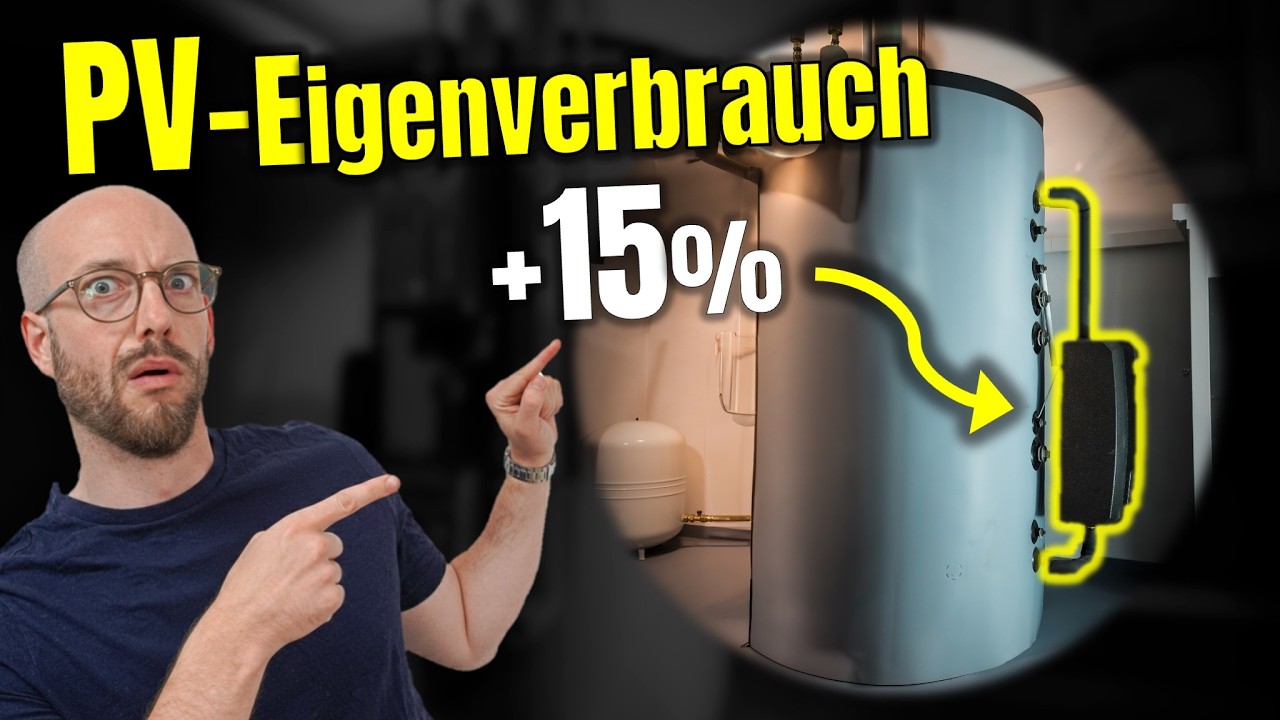
Effizienter als ein Heizstab? Den Pufferspeicher mit PV-Überschuss laden
Keywords
Summary
168 words
Critical Evaluation
Value of the Information & Strength of the Argument
The video provides valuable information about a specific product (eTherm) for increasing self-consumption of PV electricity. It clearly explains the technical differences between the eTherm and a conventional heating rod, highlighting advantages such as stratified charging and the ability to utilize low surplus power. The argumentation is coherent and supported by practical examples, including a real installation and user testimonials. However, the video is sponsored by Tuxhorn, which introduces a potential bias. The claims about efficiency and self-consumption increase are not independently verified, and no comparative data with other systems is provided. The discussion of costs and payback periods is brief and lacks detailed financial analysis.
Scientific Rigor, Source Quality, Title Accuracy
The scientific rigor is moderate. The video relies primarily on the expertise of a company representative, and while technical explanations are plausible, they are not backed by peer-reviewed studies or independent measurements. The sources cited are mainly the company’s website and related videos, which are promotional in nature. The title accurately reflects the content, comparing the eTherm to a heating rod. The video does not address potential drawbacks or limitations in depth, such as the need for a sufficiently large buffer storage and the economic viability for different user profiles. The comments show a mix of positive experiences and critical views on cost, but no systematic analysis is provided.
230 words
Title / Content Match
The title accurately reflects the content, which compares the eTherm system to a conventional heating rod for charging a buffer storage with PV surplus.
Quality & Reliability
7/10
The video presents a specific product (eTherm) with technical explanations and practical examples, but it is sponsored and lacks independent verification or comparative data.
Chapters
- Einleitung: PV-Überschuss für den Pufferspeicher
- Was ist der Unterschied zu einem Heizstab?
- Wie viel PV-Überschuss wird mindestens benötigt?
- Wie wird der PV-Überschuss erkannt?
- Wird die Wärmepumpe dadurch geschont?
- Braucht man eine Wärmepumpe?
- Um wie viel hat sich der Eigenverbrauch dadurch erhöht?
- Für wen eignet sich die eTherm?
- Wie hoch sind die Investitionskosten?
Cited Sources
- Tuxhorn eTherm product page — Official product information and details about the eTherm system.
- Money for Future - PV installation inquiry — Service for finding installation companies for PV systems and heat pumps.
- Money for Future - Solar system design tool — Free tool for designing a solar system.
- Alles wird Strom podcast — Podcast about the energy transition.
- Tibber dynamic electricity tariff — Affiliate link for a dynamic electricity provider.
- Balkonkraftwerk.de — Affiliate link for balcony solar panels.
- Wallbox Evalino — Affiliate link for a mobile wallbox.
- Related video 1 — Further video on the topic.
- Related video 2 — Further video on the topic.
Concurring Sources
- Tuxhorn eTherm product page — Official product information supporting the claims made in the video.
Dissenting Sources
- Comment on cost-effectiveness — Several comments argue that the system is too expensive compared to a simple heating rod, and that the benefits may not justify the cost.
Contribution & Novelties
The video presents the eTherm system as an innovative solution for utilizing PV surplus electricity in buffer storage, emphasizing its ability to start at low power (100W) and achieve stratified charging at 70°C. This approach differs from conventional heating rods and offers potential benefits in terms of self-consumption increase and heat pump protection. However, the concept of using PV surplus for water heating is not entirely new, as similar systems like the EFG Sandler or Solvis have been mentioned in comments. The video’s contribution lies in its detailed explanation of the eTherm’s operation and its practical application.
Pour aller plus loin :
- Photovoltaic system self-consumption — Overview of self-consumption in PV systems.
- Thermal energy storage — General concept of storing heat.
- Heat pump — Background on heat pump technology and its interaction with buffer storage.
135 words
Radar Profile
The radar profile shows moderate scores across all dimensions, with slightly higher scores in information quantity and quality, reflecting the video's informative nature but limited scientific rigor. The technical level is moderate, suitable for a general audience, while reliability is constrained by the promotional context.
💬 Positif. Sur les 30 commentaires analysés, la majorité exprime un intérêt positif et partage des expériences favorables, bien que certains soulignent le coût élevé et comparent avec des alternatives moins chères.