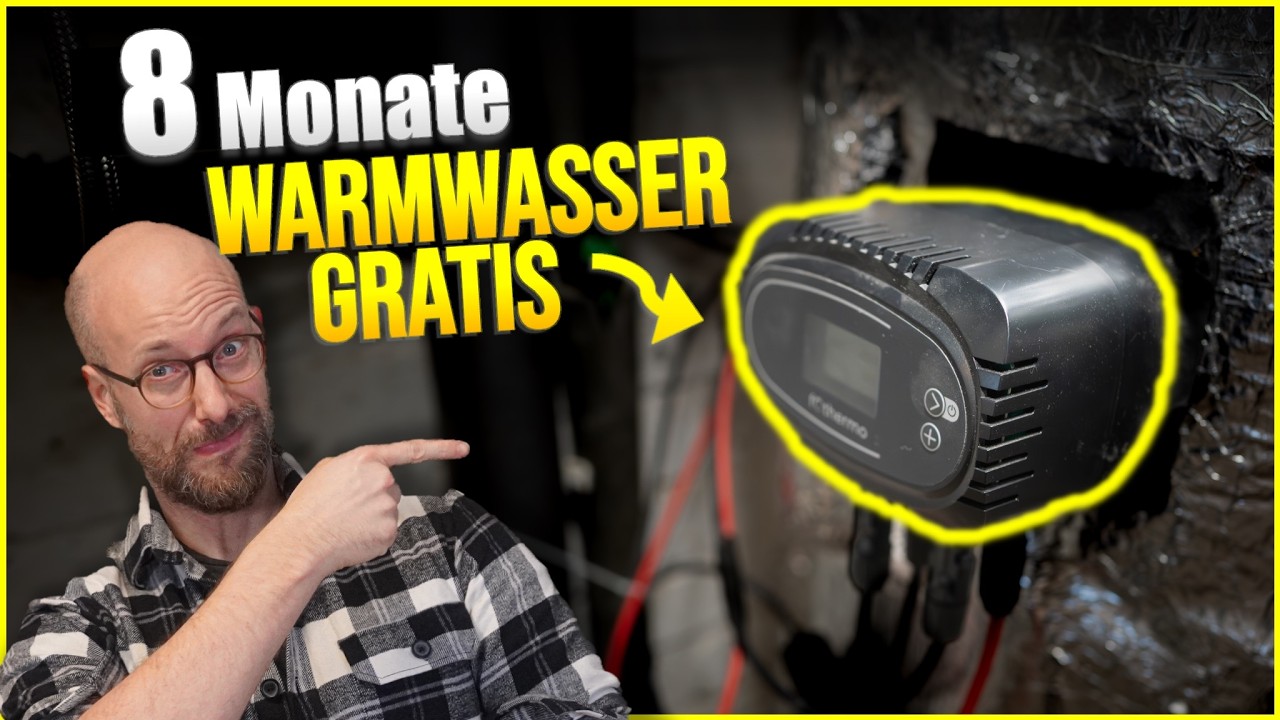
Große PV Anlage zu teuer? DIESER Heizstab am Balkonkraftwerk reduziert die Gasrechnung drastisch.
Keywords
Summary
141 words
Critical Evaluation
Value of the Information & Strength of the Argument
The video provides valuable practical insights into using a solar heating rod to increase self-consumption of PV power. The argumentation is based on a real case study with specific numbers (517 kWh, 60-75€ savings) and addresses common concerns like limescale and stratification. The explanation of the device’s operation is clear and logical, emphasizing its simplicity and plug-and-play nature. However, the video is sponsored by the manufacturer, which may bias the presentation. The benefits are well-argued, but the lack of independent verification and the absence of a detailed cost-benefit analysis (e.g., payback period) slightly weaken the argumentation.
Scientific Rigor, Source Quality, Title Accuracy
The video demonstrates good scientific rigor in explaining the technical aspects of the heating rod, such as its operation at low wattage to prevent limescale and maintain stratification. The sources cited are primarily the manufacturer’s website and the interviewee’s personal experience, which are not independent. The title accurately reflects the content, focusing on the cost-effectiveness of the solution. The video does not provide external references or studies to support the claims, relying on anecdotal evidence. The presence of a sponsor is disclosed, but it still raises questions about objectivity. Overall, the scientific rigor is moderate, with a need for more independent data.
213 words
Title / Content Match
The title accurately reflects the content: it highlights the cost-effectiveness of a heating rod with a small PV system to reduce gas bills.
Quality & Reliability
7/10
The video presents a practical case study with specific data (517 kWh produced, 60-75€ savings) and technical explanations. However, it is sponsored by the manufacturer, which introduces potential bias. The claims are plausible but not independently verified.
Key Moments
Markers derived by PSI from the transcript: the creator did not define chapters.
- Introduction: Warm water with heating rod and PV power
- How the heating rod makes warm water from PV power
- When enough PV power comes from the 4 modules
- Durability of the heating rod
- How much gas Bernd saved thanks to the heating rod
- Total investment costs
- For whom is a heating rod suitable?
- How the heating rod relieves the heat pump
Cited Sources
- Fothermo 1000 Watt Solarheizstab — Manufacturer's product page for the heating rod mentioned in the video.
- Money for Future - Anfrage für PV-Anlage — Contact page for PV installation inquiries, mentioned in the video description.
- Money for Future - Solaranlage Tool — Free tool for designing a solar system, mentioned in the video description.
- Alles wird Strom Podcast — Podcast mentioned in the video description.
- Tibber - Dynamic electricity tariff — Affiliate link for dynamic electricity tariff provider, mentioned in the video description.
- Balkonkraftwerk Shop — Affiliate link for balcony power plants, mentioned in the video description.
Concurring Sources
- Fothermo product page — Manufacturer's claims about the product align with the video's presentation.
Contribution & Novelties
The video offers a practical, low-cost solution for increasing self-consumption of PV power by using a solar heating rod. It provides real-world data from a user, highlighting the benefits of low-wattage heating for limescale prevention and thermal stratification. The interview format adds credibility and practical insights.
Pour aller plus loin :
- Photovoltaik — Overview of PV technology.
- Thermal energy storage — Relevant to buffer tanks and heat storage.
- Heat pump — Context for comparison with heating rods.
- Limescale — Explanation of scaling issues in water heaters.
86 words
Radar Profile
The radar profile shows moderate scores across all dimensions, with slightly higher scores in information quantity and quality, reflecting the practical data provided. The lower technical level and reliability scores indicate that the content is accessible but lacks in-depth technical analysis and independent verification.
💬 Positif. Sur les 30 commentaires analysés, la majorité exprime un intérêt positif pour la solution, avec des retours d'expérience et des questions techniques, bien que certains soulèvent des préoccupations sur la compatibilité et l'efficacité.