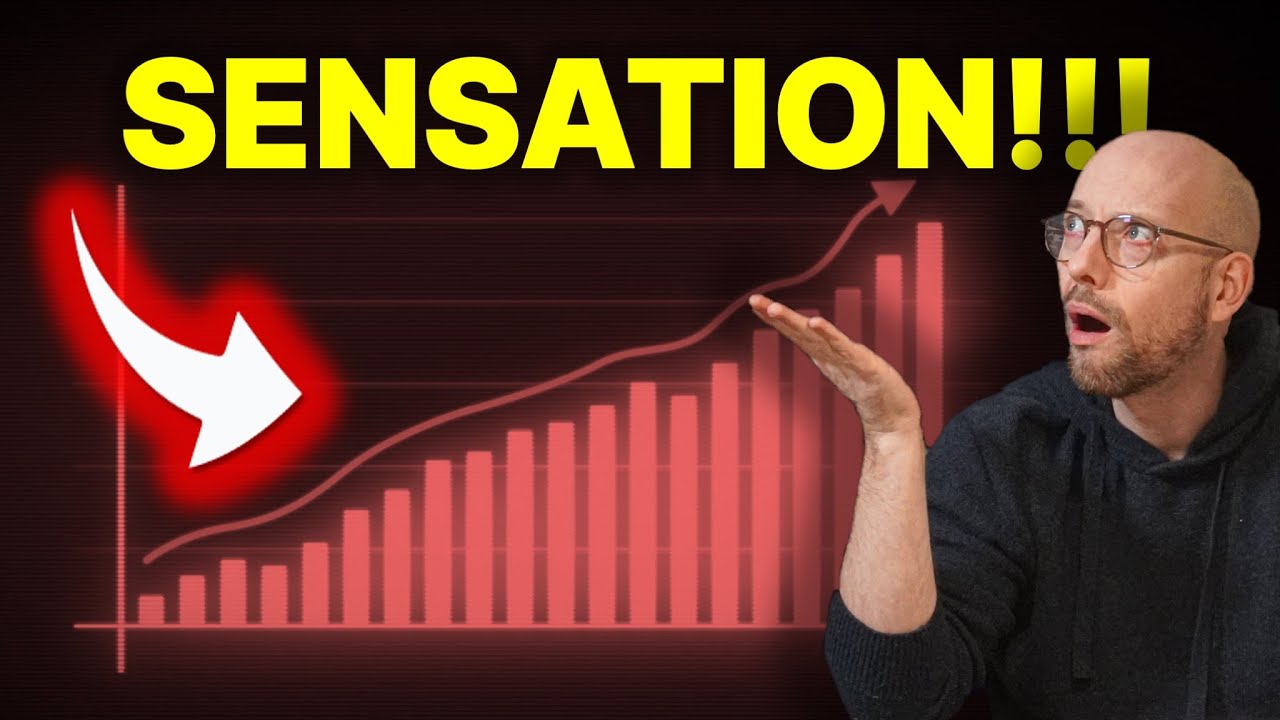
Energierevolution: Diese Kurve zeigt, was Merz und Reiche nicht verstanden haben
Keywords
Summary
170 words
Critical Evaluation
Value of the Information & Strength of the Argument
The video provides valuable insights into the current state and future potential of photovoltaics, backed by quantitative data and expert analysis. The argumentation is generally solid, using historical data and well-known learning curves to project future trends. However, the extrapolation of exponential growth over a decade is optimistic and does not fully account for potential saturation effects or system integration challenges. The discussion on efficiency and cost comparisons is compelling, but some claims, such as the exact timeline for 100% renewable electricity, are presented with confidence that may not be warranted. Overall, the value is high for informing a general audience about the economic case for renewables, but the argumentation could be more nuanced regarding uncertainties.
Scientific Rigor, Source Quality, Title Accuracy
The scientific rigor is moderate: the video relies on expert opinion and simplified models rather than peer-reviewed studies. While the data on PV growth and cost declines are consistent with known trends, the projections are extrapolations and should be treated as such. The sources cited are mostly the host’s own links and promotional materials, with no direct references to specific academic papers. The title accurately reflects the content, focusing on a curve that illustrates the exponential growth of PV. The adéquation between title and content is good, as the video indeed discusses a curve that politicians allegedly misunderstand. However, the video does not provide detailed citations for many claims, which limits its scientific rigor.
245 words
Title / Content Match
The title accurately reflects the content, focusing on a curve showing exponential growth of PV and criticizing politicians' lack of understanding.
Quality & Reliability
7/10
The video features an expert interview with a professor of energy technology, presenting quantitative data on PV growth and cost reductions. However, the discussion is largely based on extrapolations and simplified models, with some claims lacking detailed citations. The tone is opinionated and promotional, but the core data appears consistent with known trends.
Chapters
- Einleitung: Revolution der Erneuerbaren
- Entwicklung der Photovoltaik seit 2000
- Warum Erneuerbare immer billiger werden
- Wann kann Photovoltaik die ganze Welt versorgen?
- Internationaler Handel Erneuerbarer Energie
- Vorteil der Primär- und Nutzenergie Erneuerbarer Energieen
- Die Kosten der Fossilen
- Haben die Chinesen es als einzige verstanden?
Cited Sources
- Money for Future - PV-Anlage Anfrage — Link in description for PV installation inquiries.
- Money for Future - Solaranlage Tool — Free tool for designing solar systems.
- Alles wird Strom Podcast — Podcast link mentioned in the video.
- Tibber dynamic tariff — Affiliate link for dynamic electricity tariff.
- Balkonkraftwerk — Affiliate link for balcony solar systems.
- Wallbox Evalino — Affiliate link for mobile wallbox.
- Related video 1 — Related video on the topic.
- Related video 2 — Related video on the topic.
- Related video 3 — Related video on the topic.
- Related video 4 — Related video on the topic.
Concurring Sources
- Fraunhofer ISE - Photovoltaics Report — Provides data on PV cost and growth trends.
- IRENA - Renewable Power Generation Costs — Reports on declining costs of renewables.
Dissenting Sources
- Potential saturation of exponential growth — Some experts argue that exponential growth in PV will eventually slow due to market saturation and resource constraints.
Contribution & Novelties
The video provides a compelling synthesis of PV growth data and cost trends, making a strong economic case for renewables. It emphasizes the efficiency advantages of electrification and the potential for a rapid transition. The discussion on primary vs. useful energy is particularly insightful, highlighting how renewables can reduce overall energy demand. The video also touches on geopolitical shifts, with China leading the transition.
Pour aller plus loin :
- Swanson’s law — Related to the learning curve of PV cost decline.
- Levelized cost of electricity — Key metric for comparing energy costs.
- Sector coupling — Concept of integrating energy sectors for efficiency.
102 words
Radar Profile
The radar profile shows high scores in quantity and quality of information, with moderate technical level and reliability. This indicates a well-informed discussion but with some limitations in depth and sourcing.
💬 Positif. Sur les 29 commentaires analysés, la majorité exprime un soutien enthousiaste à la vidéo, saluant la clarté des explications et l'optimisme quant à la transition énergétique, avec quelques critiques constructives sur les limites du modèle de croissance exponentielle.