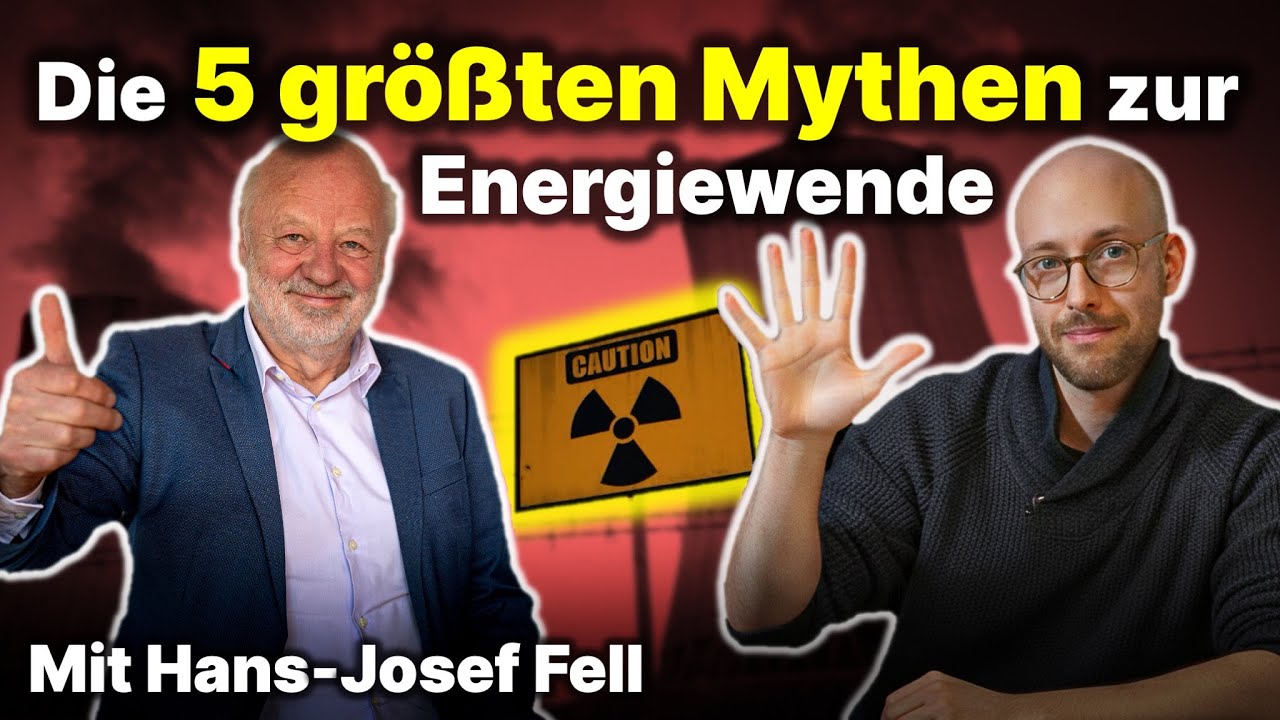
So belügt uns die fossile Industrie - Faktencheck zur Energiewende
Keywords
Summary
142 words
Critical Evaluation
Value of the Information & Strength of the Argument
The video provides valuable information by presenting concrete data and expert insights, such as the correlation between gas and electricity prices, the cost of fossil fuel subsidies, and the technical capabilities of power electronics for grid stability. The argumentation is solid, using logical reasoning and examples like France’s nuclear debt and the Flamanville reactor’s poor performance. However, the presentation is one-sided, lacking a balanced discussion of potential drawbacks or counterarguments, which slightly weakens the overall persuasiveness.
Scientific Rigor, Source Quality, Title Accuracy
The video demonstrates scientific rigor by referencing studies, reports, and expert opinions, such as the Fraunhofer Institute’s research on grid stability. However, specific sources are not always cited explicitly, and the reliance on expert opinion and advocacy may reduce the perceived reliability. The title accurately reflects the content, which is a fact-check of energy transition myths. The video includes a sponsored segment for Memodo, which is clearly disclosed and does not detract from the content’s quality.
167 words
Title / Content Match
The title accurately reflects the content, which systematically debunks five major myths about the energy transition, with a focus on the influence of the fossil fuel industry.
Quality & Reliability
7/10
The video presents a fact-check on energy transition myths, featuring Hans-Josef Fell, co-author of the German Renewable Energy Act. It provides data on costs, subsidies, and technological capabilities, but relies heavily on expert opinion and advocacy, with limited peer-reviewed sources. The arguments are coherent and supported by examples, but the presentation is one-sided, lacking counterarguments.
Chapters
- Einleitung: Die 5 größten Mythen zur Energiewende
- Mythos 1: Strom ist teuer wegen der Erneuerbaren
- Nachricht vom Sponsor
- Mythos 2: Die Energiewende ist unbezahlbar
- Mythos 3: Wir machen uns abhängig von China
- Mythos 4: Wir brauchen große Kraftwerke um Dunkelflauten zu verhindern
- Mythos 5: Atomkraft erlebt weltweite Renaissance
Cited Sources
- Memodo Expert Days 2025 — Sponsor segment promoting an event for installers.
- Memodo Photovoltaik-Großhandel — Sponsor link to the photovoltaic wholesale company.
- Money for Future - Anfrage für PV-Anlage — Link for viewers to request a PV installation.
- Money for Future - Solaranlage Tool — Free tool for designing a solar system.
- Alles wird Strom Podcast — Podcast on the energy transition.
- Tibber dynamic electricity tariff — Affiliate link for a dynamic electricity provider.
- Balkonkraftwerk — Affiliate link for balcony solar panels.
- Wallbox Evalino — Affiliate link for a mobile wallbox.
- Related video 1 — Further video on the topic.
- Related video 2 — Further video on the topic.
Concurring Sources
- Fraunhofer ISE - Stromgestehungskosten — Study on levelized cost of electricity for renewables.
- Agora Energiewende — Think tank providing analysis on the energy transition.
Dissenting Sources
Contribution & Novelties
The video offers a clear and accessible fact-check of common myths about the energy transition, providing a valuable resource for public understanding. It highlights the role of fossil fuel subsidies and the merit-order effect in electricity pricing, and presents technical solutions for grid stability. The inclusion of Hans-Josef Fell adds authoritative weight.
Pour aller plus loin :
- Merit-Order-Effekt — Explains the mechanism by which the most expensive power plant sets the electricity price.
- Erneuerbare-Energien-Gesetz — Background on the German Renewable Energy Act.
- Fossile Subventionen — Data on environmentally harmful subsidies in Germany.
92 words
Radar Profile
The radar profile shows high scores in quantity of information and technical level, indicating a content-rich video with moderate depth. The quality and reliability scores are slightly lower, reflecting the advocacy nature and reliance on expert opinion. Overall, the video is informative but may be perceived as one-sided.
💬 Positif. Sur les 30 commentaires analysés, la majorité exprime un soutien enthousiaste au contenu, avec des remerciements et des partages, bien que quelques-uns soulèvent des critiques techniques ou politiques.