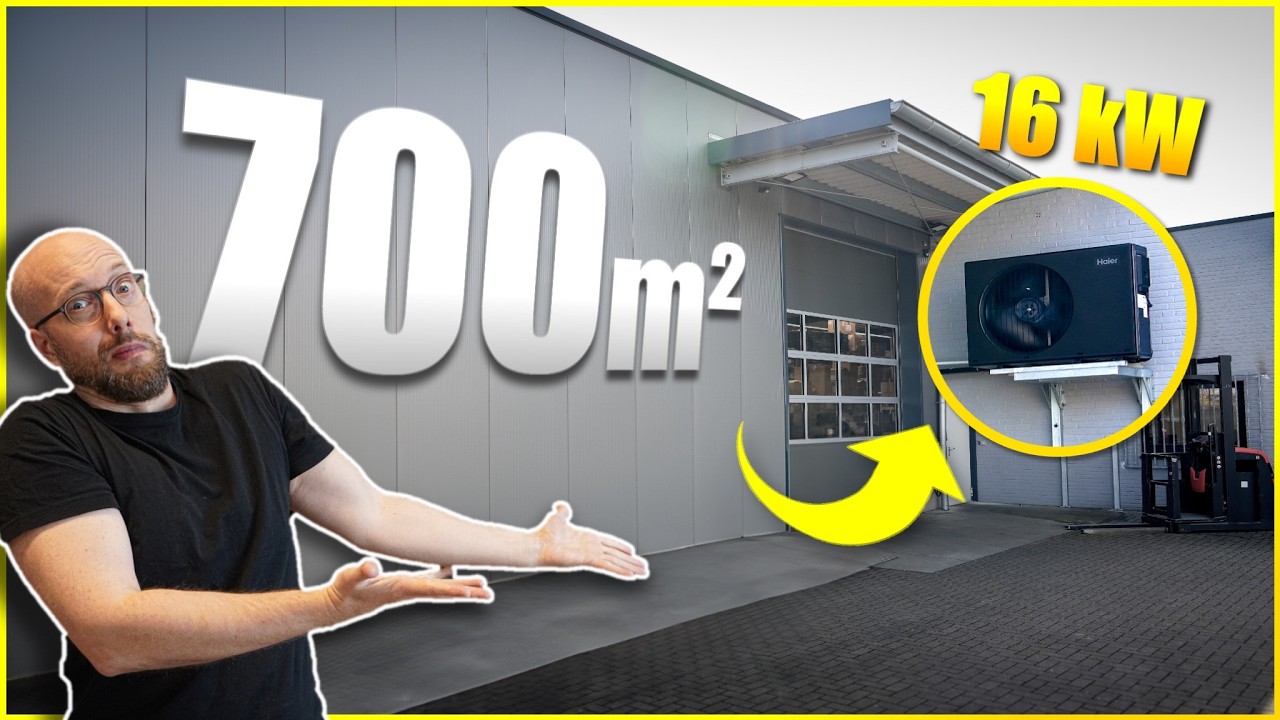
SCHLUSS MIT GAS! Unternehmer baut Wärmepumpe selbst ein (für Bruchteil der Kosten)
Keywords
Summary
165 words
Critical Evaluation
Value of the Information & Strength of the Argument
The video provides valuable real-world data on the costs and savings of installing a heat pump in a commercial building, including specific figures (€800/month gas vs €500/month electricity). It also explains the technical advantages of the Hydro-Split system, such as no need for a refrigeration license and the use of propane as a refrigerant. The argumentation is persuasive but relies heavily on the sponsor’s claims and lacks independent verification. The case study is compelling, but the video does not address potential drawbacks or limitations in depth.
Scientific Rigor, Source Quality, Title Accuracy
The video is sponsored by Haier, which is disclosed, but this introduces a potential bias. The technical explanations are simplified and some claims (e.g., COP at -25°C) are not rigorously substantiated. The title accurately reflects the content, and the video includes links to Haier’s website and other resources. However, no independent sources are cited, and the video does not provide a balanced view of alternative heating options.
168 words
Title / Content Match
The title accurately reflects the content: an entrepreneur installs a heat pump himself, highlighting cost savings and DIY aspects.
Quality & Reliability
6/10
The video presents a real-world case study with specific data on costs and savings, but it is sponsored by Haier and lacks independent verification. Technical explanations are simplified and some claims (e.g., COP at -25°C) are not rigorously substantiated.
Chapters
- Einleitung: Stresstest für die Wärmepumpe
- Warum wollte Joachim auf Wärmepumpe wechseln?
- Die Wärmepumpe und der Pufferspeicher
- Die Hayer Hydro-Split-Wärmepumpe im Check
- Warum Propan anstelle von R32 als Kältemittel?
- Eignet sich die Wärmepumpe auch für Einfamilienhäuser?
- Preis der Wärmepumpe
- So unterstützt Haier Haustechnik beim DIY-Einbau
- Joachims Ersparnisse durch die Wärmepumpe
- Joachims Tipps an die Community
Cited Sources
- Haier Hydro-Split Wärmepumpen — Official product page for the heat pump model featured in the video.
- Haier Kontaktformular — Contact form for Haier Haustechnik, mentioned for customer support.
- Rhehag (Joachim's company) — Website of the entrepreneur's business, mentioned as his trade company.
- Money for Future - Anfrage für PV-Anlage — Link for inquiries about PV installation, mentioned in the video.
- Money for Future - Solaranlage Tool — Free tool for designing a solar system, mentioned in the description.
- Robin Plus - Alles wird Strom Podcast — Podcast related to the energy transition, mentioned in the description.
- Tibber (dynamic electricity tariff) — Affiliate link for a dynamic electricity provider, mentioned in the description.
- Balkonkraftwerk (balcony solar) — Affiliate link for balcony solar panels, mentioned in the description.
- Hornbach - Haier Wärmepumpen — Link to purchase Haier heat pumps at Hornbach, mentioned in the description.
- Related video 1 — Related video on the same topic, linked in the description.
- Related video 2 — Related video on the same topic, linked in the description.
Concurring Sources
Dissenting Sources
- Comment on buffer tank efficiency — A commenter pointed out that the buffer tank's energy storage capacity is minimal, contradicting the video's implication that it is useful for storing excess PV energy.
Contribution & Novelties
The video offers a practical case study of a DIY heat pump installation in a commercial setting, highlighting the Hydro-Split technology that simplifies installation and reduces costs. It provides real-world data on energy savings and discusses the benefits of propane as a refrigerant. The video also showcases Haier’s support for DIY installers, which is a relatively new approach in the industry.
Pour aller plus loin :
- Heat pump — General overview of heat pump technology.
- Propane as refrigerant — Properties and applications of propane.
- Photovoltaic system — Basics of solar power generation.
92 words
Radar Profile
The radar profile shows moderate scores across all dimensions, indicating a balanced but not exceptional video. The highest score is in quantity of information, reflecting the detailed case study, while technical depth and reliability are lower due to the simplified explanations and sponsored content.
💬 Positif. Sur les 30 commentaires analysés, la majorité exprime un soutien enthousiaste pour le projet DIY et la technologie présentée, avec quelques interrogations techniques sur la capacité de la pompe à chaleur et des suggestions d'amélioration.