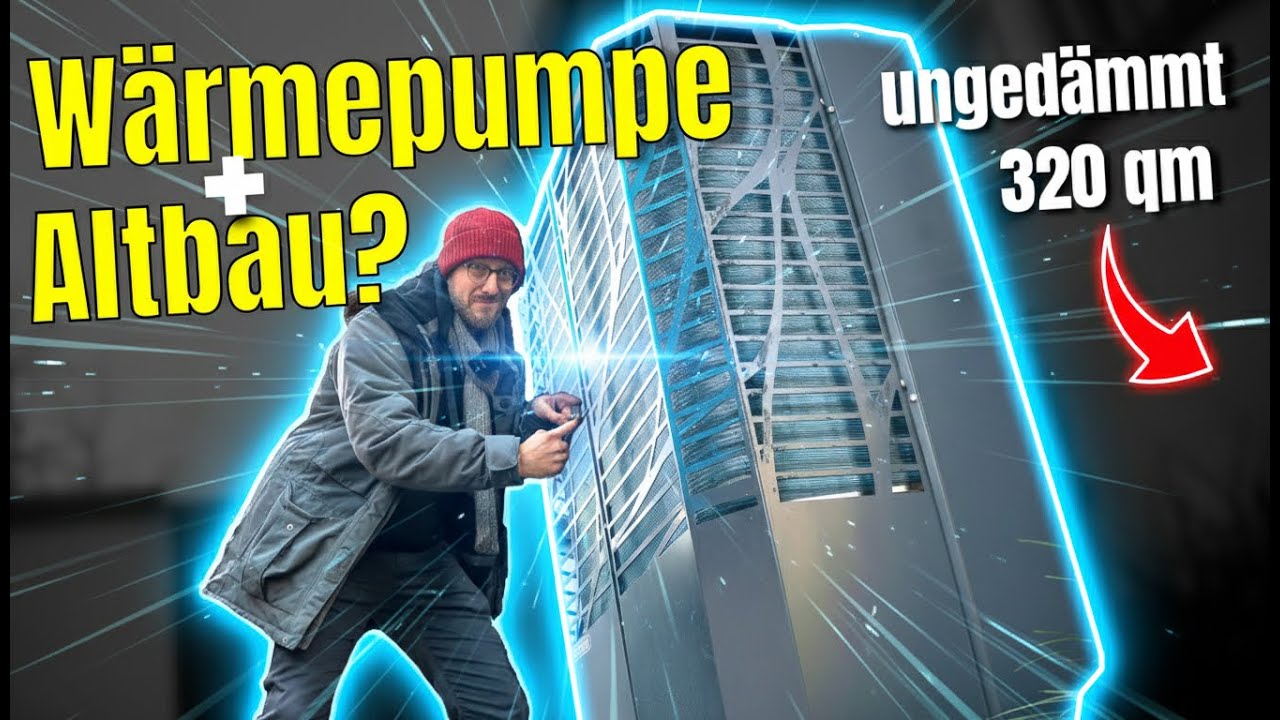
Wärmepumpe im Altbau funktioniert nicht? Rentner macht den Test
Keywords
Summary
228 words
Critical Evaluation
Value of the Information & Strength of the Argument
The video provides valuable real-world data on heat pump performance in an old building, including specific energy consumption, efficiency, and cost figures. The argumentation is persuasive, as it directly addresses common concerns about heat pumps in old buildings and demonstrates that they can work effectively. However, the evidence is based on a single case study and relies on the homeowner’s self-reported data, which may not be representative of all situations. The video also includes promotional content for a sponsor, which could introduce bias, but the core information appears credible.
Scientific Rigor, Source Quality, Title Accuracy
The video does not cite external scientific sources, but it presents empirical data from a real installation. The title accurately reflects the content, and the video is well-structured with clear chapters. The presence of a sponsor segment is disclosed, and affiliate links are provided, but they do not detract from the factual content. The video’s scientific rigor is moderate, as it lacks independent verification and does not discuss potential limitations or alternative scenarios in depth.
179 words
Title / Content Match
The title is a provocative question that accurately reflects the content: a test of a heat pump in an old, uninsulated building. The video delivers on this promise by presenting the case study and results.
Quality & Reliability
7/10
The video presents a real-world case study with specific data (energy consumption, costs, efficiency) and includes a clear explanation of the heat pump's operation. However, it relies heavily on anecdotal evidence and lacks independent verification of the claimed figures. The presence of a sponsor segment and affiliate links introduces potential bias, though the core content appears factual.
Chapters
- Einleitung: Wärmepumpe im Altbau
- Warum entschied sich Bernd für Wärmepumpe?
- Wie viel Gasverbrauch hatte Bernd?
- Bernds Sorge: Klappt das mit Wärmepumpe?
- Nachricht vom Sponsor des heutigen Videos
- Bernds Sorge: Klappt das mit Wärmepumpe?
- Wie effizient läuft die Wärmepumpe?
- Wie hoch ist die Vorlauftemperatur?
- Wie viel spart Bernd durch die Wärmepumpe?
- Kosten & Amortisationszeit
- Bernds Fazit & Tipps
Cited Sources
- Planet Wild - Grüne Wüste Projekt — Referenced in the sponsor segment as an example of Planet Wild's projects.
- Anfrage für PV-Anlage oder Wärmepumpe — Mentioned as a contact for installation services.
- Kostenloses Tool für Solaranlage — Provided as a tool for designing solar systems.
- Planet Wild Mitgliedschaft — Sponsor link for joining Planet Wild.
- Podcast zur Energiewende — Mentioned as a related podcast.
- Tibber dynamischer Stromtarif — Affiliate link for dynamic electricity tariff.
- Balkonkraftwerk — Affiliate link for balcony solar panels.
- Mobile Wallbox Evalino — Affiliate link for a mobile wallbox.
Concurring Sources
- Heat pump - Wikipedia — General information on heat pump technology and efficiency.
- Seasonal coefficient of performance - Wikipedia — Explanation of the SCOP metric used in the video.
Contribution & Novelties
The video contributes a concrete case study demonstrating that heat pumps can work efficiently in old, uninsulated buildings, challenging common misconceptions. It provides specific performance data (SCOP of 5.0) and cost figures, offering practical insights for homeowners considering a similar transition. The emphasis on the importance of low flow temperatures and the potential for high efficiency even with old radiators is a valuable addition to the discourse.
Pour aller plus loin :
- Heat pump - Wikipedia — Provides a general overview of heat pump technology and efficiency metrics.
- Seasonal coefficient of performance - Wikipedia — Explains the SCOP metric used to measure heat pump efficiency.
- German Energy Agency (dena) - Heat pumps — Offers official information on heat pump incentives and best practices in Germany.
- Fraunhofer ISE - Heat pump research — Provides scientific studies on heat pump performance in existing buildings.
142 words
Radar Profile
The radar profile shows balanced scores across information quantity, quality, technical level, and reliability, with a slight emphasis on information quantity and quality. This indicates a well-rounded video that provides substantial data and explanations, though technical depth and reliability are slightly lower, reflecting the anecdotal nature of the case study.
💬 Positive. Sur les 30 commentaires analysés, la majorité exprime un avis favorable, saluant la démonstration et les conseils pratiques, avec quelques interrogations techniques sur les détails de l'installation.