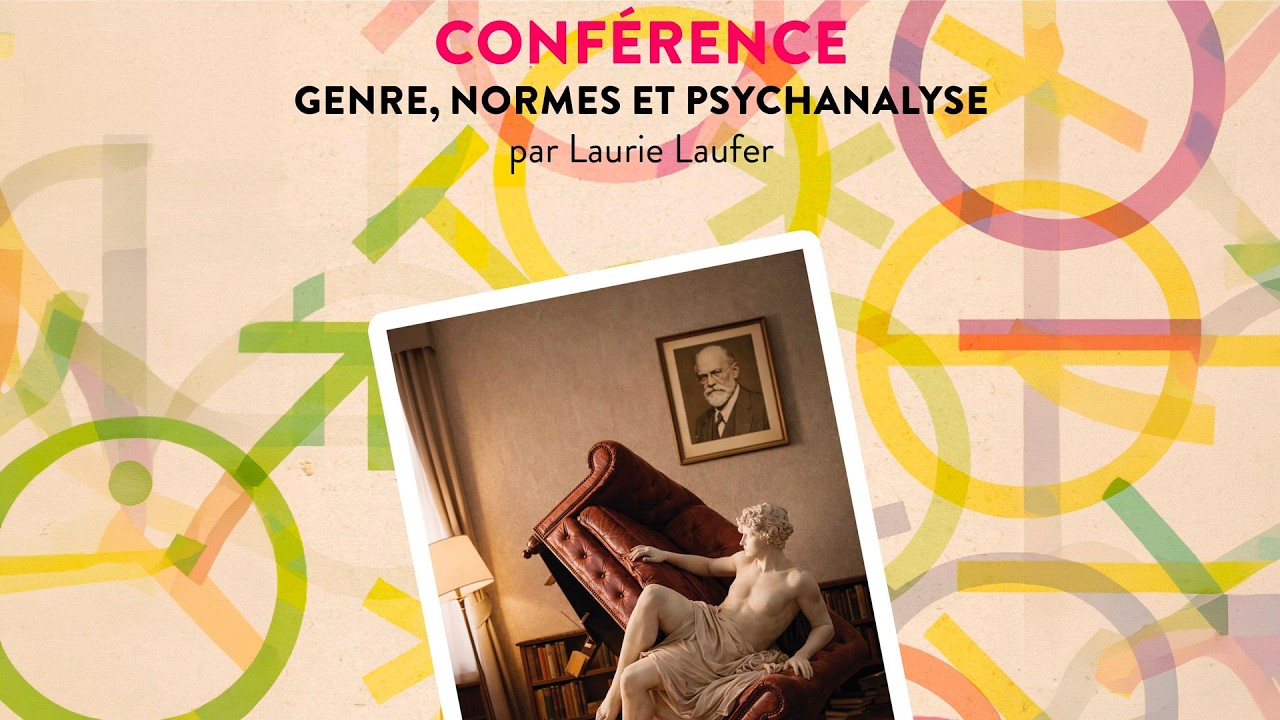
Le mois du genre - Genre, normes et psychanalyse par Laurie LAUFER.
Keywords
Summary
164 words
Critical Evaluation
Value of the Information & Strength of the Argument
The value of the information lies in its clear historical contextualization of psychoanalytic concepts and its critical examination of how norms shape subjectivity. The argumentation is solid, drawing on primary sources such as Freud’s letters and key theoretical works. Laufer effectively demonstrates that psychoanalysis, when faithful to Freud’s original subversive insights, can be a tool for de-pathologizing sexual diversity. However, the argument is primarily theoretical and may not address all contemporary critiques of psychoanalysis.
Scientific Rigor, Source Quality, Title Accuracy
The speaker demonstrates scientific rigor by grounding her arguments in historical texts and citing specific works, such as Freud’s ‘Three Essays on the Theory of Sexuality’ and Laplanche’s writings. The title accurately reflects the content. The talk is well-structured and academically informed, though it is an opinion piece rather than a systematic review.
142 words
Title / Content Match
The title accurately reflects the content, which discusses gender, norms, and psychoanalysis.
Quality & Reliability
8/10
The speaker is a professor of clinical psychopathology and psychoanalyst, providing a well-structured historical and theoretical analysis. The content is based on established psychoanalytic theory and historical references, though it is primarily an opinion/expert talk rather than a systematic review.
Key Moments
Markers derived by PSI from the transcript: the creator did not define chapters.
- Introduction and thanks to the organizing collective.
- Discussion of Freud's rupture with degeneration theory and the pathologization of sexuality.
- Explanation of Freud's concept of polymorphous perversity and its implications.
- Introduction of the question: what troubles do gender studies bring to psychoanalysis?
- Reading of Freud's letter to an American mother about homosexuality, emphasizing his non-pathologizing stance.
- Discussion of psychic bisexuality and its historical context.
- Reference to Laplanche's idea that gender is an unthought of psychoanalysis.
- Exploration of how differentiation leads to hierarchization, and the role of intersectionality.
- Conclusion: psychoanalysis should aim for the patient's éros, not moral conformity.
Cited Sources
- Le pouvoir des normes. Penser le genre avec la psychanalyse — Book directed by Laurie Laufer, mentioned in the description.
- Psychopathia Sexualis — Referenced as a key psychiatric text by Krafft-Ebing.
- Three Essays on the Theory of Sexuality — Freud's work discussed in the talk.
- The History of Sexuality — Foucault's work referenced in the talk.
Concurring Sources
- Le pouvoir des normes. Penser le genre avec la psychanalyse — Book directed by Laurie Laufer, aligns with the talk's themes.
Contribution & Novelties
The talk provides a nuanced perspective on the relationship between psychoanalysis and gender studies, arguing that gender is a ‘return of the repressed’ in psychoanalytic theory. It offers a historical contextualization of psychoanalytic concepts and critiques the normative uses of psychoanalysis. The speaker emphasizes the need to re-politicize psychoanalysis and to focus on the patient’s éros rather than moral conformity.
Pour aller plus loin :
- Judith Butler’s Gender Trouble — Foundational text in gender theory, relevant to the critique of binary gender.
- Michel Foucault’s The History of Sexuality — Explores the relationship between power, knowledge, and sexuality.
- Jean Laplanche’s works — Psychoanalyst who theorized the ’enigmatic signifier’ and the unthought of gender.
112 words
Radar Profile
The radar profile shows high scores in information quality and reliability, with slightly lower scores in technical level and quantity, reflecting the theoretical and expert nature of the talk.