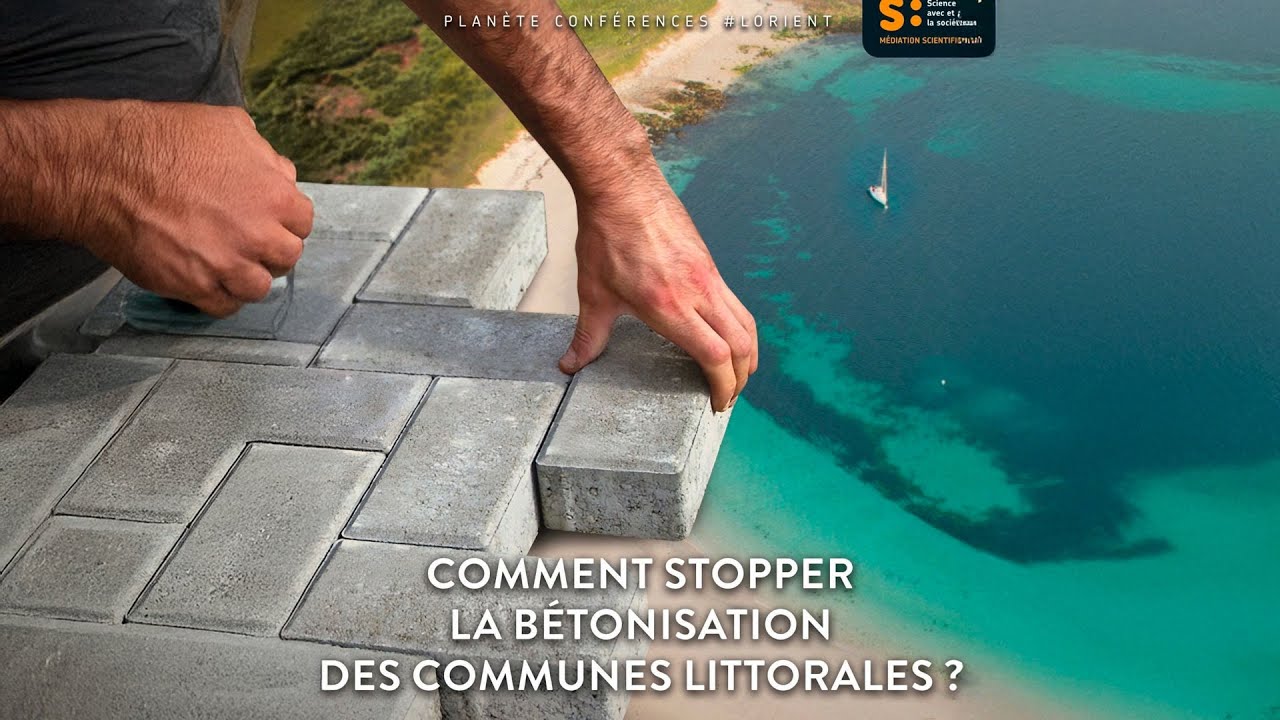
Planète Conférences - Comment stopper la bétonisation des communes littorales
Keywords
Summary
173 words
Critical Evaluation
Value of the Information & Strength of the Argument
The value of the information lies in the original data analysis by Splann!, which provides concrete figures and maps illustrating the extent of coastal urbanization. The argumentation is solid, based on a combination of quantitative data (BD Topo, census) and qualitative analysis of planning documents (PLU) and legal frameworks. The speakers effectively demonstrate the paradox of building more while losing residents, and they critically examine the failures of the Loi Littoral. However, the discussion is somewhat one-sided, focusing on the problems without deeply exploring potential solutions or counterarguments. The presence of an academic and a planning expert adds credibility, but the debate format limits the depth of analysis.
Scientific Rigor, Source Quality, Title Accuracy
The scientific rigor is moderate. The journalists used open data sources (BD Topo, INSEE) and referenced legal texts and jurisprudence. They also consulted the ‘référentiel loi littorale’ published by the Brittany region. However, the investigation is not peer-reviewed, and the speakers do not cite specific academic studies. The title accurately reflects the content, which is a conference on stopping coastal urbanization. The discussion is well-structured, but the lack of citations for some claims and the reliance on a single investigation reduce the overall rigor.
207 words
Title / Content Match
The title accurately reflects the content, which focuses on the issue of coastal urbanization and potential solutions.
Quality & Reliability
7/10
The conference features investigative journalists from Splann! presenting a data-driven study, complemented by an academic and a planning expert. The methodology is transparent, using open data and legal analysis. However, the discussion is largely based on a single investigation and lacks peer-reviewed sources, and the speakers' perspectives may be biased.
Key Moments
Markers derived by PSI from the transcript: the creator did not define chapters.
- Introduction by the moderator, presenting the topic and the speakers.
- Denis Vannier and Jérémie Szpirglas introduce Splann! and explain the origin of their investigation.
- Presentation of the methodology: using BD Topo data and buffers to map new construction between 2014 and 2024.
- Discussion on the definition of the coastal zone and the legal framework of the Loi Littoral.
- Analysis of planning documents (PLU) and identification of legal weaknesses.
- Presentation of the paradox: municipalities with high construction rates but population decline.
- Discussion on the role of state services and the lack of control over permits.
- Arnaud Le Montagner explains the challenges of implementing ZAN and the need for planning.
- Ronan Le Delezir discusses the social tensions and the need for a balanced approach.
- Q&A session begins, with questions from the audience.
Cited Sources
- Splann! investigation on coastal urbanization — The journalists present their data-driven investigation on the artificialization of the Breton coastline.
- BD Topo (IGN) — Used to map buildings and track urban expansion between 2014 and 2024.
- INSEE census data — Used to analyze population changes in coastal municipalities.
- Loi Littoral (1986) — The legal framework discussed throughout the conference.
- Référentiel loi littorale (Région Bretagne) — Referenced as a guide for interpreting the law and jurisprudence.
Concurring Sources
- CEREMA - Artificialisation des sols — Provides national data on land artificialization, supporting the claims of the conference.
- Rapport du Sénat sur la loi Littoral — A parliamentary report discussing the application and limits of the Loi Littoral.
Dissenting Sources
Contribution & Novelties
The conference provides an original contribution by combining investigative journalism with data analysis to quantify the paradox of coastal urbanization in Brittany. It highlights the gap between legal intentions and actual practices, and the challenges of implementing ZAN. The discussion offers a multi-stakeholder perspective, including journalists, an academic, and a planning expert.
Pour aller plus loin :
- Loi Littoral — Overview of the French coastal law.
- Zéro Artificialisation Nette — Explanation of the ZAN policy.
- Artificialisation des sols — General concept of land artificialization.
- Splann! — The independent Breton media that conducted the investigation.
94 words
Radar Profile
The radar profile shows high scores in quantity of information and technical level, reflecting the detailed data presentation and legal analysis. However, the quality of information and global reliability are slightly lower due to the lack of peer-reviewed sources and the potential bias of the speakers.
💬 Sur les 0 commentaires analysés, aucune tendance n'a pu être dégagée.