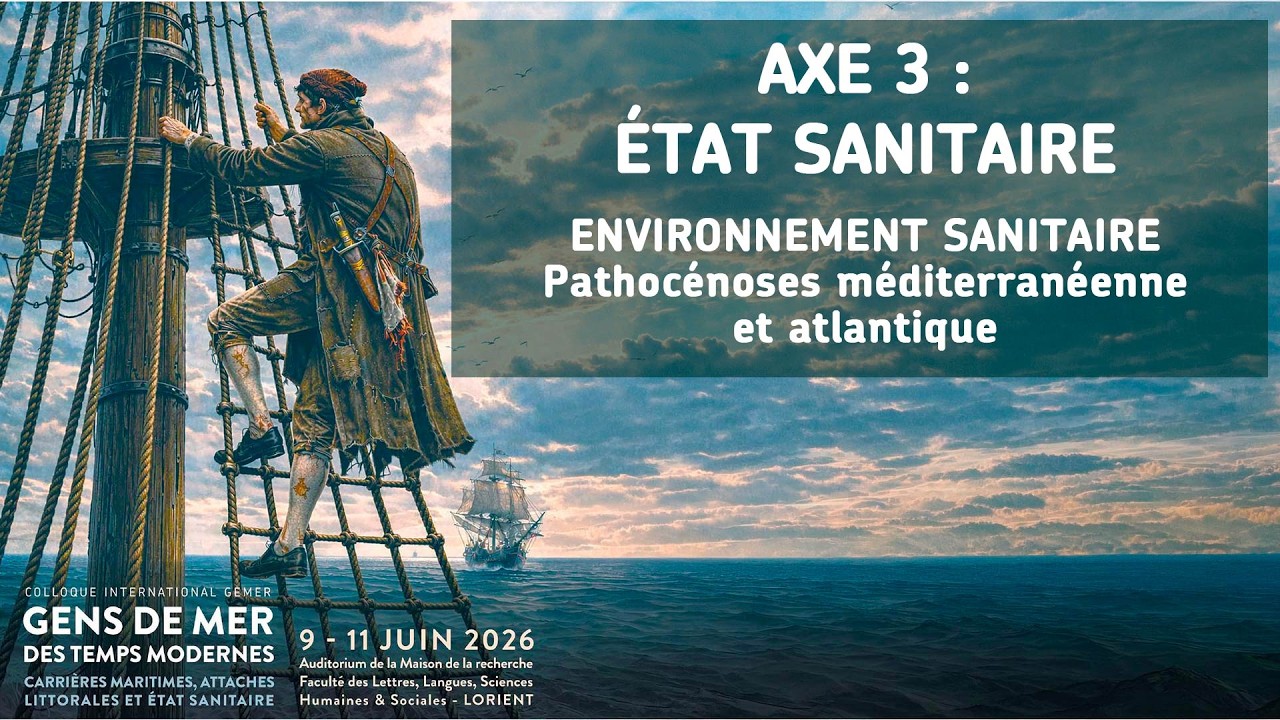
Pathocénoses méditerranéenne et atlantique à travers les sources médicales du XVIIIe siècle.
Keywords
Summary
112 words
Critical Evaluation
Value of the Information & Strength of the Argument
The presentation provides valuable insights into historical mortality patterns using primary sources. The argumentation is methodical, with clear descriptions of data collection and analysis. The authors acknowledge limitations, such as missing causes of death and small sample sizes, which strengthens the credibility of their conclusions. However, some inferences, like estimating typhus contamination rates, rely on assumptions that could be further justified.
Scientific Rigor, Source Quality, Title Accuracy
The research is based on rigorous archival work, using naval registers and parish records. The sources are appropriate for the research questions, and the authors transparently discuss their limitations. The title accurately reflects the content, though the term ‘pathocenoses’ is not explicitly defined in the presentation. The analysis of sources is thorough, but the presentation could benefit from more explicit references to secondary literature.
140 words
Title / Content Match
The title accurately reflects the content, which compares disease patterns (pathocenoses) in Mediterranean and Atlantic contexts using 18th-century medical sources.
Quality & Reliability
7/10
The presentation is based on original archival research, using primary sources such as naval registers and parish records. The methodology is clearly described, and limitations are acknowledged. However, the sample sizes are small, and some inferences are based on indirect evidence.
Key Moments
Markers derived by PSI from the transcript: the creator did not define chapters.
- Introduction to the study of sailors from Cancale and their mortality.
- Comparison of mortality between Newfoundland sailors and general population.
- Impact of wars on life expectancy of sailors.
- Analysis of sailors who died in hospitals.
- Typhus epidemics on naval expeditions and their impact on Cancale sailors.
- Introduction to the second study on sailors from Étang de Berre.
- Age structure of sailors in the registers.
- Variables observed and methods used for analysis.
- Results on health status and mortality of sailors.
- Limitations of the study and need for complementary sources.
Cited Sources
- Registres de matricule des marins (18e siècle) — Primary sources used for the study of sailors from Étang de Berre.
- Inventaire de Tiriuc — Used to identify the cohort of sailors from Cancale.
- Monographie paroissiale de Cancale — Provided age at death for the general population of Cancale.
Concurring Sources
- Grmek, M. (1991). Diseases in the Ancient Greek World — Introduces the concept of pathocenosis, which aligns with the presentation's framework.
Dissenting Sources
- Some studies suggest higher life expectancy for sailors — The presentation's finding of early mortality among sailors may contrast with other historical studies that indicate better health conditions for certain naval populations.
Contribution & Novelties
The presentation contributes original findings on the mortality of 18th-century French sailors, particularly highlighting the impact of war and disease. It demonstrates the value of linking multiple archival sources to reconstruct historical health patterns. The study of the Étang de Berre sailors is less common in the literature, offering new data on provincial naval populations.
Pour aller plus loin :
- Pathocenosis — Concept central to the presentation, defined by Mirko Grmek.
- Typhus — Disease discussed in the context of naval epidemics.
- Naval history of France — Background on the French navy in the 18th century.
95 words
Radar Profile
The radar profile shows high scores in information quality and reliability, reflecting the use of primary sources and transparent methodology. The technical level is moderate, indicating a balance between accessibility and scientific depth. The overall profile suggests a solid academic presentation with room for more quantitative analysis.
💬 No comments were provided for analysis.