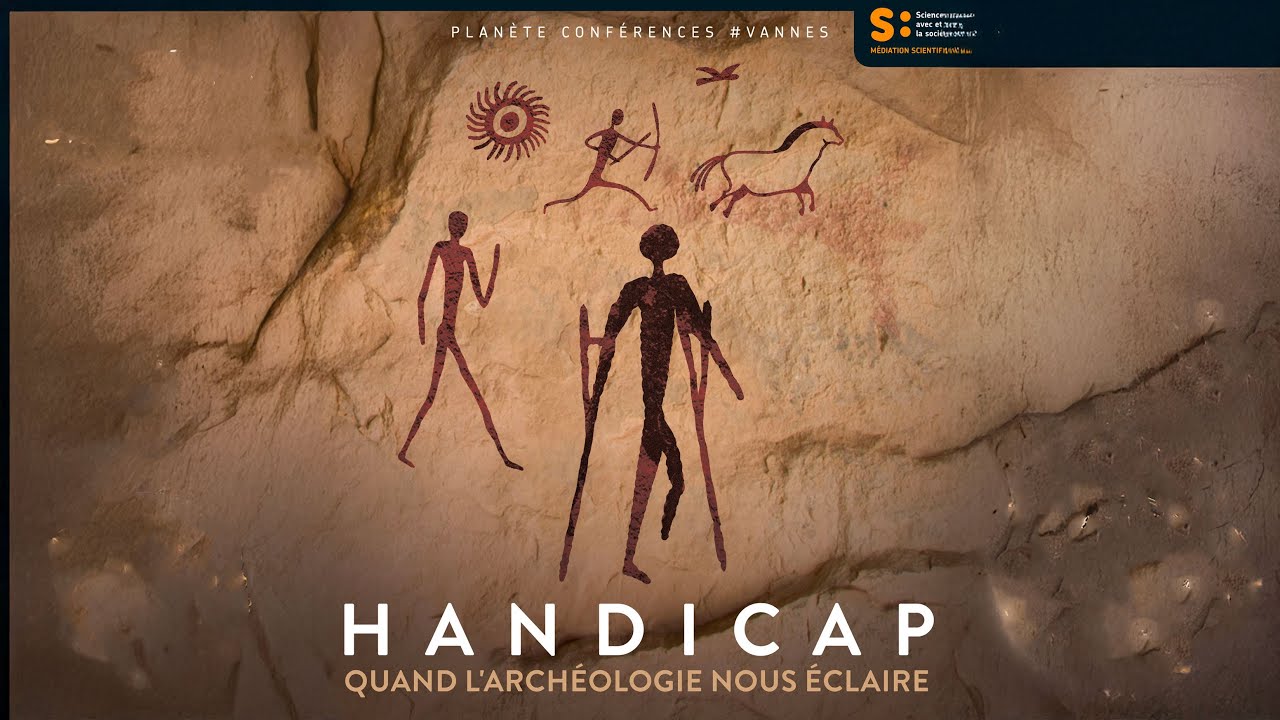
Planète conférences - Handicap, quand l'archéologie nous éclaire
Keywords
Summary
153 words
Critical Evaluation
Value of the Information & Strength of the Argument
The presentation offers valuable insights into a rarely discussed topic, using concrete archaeological examples to argue that disability was often accommodated and even valued in past societies. The argumentation is solid, based on scientific methods and careful interpretation of evidence. Delattre acknowledges the limitations of retrospective diagnosis and the need for caution in interpreting iconography. She effectively challenges modern assumptions about disability in the past, providing a nuanced perspective that emphasizes the social construction of disability.
85 words
Title / Content Match
The title accurately reflects the content: a conference on how archaeology sheds light on disability in past societies.
Quality & Reliability
8/10
The speaker is a recognized archaeo-anthropologist from INRAP, and the content is based on established scientific methods (paleopathology, isotopic analysis, paleogenetics) and well-documented case studies. The presentation is rigorous, with appropriate caveats about retrospective diagnosis. However, some interpretations (e.g., shamanism and disability) are speculative and not universally accepted.
Key Moments
Markers derived by PSI from the transcript: the creator did not define chapters.
- Introduction to INRAP and the role of preventive archaeology
- Explanation of the archaeo-anthropologist's methods: determining sex, age, pathologies
- Discussion of isotopic analysis and paleogenetics in tracing origins and diseases
- Introduction to the concept of 'different bodies' and the social dimension of disability
- Examples from ancient Egypt: stelae depicting dwarfs and individuals with disabilities
- Moche ceramics showing amputees with prostheses and the shamanic interpretation
- Medieval examples: a Bible illumination and a mosaic showing amputees with prostheses
- Discussion of the importance of studying disability for understanding societal values
- Conclusion: archaeology's contribution to contemporary debates on inclusion
Cited Sources
- INRAP (Institut national de recherches archéologiques préventives) — Mentioned as the speaker's institution and the context of preventive archaeology.
- ArteHIS (UMR 6298) — Mentioned as the speaker's research laboratory.
Concurring Sources
- INRAP — The speaker's institution, supporting the credibility of the research.
Contribution & Novelties
This conference provides a comprehensive overview of how archaeology can reveal the social integration of disabled individuals in past societies, challenging modern assumptions. It highlights the importance of interdisciplinary approaches and the need to consider cultural context. The speaker’s emphasis on ‘different bodies’ rather than ‘handicap’ offers a fresh perspective.
Pour aller plus loin :
- Paleopathology — Study of ancient diseases, relevant to the methods discussed.
- Bioarchaeology — The study of human remains in archaeological context, central to the talk.
- Disability in the ancient world — Provides additional context on historical attitudes.
- Moche culture — Background on the Moche civilization mentioned in the talk.
104 words
Radar Profile
The radar profile shows high scores in information quantity, quality, and reliability, with a moderate technical level. This indicates a well-balanced presentation that is both informative and accessible, suitable for a general audience interested in archaeology and disability studies.