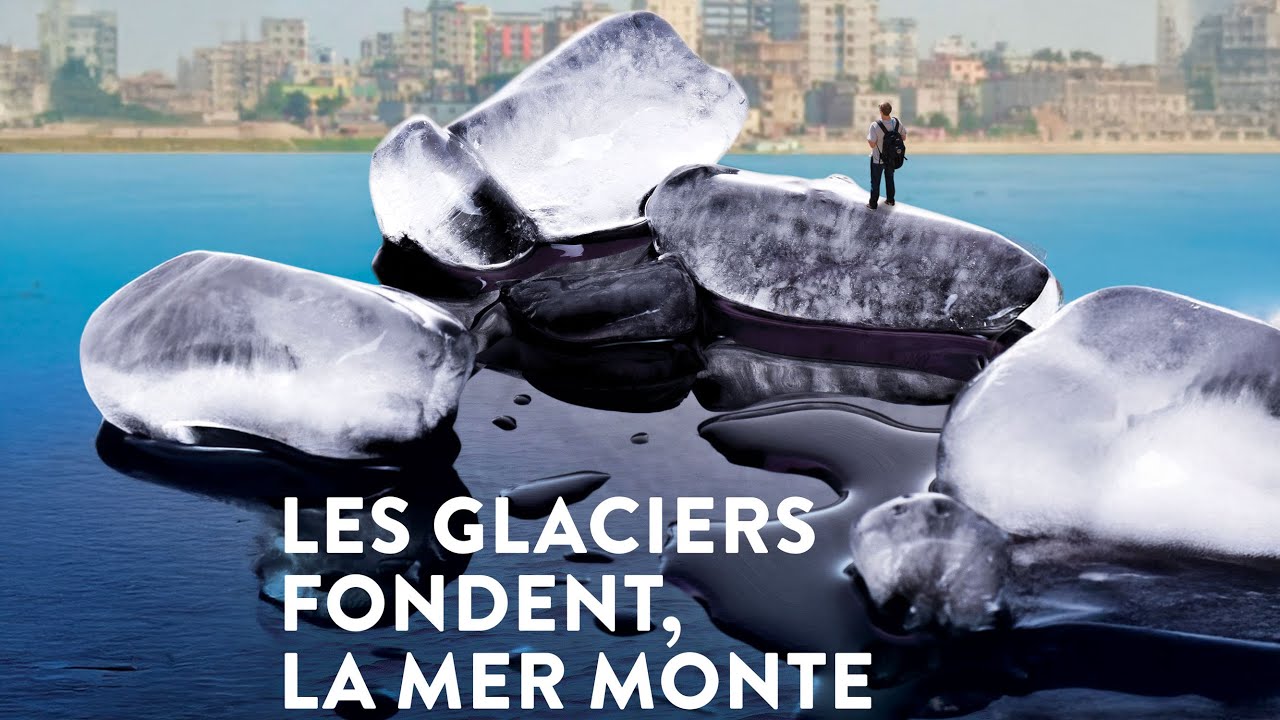
Planète conférences - Les glaciers fondent, la mer monte.
Keywords
Summary
153 words
Critical Evaluation
Value of the Information & Strength of the Argument
The conference provides valuable information on glacier types, their distribution, and their sensitivity to climate change. The argumentation is solid, based on scientific data and field observations. The speaker uses clear examples, such as the mass balance measurements on Swiss glaciers and the projected evolution of the Mer de Glace, to illustrate the processes. He also addresses common misconceptions, such as the potential for complete Antarctic melting, and provides a nuanced perspective on the timescales involved.
Scientific Rigor, Source Quality, Title Accuracy
The scientific rigor is high, with references to the World Glacier Inventory, IPCC scenarios, and specific studies. The speaker cites his own research and that of colleagues, and the content aligns with current scientific consensus. The title accurately reflects the content, which covers both glacier melt and sea-level rise. The conference is well-structured and the information is presented in an accessible yet precise manner.
155 words
Title / Content Match
The title accurately reflects the main topics: glacier melt and sea-level rise, with additional discussion of related hazards and water resources.
Quality & Reliability
9/10
The conference is given by Denis Mercier, a professor of geography at Sorbonne University and a specialist in polar environments and climate change impacts. The content is based on established glaciological data, including the World Glacier Inventory, IPCC scenarios, and field measurements. The speaker presents scientific consensus and clearly distinguishes between potential and realistic sea-level rise contributions.
Key Moments
Markers derived by PSI from the transcript: the creator did not define chapters.
- Introduction to the conference and the topic of glacier melt and sea-level rise.
- Explanation of the diversity of glaciers: ice sheets, ice caps, valley glaciers, and hanging glaciers.
- Discussion on the Antarctic ice sheet, its potential sea-level rise of 65 meters, and why it is unlikely to melt completely.
- Comparison with the Greenland ice sheet and its faster dynamics.
- Presentation of glacier mass balance data and the global trend of negative balances since the 1950s.
- Example of Swiss glaciers and the measurement of ablation using stakes.
- Projections for glacier disappearance by 2100 under different IPCC scenarios.
- Consequences of glacier melt: water resources for 2 billion people, particularly in the Himalayas.
- Discussion on glacial hazards such as icefalls and glacial lake outburst floods.
- Conclusion and emphasis on the need for adaptation.
Cited Sources
- World Glacier Inventory — Cited as the source for the number of glaciers worldwide (274,000).
- IPCC Scenarios — Referenced for the climate scenarios (1.5°C to 4°C) used in projections.
- Laboratoire de Géographie Physique (UMR 8591) — Mentioned as the speaker's research laboratory.
Concurring Sources
- IPCC Special Report on the Ocean and Cryosphere — Supports the findings on glacier melt and sea-level rise.
Contribution & Novelties
The conference provides a comprehensive overview of glacier types and their differential responses to climate change, emphasizing the importance of size and location. It clarifies the potential sea-level rise contributions from major ice sheets and the realistic timescales. The speaker also highlights the socio-economic impacts on water resources and hazards, offering a holistic perspective.
Pour aller plus loin :
- Glacier mass balance — Explains the concept of mass balance and its measurement.
- IPCC Sixth Assessment Report — Provides the latest climate projections and scenarios.
- Glacial lake outburst flood — Discusses the hazard of glacial lake outbursts, a consequence of glacier melt.
101 words
Radar Profile
The radar profile shows high scores in information quantity, quality, and reliability, with a slightly lower technical level, indicating that the content is scientifically robust but accessible to a general audience.
💬 Sur les 0 commentaires analysés, aucune tendance n'est disponible.