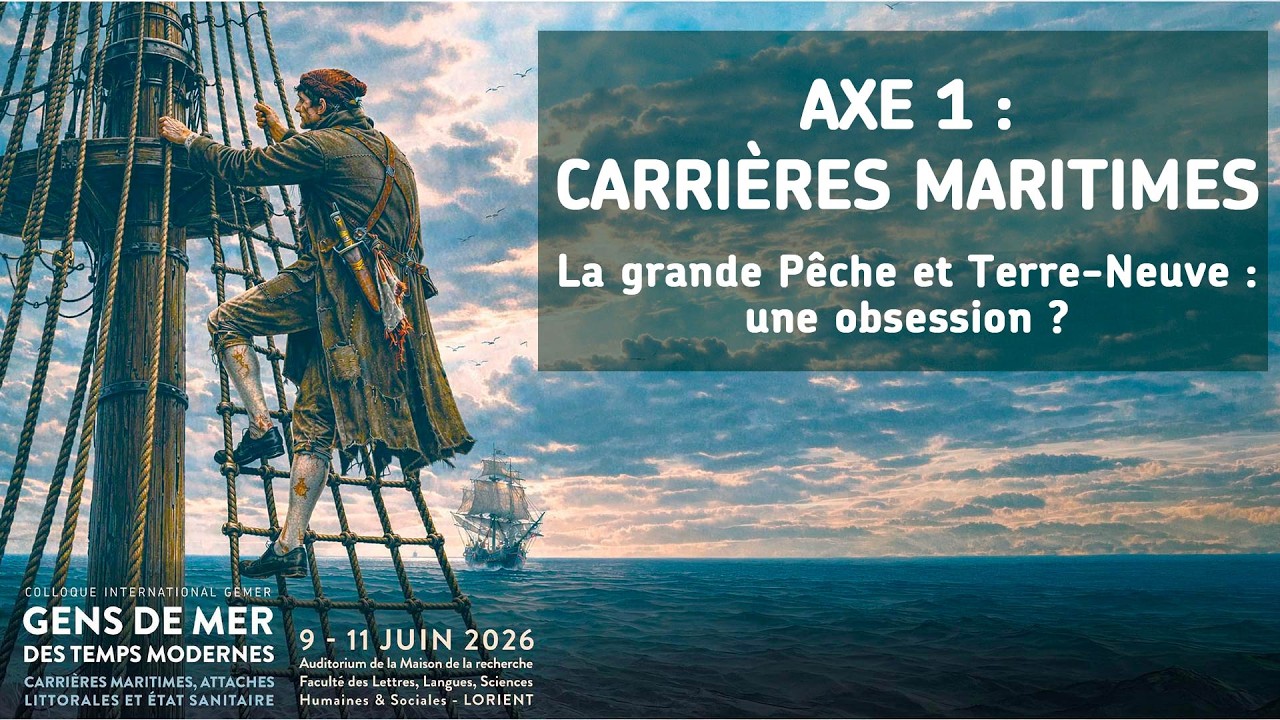
La Grande Pêche et Terre-Neuve : une obsession ?
Keywords
Summary
160 words
Critical Evaluation
Value of the Information & Strength of the Argument
The video provides valuable insights into the French cod fishery, based on primary sources and quantitative analysis. The speaker presents data on fleet sizes, crew numbers, and fishing zones, which adds depth to the historical narrative. The argumentation is solid, though informal, with references to specific archives and documents. The speaker’s expertise is evident, and he offers unique perspectives on the economic and social aspects of the fishery.
Scientific Rigor, Source Quality, Title Accuracy
The speaker demonstrates scientific rigor by using archival sources and presenting data. However, he does not provide explicit citations during the talk, though he mentions specific documents and archives. The title is appropriate, as the video explores the historical importance of the fishery and the enduring fascination with Newfoundland. The content is well-structured, but the informal style and lack of formal references may reduce its perceived reliability.
150 words
Title / Content Match
The title is appropriate as the video explores the historical importance of the Grand Banks fishery to French ports like Saint-Malo and Cancale, and the enduring fascination with Newfoundland.
Quality & Reliability
7/10
The speaker is a historian specializing in maritime history, using archival sources and quantitative data. However, the presentation is informal and lacks explicit citations, though references to archives and specific documents are mentioned.
Key Moments
Markers derived by PSI from the transcript: the creator did not define chapters.
- Introduction to the topic and the importance of Newfoundland fishery.
- Overview of the main fishing zones and their evolution.
- Discussion of the role of the admiral and the organization of the fishery.
- Explanation of the payment system and the 'lot'.
- Details on the processing of cod on shore.
- Analysis of fleet sizes and crew numbers over time.
- Discussion of the dangers from pirates and Inuit.
- Impact of the Treaty of Utrecht and the French Shore.
- Case study of a Cancale fisherman, Pierre Gautier.
- Conclusion summarizing the importance of the fishery.
Cited Sources
- Service Historique de la Défense (SHD) archives — Mentioned as source for crew lists and ship logs.
- Memorial University of Newfoundland — Mentioned as a venue for a conference on French presence in Newfoundland.
Concurring Sources
- The French Presence in Newfoundland — The speaker mentions a conference at Memorial University, indicating scholarly interest in the topic.
Contribution & Novelties
The video offers a detailed historical analysis of the French cod fishery in Newfoundland, based on archival research. It provides quantitative data on fleet sizes and crew numbers, and highlights the importance of the fishery to specific ports like Saint-Malo and Cancale. The speaker also discusses the social and economic aspects, such as payment systems and the practice of sending crews back on ‘sacques’.
Pour aller plus loin :
- Treaty of Utrecht — Relevant to the discussion of the French Shore and the loss of Newfoundland.
- Grand Banks of Newfoundland — Provides background on the fishing grounds.
- Cod fishing in Newfoundland — Further reading on the history of cod fishing in the region.
113 words
Radar Profile
The radar profile shows high scores in quantity and quality of information, with moderate technical level and reliability. This indicates a content-rich lecture with solid historical data, but with an informal presentation style that may not meet strict academic standards.