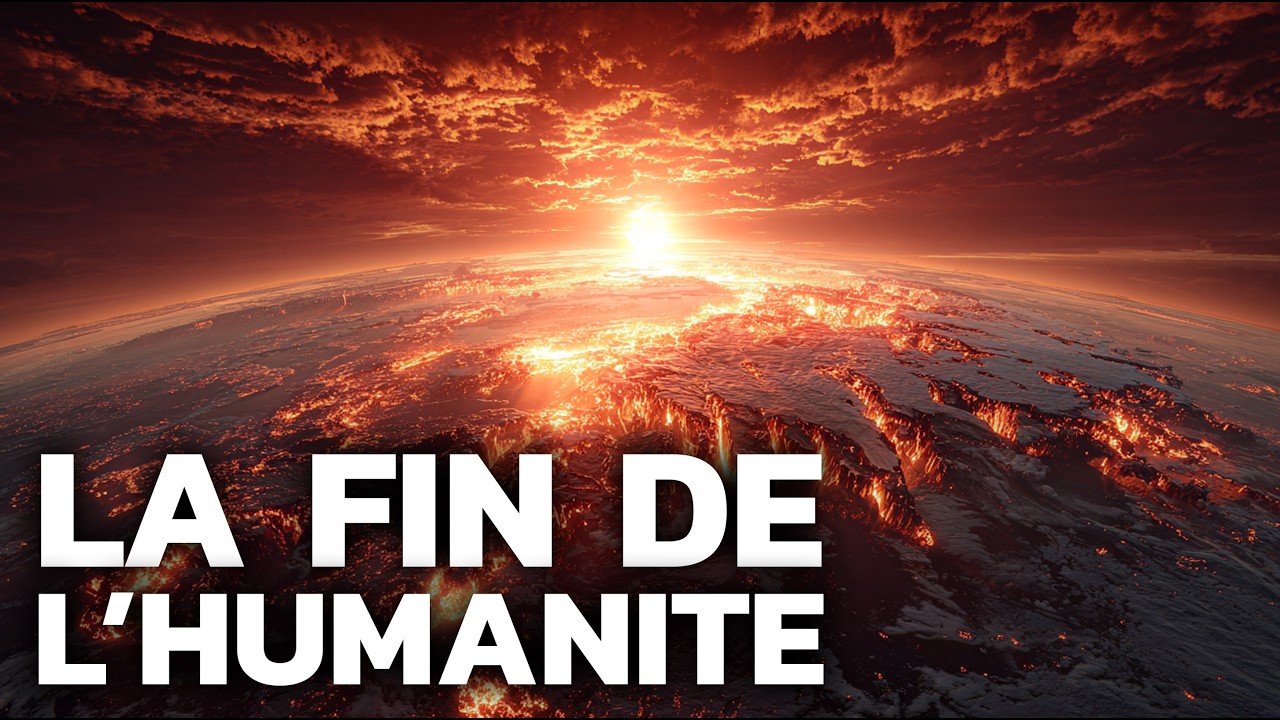
Comment l’humanité pourrait disparaître ?
Keywords
Summary
139 words
Critical Evaluation
The video provides a comprehensive and scientifically grounded overview of existential risks to humanity. It effectively uses historical examples, such as the 2012 Mayan prophecy and the 1910 Halley’s comet panic, to illustrate how apocalyptic fears often stem from cultural context rather than scientific reality. The discussion of the five mass extinctions is particularly strong, as it relies on geological and isotopic evidence, demonstrating a rigorous approach to understanding past crises. The video also addresses contemporary threats like climate change and nuclear war, framing them as systemic risks that require careful analysis. However, the video occasionally ventures into speculative territory, such as the potential for AI to cause extinction, without fully exploring counterarguments. While it mentions the importance of space colonization, it does not delve deeply into the technical and logistical challenges, leaving some questions unanswered. The production quality is high, with clear narration and engaging visuals, but the lack of explicit citations for some claims may reduce its utility for viewers seeking to verify information. Overall, the video is a valuable educational resource that balances scientific accuracy with accessibility, though it could benefit from more detailed sourcing and a more critical examination of certain scenarios.
196 words
Title / Content Match
The title accurately reflects the content, which explores various scenarios of human extinction and survival.
Quality & Reliability
8/10
The video presents a well-structured overview of existential risks, grounded in scientific consensus and historical data. It cites specific events like the five mass extinctions and uses geological evidence. However, it lacks detailed citations for some claims and includes speculative elements, though clearly framed as such.
Key Moments
Markers derived by PSI from the transcript: the creator did not define chapters.
- Introduction to the topic and the 2012 Mayan prophecy.
- Discussion of historical apocalyptic predictions and their cultural context.
- Explanation of the five mass extinctions, starting with the Ordovician.
- Analysis of the Permian-Triassic extinction and volcanic activity.
- Discussion of current threats: climate change, nuclear war, and pandemics.
- Exploration of space colonization as a potential survival strategy.
- Reflection on humanity's fragility and the importance of understanding risks.
Cited Sources
- SIRIUS app — Mentioned as a tool for astronomy enthusiasts.
- Questionnaire for teachers — Requested for educational feedback.
- Spotify Podcast — Early access to videos.
- Facebook channel — Social media presence.
- Instagram channel — Social media presence.
- Join the channel — Membership benefits.
Concurring Sources
Dissenting Sources
- Global Challenges Foundation — Some risk assessments may differ in probability estimates.
Contribution & Novelties
The video synthesizes a wide range of scientific knowledge about existential risks, presenting it in an engaging and accessible manner. It uniquely combines historical apocalyptic narratives with modern scientific evidence, offering a comprehensive overview that is both educational and thought-provoking. The emphasis on understanding past extinctions to inform future decisions is a valuable contribution to public discourse.
Pour aller plus loin :
- Five mass extinctions — Provides detailed information on the major extinction events.
- Nuclear winter — Explores the climatic consequences of nuclear war.
- Space colonization — Discusses the feasibility and challenges of human settlement beyond Earth.
97 words
Radar Profile
The radar profile shows high scores in quantity and quality of information, indicating a rich and reliable content. The technical level is moderate, making it accessible to a broad audience. The overall reliability is strong, with minor gaps in explicit sourcing.
💬 Très positif. Sur les 30 commentaires analysés, les spectateurs expriment une grande appréciation pour la pédagogie et la qualité des vidéos, certains les utilisant pour s'endormir ou se détendre.