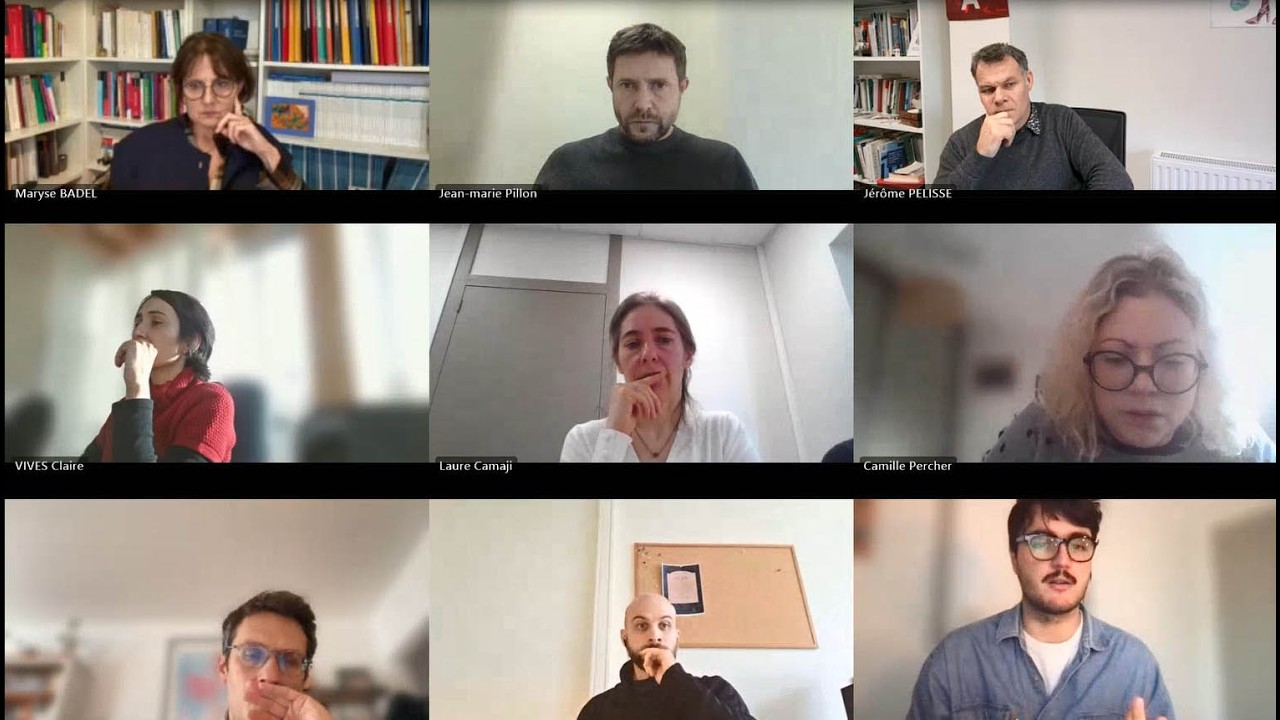
Après-midi de la protection sociale-Contrôler les demandeurs d'emploi, de quel droit-9 décembre 2025
Keywords
Summary
173 words
Critical Evaluation
Value of the Information & Strength of the Argument
The video provides valuable insights into a rarely studied aspect of unemployment policy. The research is based on a rich corpus of internal documents and interviews, offering a detailed empirical account of the control process. The argumentation is solid, with clear links between the data collected and the conclusions drawn. The researchers are careful to distinguish between different sources of control and to highlight the normative implications of their findings. The discussion with the discussants adds depth, as they challenge some assumptions and suggest further avenues for research. However, the presentation is somewhat dense and may require prior knowledge of the French unemployment system to fully appreciate.
Scientific Rigor, Source Quality, Title Accuracy
The research is rigorous, with a clear methodology and a comprehensive analysis of available sources. The team acknowledges the opacity of the subject and the limitations of their data, such as the scarcity of legal challenges. They rely on a variety of sources, including internal documents, interviews, and legal cases, which strengthens the credibility of their findings. The title accurately reflects the content, focusing on the legal and social dimensions of controlling job seekers. The presentation is well-structured, with clear sections and a coherent narrative. The discussants provide critical feedback, further enhancing the scientific quality of the presentation.
220 words
Title / Content Match
The title accurately reflects the content, which focuses on the legal and social aspects of controlling job seekers in France.
Quality & Reliability
8/10
The video presents a rigorous academic research project conducted by a multidisciplinary team of sociologists, political scientists, and legal scholars. The research is based on a comprehensive corpus of internal documents, interviews, and legal analysis, and is presented by the researchers themselves. The discussion includes critical commentary from two discussants, enhancing the reliability. However, the video is a conference presentation and not a peer-reviewed publication, and some data may be subject to interpretation.
Key Moments
Markers derived by PSI from the transcript: the creator did not define chapters.
- Introduction by the moderator, presenting the research team and the topic.
- Overview of the control of job seekers: historical context and evolution since the 1990s.
- Presentation of the research program: objectives, methodology, and the challenge of accessing an opaque object.
- Data on the sources of control: random selection, referrals, and targeted controls, with statistics on their evolution.
- Discussion of the procedural and IT normalization of control since 2015, including the new procedure in 2022.
- Findings on radiation rates and the low number of legal challenges, highlighting the 'evaporation' of contestations.
- Tristan Pellerin presents the first part of the research: the legal definition of 'active job search' and the role of internal doctrine.
- Discussion of the normative construction of the 'good job seeker' and the alignment with social norms.
- Commentary by Hugo Avvenire and Jérôme Pélisse, offering critical perspectives on the research.
- Q&A session with the audience, addressing questions about the implications of the research.
Cited Sources
- Rapport de recherche 'Le contrôle de la recherche d'emploi : normes, agents, contentieux' — Mentioned as available online, but no URL provided in the video.
- Code du travail — Referenced as the legal framework for the obligations of job seekers.
- Loi n° 2018-771 du 5 septembre 2018 pour la liberté de choisir son avenir professionnel — Mentioned as the law that transferred sanctioning power to Pôle Emploi.
Concurring Sources
- Étude de la DARES sur le contrôle de la recherche d'emploi — Mentioned as one of the few public studies on the subject, providing official statistics.
- Rapport de la Cour des comptes sur Pôle Emploi — Referenced as a potential source of information on the institution's operations.
Dissenting Sources
- Discours politiques sur l'efficacité du contrôle — The research suggests that the control has no statistically significant effect on return to employment, which contrasts with political discourse emphasizing its deterrent and incentive effects.
Contribution & Novelties
This research provides a unique empirical and multidisciplinary analysis of the control of job seekers in France, a topic that has been largely overlooked. It reveals how the internal administrative doctrine and practices of the control platforms shape the legal meaning of ‘active job search’, often aligning with moral judgments. The study also highlights the low rate of legal challenges, suggesting a ’evaporation’ of contestations. This contributes to a better understanding of the implementation of public policy and the role of street-level bureaucrats.
Pour aller plus loin :
- France Travail — Official website of the new public employment service, relevant for understanding the current context.
- Pôle Emploi — Official website of the former institution, useful for historical context.
- CERCRID — Research center that organized the conference, providing access to related publications.
- Institut Robert Badinter — The institute that supported the research, offering additional resources on legal and social issues.
149 words
Radar Profile
The radar profile shows high scores in information quantity and quality, reflecting the rich empirical data and rigorous analysis. The technical level is moderate, indicating that the content is accessible to a general audience with some background knowledge. The overall reliability is high, supported by the multidisciplinary approach and critical discussion.
💬 Sur les 0 commentaires analysés, aucune tendance n'a pu être dégagée.