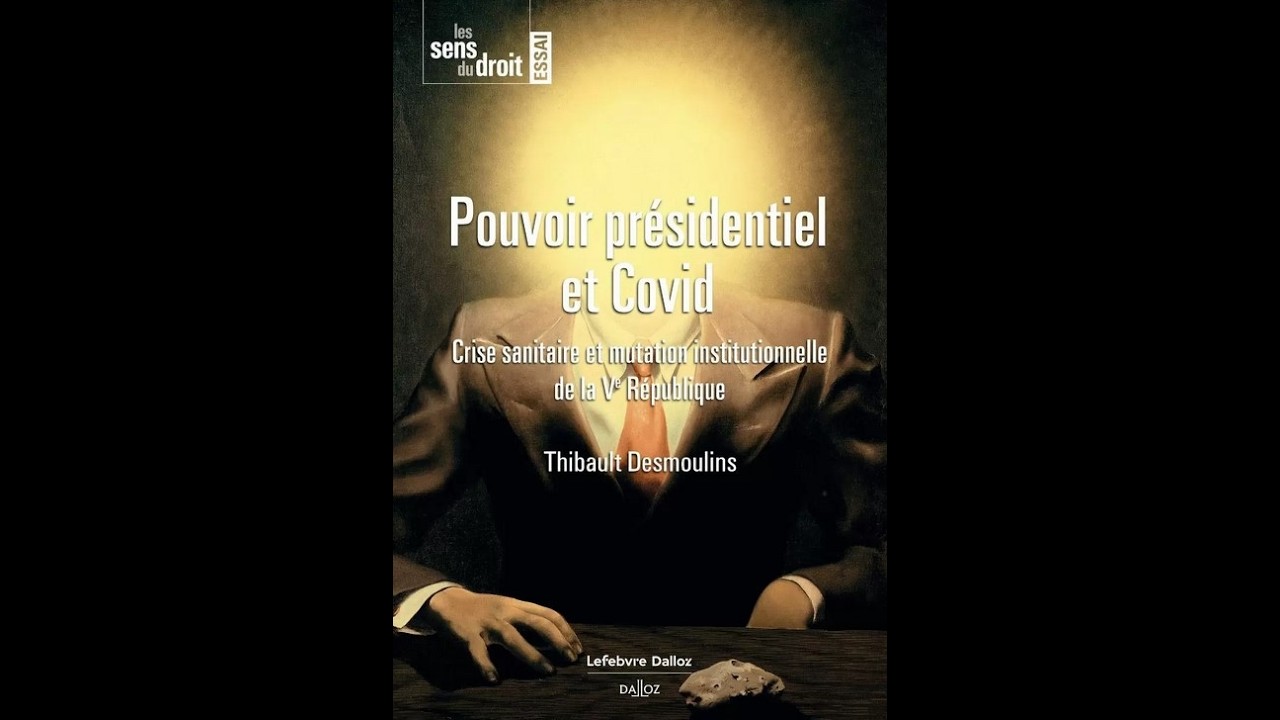
Séminaire général du CERCRID "Pouvoir présidentiel et covid" - 17 octobre 2025
Keywords
Summary
169 words
Critical Evaluation
Value of the Information & Strength of the Argument
The value of the information lies in its detailed analysis of the constitutional and legal aspects of the Covid crisis in France, offering a novel perspective on presidential power. The argumentation is solid, grounded in legal theory and historical context, and the author engages critically with existing categories. The discussion adds depth by challenging the author’s thesis and exploring broader implications for democracy.
Scientific Rigor, Source Quality, Title Accuracy
The seminar demonstrates scientific rigor through its academic setting, the author’s expertise, and the critical engagement of the discussant. Sources are not explicitly cited in the video, but the discussion references legal concepts and works such as Levitsky and Ziblatt’s “How Democracies Die.” The title accurately reflects the content, and the presentation is well-structured.
132 words
Title / Content Match
The title accurately reflects the content: a seminar on presidential power during the Covid crisis, centered on the book by Thibault Desmoulins.
Quality & Reliability
8/10
The seminar features a legal scholar presenting his published work, with a discussant and Q&A. The content is grounded in constitutional law and political science, referencing specific legal concepts and historical context. The discussion is academic and critical, though it reflects the author's interpretive framework.
Key Moments
Markers derived by PSI from the transcript: the creator did not define chapters.
- Introduction by Grégory, presenting the speaker and the book.
- Thibault Desmoulins begins his presentation, outlining his research background and the three main areas of investigation.
- Discussion of the concentration of presidential decisions and the role of the Defense Council.
- Analysis of the classification of emergency measures and the concept of urgency.
- Exploration of the genealogy of crisis law and its military origins.
- Presentation of the thesis of a shift from political to legal presidentialism.
- Agathe Faranda poses questions on democracy, science, and methodology.
- Desmoulins responds to questions, discussing the impact on democracy and the role of legal research.
- Further discussion and Q&A with the audience.
Cited Sources
- Pouvoir présidentiel et covid. Crise sanitaire et mutation institutionnelle de la Vème République — The book by Thibault Desmoulins, which is the main subject of the seminar.
- How Democracies Die — Referenced by the discussant as a comparative work on democratic backsliding.
Concurring Sources
- How Democracies Die — The discussant references this book to raise concerns about democratic decline, which aligns with the seminar's critical perspective.
Contribution & Novelties
The seminar provides an original analysis of the Covid crisis as a constitutional moment, arguing that it accelerated a shift in French presidentialism from a political to a legal nature. This perspective challenges traditional views and offers a new framework for understanding executive power. The discussion also highlights the importance of looking beyond formal legal texts to grasp actual power dynamics.
Pour aller plus loin :
- Présidentialisme — Concept central to the discussion.
- État d’urgence — Legal framework discussed in the seminar.
- Conseil de défense — Institution analyzed as a locus of presidential power.
94 words
Radar Profile
The radar profile shows high scores in information quantity, quality, and reliability, with a slightly lower technical level, indicating a well-balanced and accessible academic discussion.