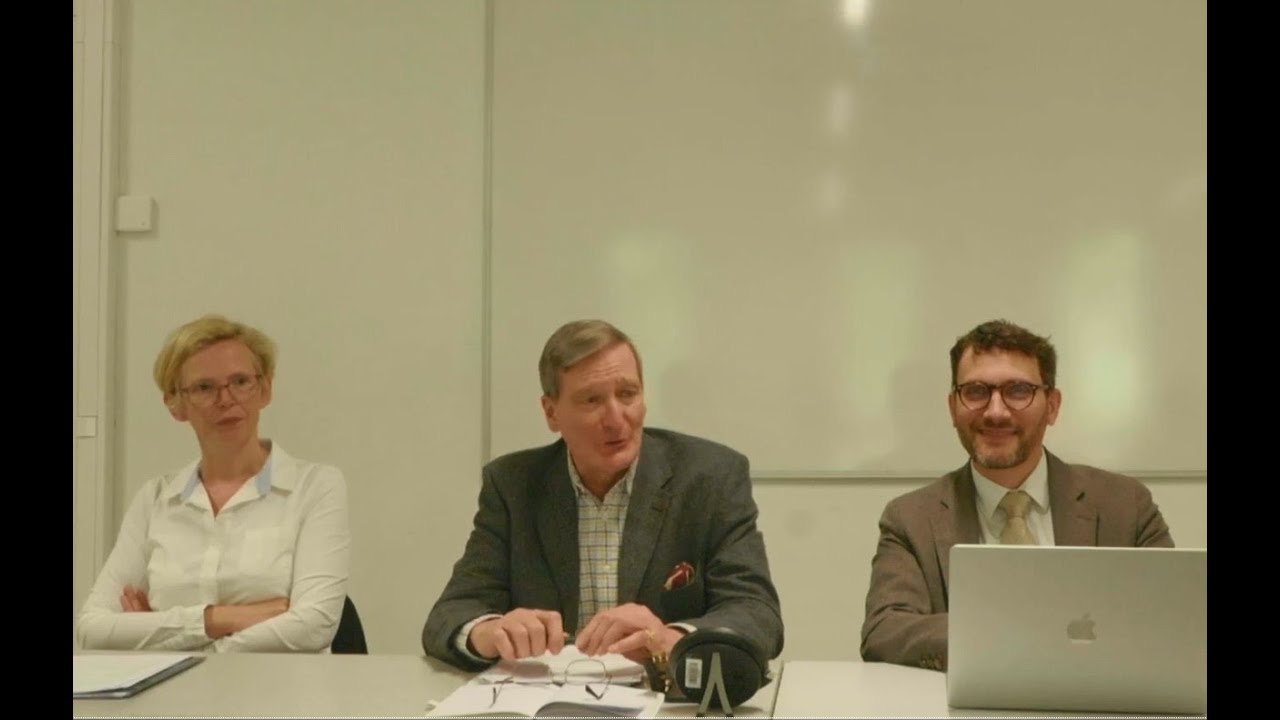
Conf "Evolution de la liberté d’expression au Royaume-Uni sous l’influence de la CEDH" - 16 mai 2025
Keywords
Summary
167 words
Critical Evaluation
Value of the Information & Strength of the Argument
The value of the information is high, as it provides firsthand insights from a former Attorney General on the practical application of laws restricting free speech. The arguments are well-structured and grounded in legal principles and case law, such as the Sunday Times case. The speakers effectively illustrate the complexities of balancing free expression with other societal interests, offering concrete examples from their professional experience. The argumentation is solid, though it relies on personal experience and legal interpretation rather than empirical data.
Scientific Rigor, Source Quality, Title Accuracy
The scientific rigor is moderate; the speakers are credible experts, but the presentation is an oral conference without formal citations. The sources mentioned include legal statutes and case law, but no specific references are provided in the description. The title accurately reflects the content, and the discussion is relevant to the topic. The conference is organized by academic institutions, adding to its credibility.
160 words
Title / Content Match
The title accurately reflects the content, which discusses the evolution of freedom of expression in the UK under the influence of the European Convention on Human Rights.
Quality & Reliability
8/10
The conference features two legal experts: Dominic Grieve, former Attorney General, and Peggy Ducoulombier, professor of public law. Their arguments are grounded in legal texts and case law, but the format is an oral presentation without detailed citations or peer review.
Key Moments
Markers derived by PSI from the transcript: the creator did not define chapters.
- Introduction by the chair, presenting the speakers and the topic.
- Dominic Grieve begins his talk on the historical background of freedom of expression in the UK.
- Discussion of defamation laws and their evolution under the ECHR.
- Explanation of contempt of court and its application in criminal trials.
- Examples of prosecutions for contempt of court, including the Levi Bellfield case.
- Discussion of public order offenses and restrictions on protests.
- Analysis of hate speech laws and the protection of religious groups.
- Peggy Ducoulombier begins her presentation on privacy vs. freedom of expression.
- Comparison of ECHR jurisprudence on privacy and expression in the UK and France.
- Q&A session with the audience.
Cited Sources
- European Convention on Human Rights — Mentioned as the basis for freedom of expression in the UK, particularly Article 10.
- Contempt of Court Act 1981 — Discussed in relation to restrictions on media reporting during trials.
- Criminal Justice and Courts Act 2015 — Mentioned as making jury research a criminal offense.
Concurring Sources
- European Court of Human Rights — The court's jurisprudence is central to the discussion.
Dissenting Sources
- JD Vance's comments on UK free speech — The conference addresses the claim that the UK no longer has freedom of expression, providing a nuanced legal perspective.
Contribution & Novelties
The conference provides a unique perspective from a former Attorney General on the practical application of laws restricting free speech in the UK, offering insights not typically found in academic literature. It also highlights the ongoing tension between the ECHR and UK sovereignty.
Pour aller plus loin :
- Article 10 of the ECHR — Core legal provision discussed.
- Sunday Times v. United Kingdom (1979) — Landmark case on contempt of court and freedom of expression.
- Human Rights Act 1998 — UK legislation incorporating the ECHR.
85 words
Radar Profile
The radar profile shows high scores in information quantity, quality, and reliability, with a slightly lower technical level, reflecting the expert but accessible nature of the discussion.
💬 No comments were provided for analysis.