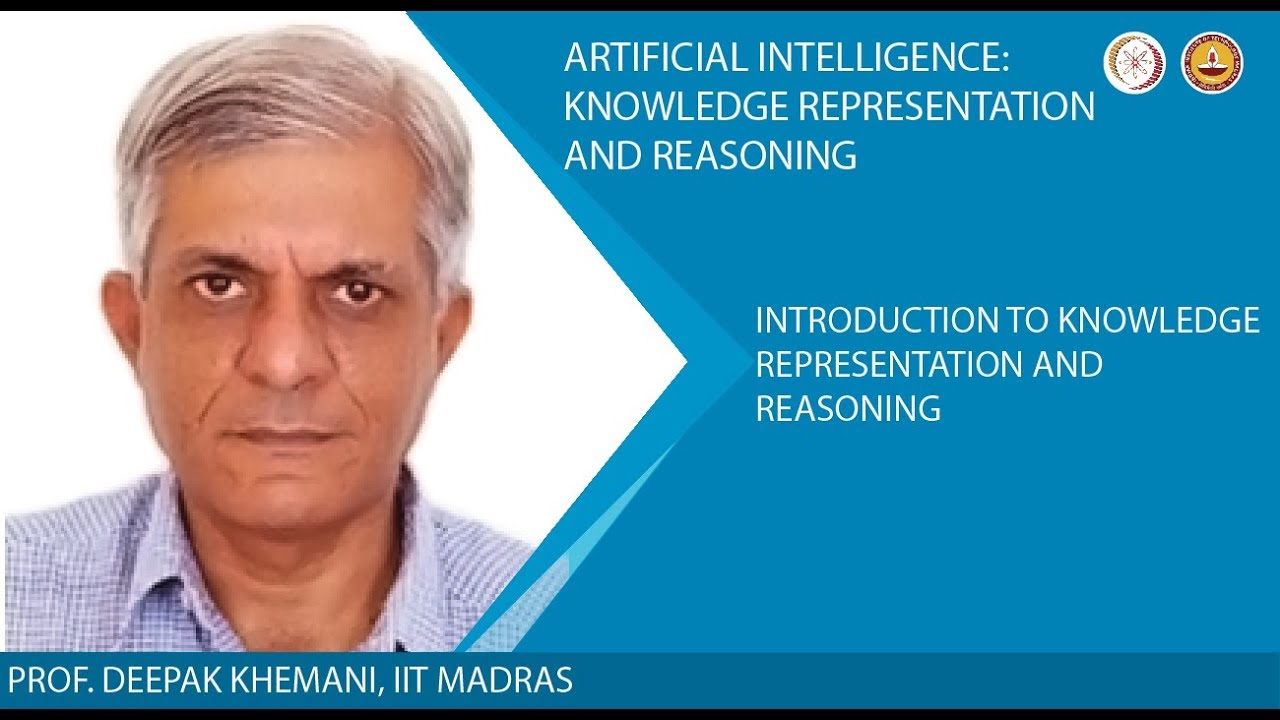
Introduction to Knowledge Representation and Reasoning
Keywords
Summary
176 words
Critical Evaluation
Value of the Information & Strength of the Argument
The lecture provides a valuable historical and conceptual overview of knowledge representation, connecting philosophical ideas to AI’s foundational principles. The argumentation is coherent, building from philosophical theories to the Physical Symbol System Hypothesis and its implications. It effectively explains why symbolic representation is necessary for reasoning, contrasting it with sub-symbolic approaches. The discussion of the subject-object problem and the distinction between ontology and epistemology adds depth. However, the lecture is introductory and does not delve into technical details or formal logic, which limits its depth for advanced audiences.
Scientific Rigor, Source Quality, Title Accuracy
The lecture demonstrates scientific rigor by grounding concepts in the works of Locke, Hume, Kant, and the pioneers of AI. It accurately describes the Dartmouth Conference and the contributions of Newell and Simon. However, it does not provide direct citations to specific papers or books, relying instead on general references. The title accurately reflects the content, which is an introduction to the field. The lecture is well-structured and clear, but the lack of explicit sources reduces its scholarly rigor.
182 words
Title / Content Match
The title accurately reflects the content, which introduces the core concepts of knowledge representation and reasoning.
Quality & Reliability
8/10
The lecture provides a solid historical and conceptual foundation for knowledge representation, drawing on established philosophical sources and AI pioneers. The content is accurate and well-structured, though it lacks direct citations to specific papers or resources.
Key Moments
Markers derived by PSI from the transcript: the creator did not define chapters.
- Introduction to the lecture and the historical context of knowledge representation.
- Discussion of John Locke's tabula rasa and the empiricist view of knowledge.
- Hume's view of ideas as mental particles and the question of meaning.
- Kant's a priori principles and the subject-object problem.
- Introduction to ontology and epistemology in the context of knowledge representation.
- The Dartmouth Conference and the birth of AI.
- Newell and Simon's Logic Theorist and the Physical Symbol System Hypothesis.
- Contrast between classical AI and neural networks regarding representation.
- Why we cannot reason at the level of fundamental particles and the need for concepts.
- Introduction to intelligent agents and the model of the world.
- Semiotics and the nature of symbols, and why natural language is unsuitable for formal representation.
Cited Sources
- Machines Who Think — Referenced as a source for the history of the Dartmouth Conference.
Concurring Sources
- Physical Symbol System Hypothesis — The hypothesis is central to the lecture and is well-documented.
Contribution & Novelties
The lecture provides a clear and accessible synthesis of the philosophical foundations of knowledge representation, linking them to the development of AI. It emphasizes the Physical Symbol System Hypothesis as a cornerstone of classical AI and contrasts it with sub-symbolic approaches. The discussion of semiotics and the limitations of natural language adds a unique perspective.
Pour aller plus loin :
- Physical symbol system — Wikipedia article on the hypothesis by Newell and Simon.
- Ontology (information science) — Wikipedia article on ontology in computer science.
- Logic Theorist — Wikipedia article on the first AI program.
- Semiotics — Wikipedia article on the study of signs and symbols.
105 words
Radar Profile
The radar profile shows high scores in information quantity and quality, with a moderate technical level. This indicates a lecture that is informative and reliable but not highly technical, suitable for an introductory audience.