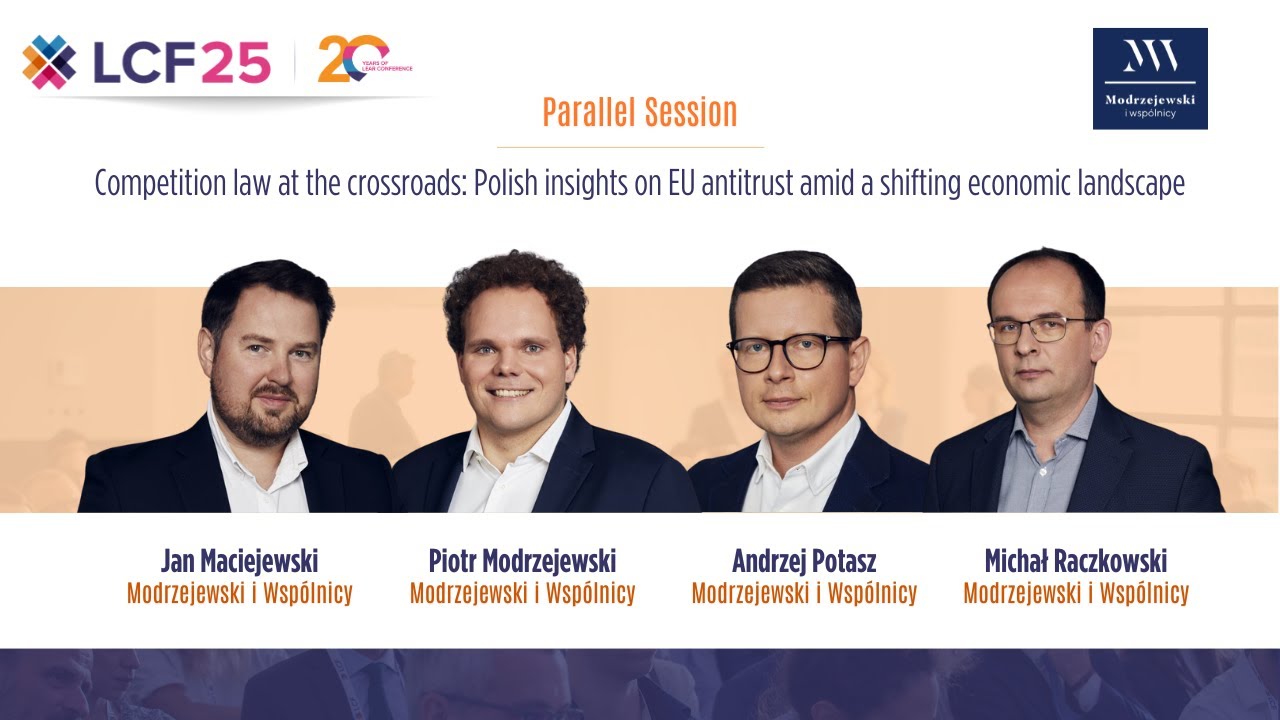
LCF25 - Competition law at the crossroads: Polish insights on EU antitrust
Keywords
Summary
158 words
Critical Evaluation
Value of the Information & Strength of the Argument
The video offers valuable insights from practitioners directly involved in the cases, providing a unique insider perspective on the reasoning of the Polish competition authority and the strategic considerations in antitrust litigation. The argumentation is generally solid, with speakers explaining the legal and economic reasoning behind their positions, such as the substitutability of TV channels and the potential benefits of interim measures in private enforcement. However, some arguments are presented as opinions without deep empirical support, and the discussion on labor market agreements is speculative due to the ongoing nature of the case.
Scientific Rigor, Source Quality, Title Accuracy
The speakers demonstrate a strong command of relevant case law, referencing key EU judgments such as United Brands, Google Shopping, and recent CJEU rulings like RH v Volvo and Scanska. However, they do not provide formal citations or links to sources, and the discussion relies heavily on their professional experience. The title accurately reflects the content, which focuses on Polish competition law developments and their EU implications. No comments were provided for analysis.
181 words
Title / Content Match
The title accurately reflects the content, which discusses Polish competition law cases and their implications for EU antitrust.
Quality & Reliability
7/10
The video features experienced competition lawyers discussing recent Polish and EU antitrust cases, providing insider perspectives on a case they represented. However, it is a panel discussion without formal citations or peer review, and some claims are based on public information and personal opinions.
Key Moments
Markers derived by PSI from the transcript: the creator did not define chapters.
- Introduction of speakers and overview of topics.
- Discussion of abuse of dominance case in Polish media market.
- Analysis of market definition and single-brand markets.
- Discussion of private enforcement and Google Shopping injunction.
- Examination of labor market competition law and Biedronka case.
- Comparison with CJEU opinion in CD Tondela and discussion of by-object vs by-effect.
- Audience survey on labor market agreements and concluding remarks.
Cited Sources
- United Brands case — Referenced in discussion of single-brand market definition.
- Google Shopping case — Referenced in private enforcement discussion.
- RH v Volvo case — Referenced as recent CJEU ruling aiding private enforcement.
- Scanska case — Referenced regarding successor liability.
- CD Tondela case — Referenced in labor market agreements discussion.
Concurring Sources
- European Commission - Competition — General EU competition policy framework.
- Polish Office of Competition and Consumer Protection (UOKiK) — Official authority decisions and guidelines.
Contribution & Novelties
The video provides a practitioner’s perspective on recent Polish competition law cases, offering insights not typically found in academic literature. It highlights the practical challenges of market definition in media markets and the potential of interim measures to boost private enforcement. The discussion on labor market agreements is timely and contributes to the ongoing debate on how competition law should address no-poach and wage-fixing agreements.
Pour aller plus loin :
- European Commission - Competition — Official EU competition policy resources.
- Polish Office of Competition and Consumer Protection (UOKiK) — Official website of the Polish competition authority.
- Court of Justice of the European Union - Case law — Access to CJEU judgments and opinions.
- OECD - Competition and Labour Markets — OECD work on competition issues in labour markets.
128 words
Radar Profile
The radar profile shows balanced scores across all dimensions, indicating a well-rounded presentation with solid information quality and technical depth, though not exceptional in any single area.