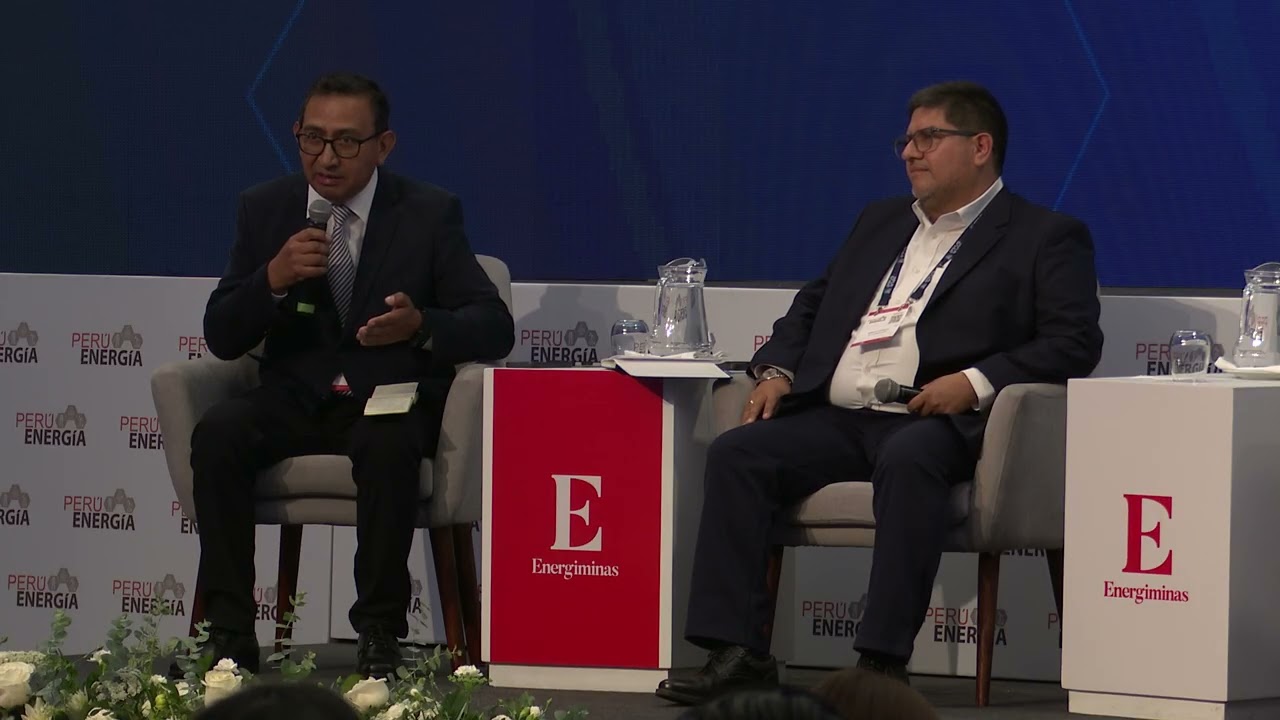
Panel: La descarbonización de la energía: Retos y oportunidades - Perú Energía 2025
Keywords
Summary
166 words
Critical Evaluation
Value of the Information & Strength of the Argument
The panel provides valuable insights from industry practitioners directly involved in energy projects in Peru. The arguments are generally well-structured, with each panelist offering concrete examples from their operations. For instance, Olguino’s description of the challenges of integrating solar power in Moquegua due to incomplete transmission lines illustrates real-world issues. Vázquez’s point about the low carbon intensity of Peru’s electricity generation (210 gCO2/kWh) and the need to focus on energy efficiency is supported by data. Guimac’s emphasis on the need for flexible transmission planning is logical. However, the discussion is largely based on professional experience and corporate perspectives, with limited engagement with academic research or detailed technical analysis. Some claims, such as the potential for hydrogen in mining, are presented as ongoing initiatives without deep technical evaluation. Overall, the argumentation is coherent and persuasive, but it lacks the rigor of a scientific review.
Scientific Rigor, Source Quality, Title Accuracy
The panel references several key sources: the COP28 call to transition away from fossil fuels, the IPCC 2021 report, the IEA’s Energy Outlook for Latin America, and OLADE’s regional energy outlook. These are credible and relevant. However, specific data points (e.g., emissions reductions at La Pampilla refinery) are not accompanied by citations. The title accurately reflects the content. The discussion is scientifically informed but not heavily sourced. The panelists’ expertise adds credibility, but the lack of formal citations limits the scientific rigor.
240 words
Title / Content Match
The title accurately reflects the content: a panel discussion on energy decarbonization challenges and opportunities in Peru.
Quality & Reliability
7/10
The panel features industry experts from major energy companies (Anglo American, ISA, Repsol) and KPMG, providing practical insights and data. However, the discussion is largely opinion-based and lacks rigorous scientific citations or peer-reviewed sources. Some claims are specific (e.g., emissions reductions) but not independently verified.
Key Moments
Markers derived by PSI from the transcript: the creator did not define chapters.
- Introduction and context: COP28, IPCC, IEA, OLADE, and Peru's law 28832.
- Ernesto Olguino (Anglo American) discusses decarbonization in mining: renewable contracts, hydrogen, trolley assist.
- Luis Vázquez (Repsol) on multi-energy approach, Peru's low carbon intensity, and energy efficiency.
- Jorge Guimac (ISA) on transmission infrastructure challenges and the need for flexible planning.
- Discussion on grid stability, inertia, and the Spanish blackout example.
- Luis Vázquez on the energy trilemma: decarbonization, security, and affordability.
- Concluding remarks: need for pragmatic policy, innovation, and data-driven decisions.
Cited Sources
- COP28 UAE — Mentioned as the first collective call to transition away from fossil fuels.
- IPCC Sixth Assessment Report — Cited for the technical feasibility of limiting warming to 1.5°C.
- IEA Latin America Energy Outlook — Referenced for the region's renewable potential and infrastructure gaps.
- OLADE Energy Panorama of Latin America and the Caribbean — Cited for the potential of 85% renewable electricity by 2050.
Concurring Sources
- IEA Latin America Energy Outlook — Aligns with the panel's emphasis on renewable potential and infrastructure gaps.
- OLADE Energy Panorama — Supports the panel's view on the potential for high renewable penetration by 2050.
Contribution & Novelties
The panel provides a unique industry perspective on the practical challenges of decarbonization in Peru, particularly the integration of renewables into the grid and the need for firm capacity. It highlights the tension between rapid renewable deployment and the slower development of transmission infrastructure, a critical issue often overlooked in policy discussions. The discussion also emphasizes the importance of energy efficiency and the role of natural gas as a transition fuel, offering a pragmatic view of the energy transition.
Pour aller plus loin :
- Energy transition in Peru — Overview of Peru’s energy mix and policies.
- Grid inertia and renewable integration — Technical background on the role of inertia in power systems.
- Law 28832 in Peru — Official source for Peru’s electricity sector regulations (note: URL may not be specific).
130 words
Radar Profile
The radar profile shows a balanced but moderate performance across all dimensions. The panel scores highest on information quantity and quality, reflecting the depth of practical insights, while technical level and reliability are slightly lower due to the absence of formal citations and the reliance on professional opinion.
💬 No comments were provided for analysis.