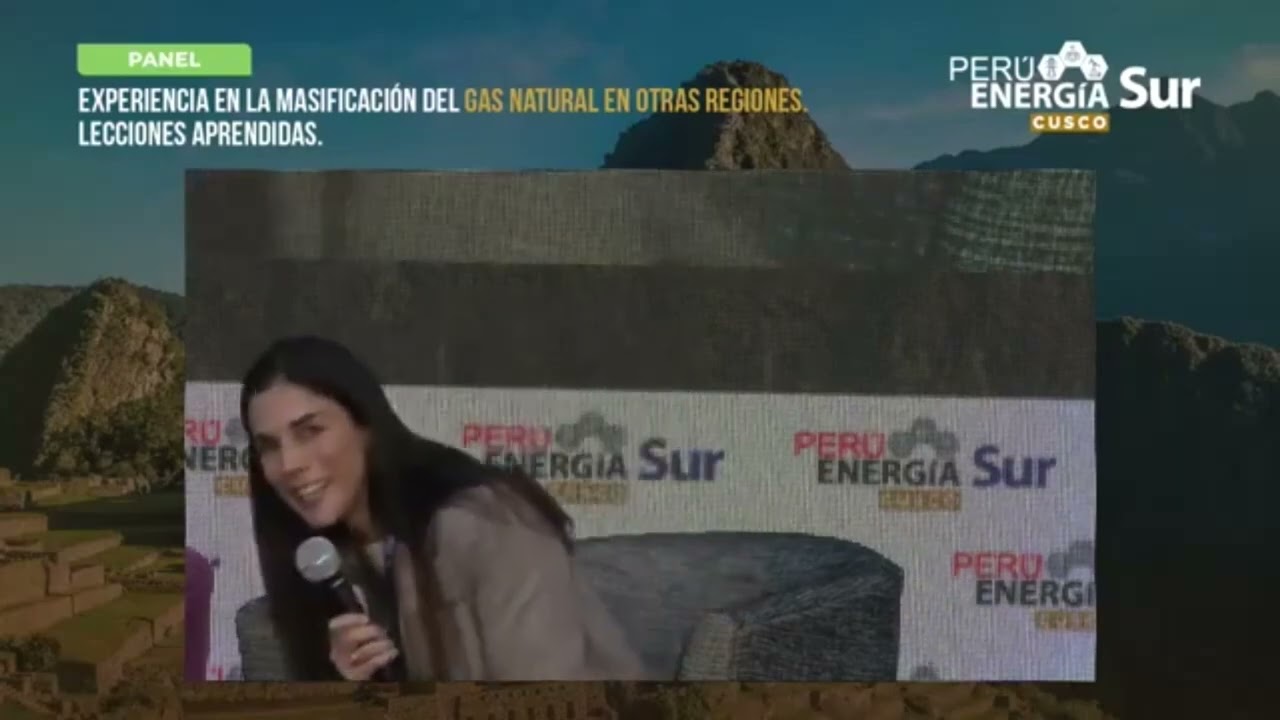
¿Cuáles son las lecciones aprendidas en la masificación del gas natural en regiones?
Keywords
Summary
184 words
Critical Evaluation
Value of the Information & Strength of the Argument
The panel provides valuable insights from industry leaders with direct experience in natural gas distribution. They offer concrete data, such as Cálidda’s 2 million connections and 18,000 km of networks, and Contugas’s 105,000 residential clients. The argumentation is coherent, emphasizing the critical role of anchor industries and cross-subsidies in making residential connections viable. They also identify regulatory hurdles and the need for predictable frameworks. However, the discussion is largely anecdotal and lacks rigorous data analysis or independent verification. The panelists’ perspectives are naturally biased towards their companies’ interests, and they do not address potential environmental or social concerns comprehensively.
Scientific Rigor, Source Quality, Title Accuracy
The video does not cite specific sources, but the panelists reference their companies’ experiences and regulatory frameworks. The title accurately reflects the content. The discussion is based on expert opinion rather than peer-reviewed research, so the scientific rigor is moderate. The panelists provide specific examples and data, but these are not independently verified. The adequacy between title and content is high, as the panel directly addresses lessons learned from regional gas expansion. No comments were provided for analysis.
192 words
Title / Content Match
The title accurately reflects the content, which focuses on lessons learned from natural gas expansion in various regions of Peru.
Quality & Reliability
7/10
The video features three senior executives from major natural gas distribution companies in Peru, providing firsthand experience and specific data. However, the discussion is largely opinion-based and lacks independent verification or academic sources.
Key Moments
Markers derived by PSI from the transcript: the creator did not define chapters.
- Martín Mejía discusses the first challenge of connecting the first residential customer in Lima and the fear of gas.
- Mejía explains the regulatory changes that allowed continued investment after initial obligations were met, including the role of electricity generators.
- Alexandra Boero talks about the challenges in northern regions, the need for a state policy, and the issue of tariff disparities.
- Boero discusses the failed tariff leveling law and its limited impact due to congressional modifications.
- Juan Miguel Cayo criticizes the design of gas massification policies, highlighting the success of Lima and the need for anchor industries.
- Cayo gives an example of GNV price distortions and the need for uniform tariffs.
- Martín Mejía presents Cálidda's proposal for expanding gas to seven regions, emphasizing its viability through Lima's demand.
- Mejía explains the timeline for implementation, including permits and construction.
- Alexandra Boero compares with Colombia's decentralized model and uniform tariff, suggesting Peru should adopt similar policies.
Cited Sources
- Cálidda — Mentioned as the natural gas distributor in Lima and Callao, with 2 million connections.
- Contugas — Mentioned as the distributor in Ica, with 105,000 residential clients.
- Promigas Perú — Mentioned as the operator of Quavi in northern regions.
- Osinergmin — Mentioned as the regulator that calculates tariffs.
- ProInversión — Mentioned as the agency evaluating Cálidda's proposal.
Concurring Sources
- Cálidda — The company's official website provides information on its operations and achievements, consistent with the panel's claims.
- Osinergmin — The regulator's website offers data on tariffs and regulations, supporting the discussion on regulatory frameworks.
Dissenting Sources
- No discordant sources identified — The video does not present conflicting information from external sources; the panelists are aligned in their views.
Contribution & Novelties
The video provides a unique insider perspective on the challenges and successes of natural gas massification in Peru, particularly highlighting the importance of anchor industries and cross-subsidies. It also offers a critical analysis of regulatory failures and proposes a new model for expanding gas to southern regions. The discussion with multiple experts adds depth and practical insights.
Pour aller plus loin :
- Natural gas in Peru — Overview of natural gas industry in Peru.
- Camisea Gas Project — Background on the major gas field in Peru.
- Energy policy of Peru — Context on energy policies.
- FISE (Fondo de Inclusión Social Energético) — Program mentioned for financing connections.
- Tariff leveling concept — General concept of tariffs.
115 words
Radar Profile
The radar profile shows high scores in quantity of information and reliability, reflecting the detailed and experienced-based content. The technical level is moderate, suitable for a professional audience. The overall balance indicates a solid, informative discussion with minor limitations in scientific rigor.